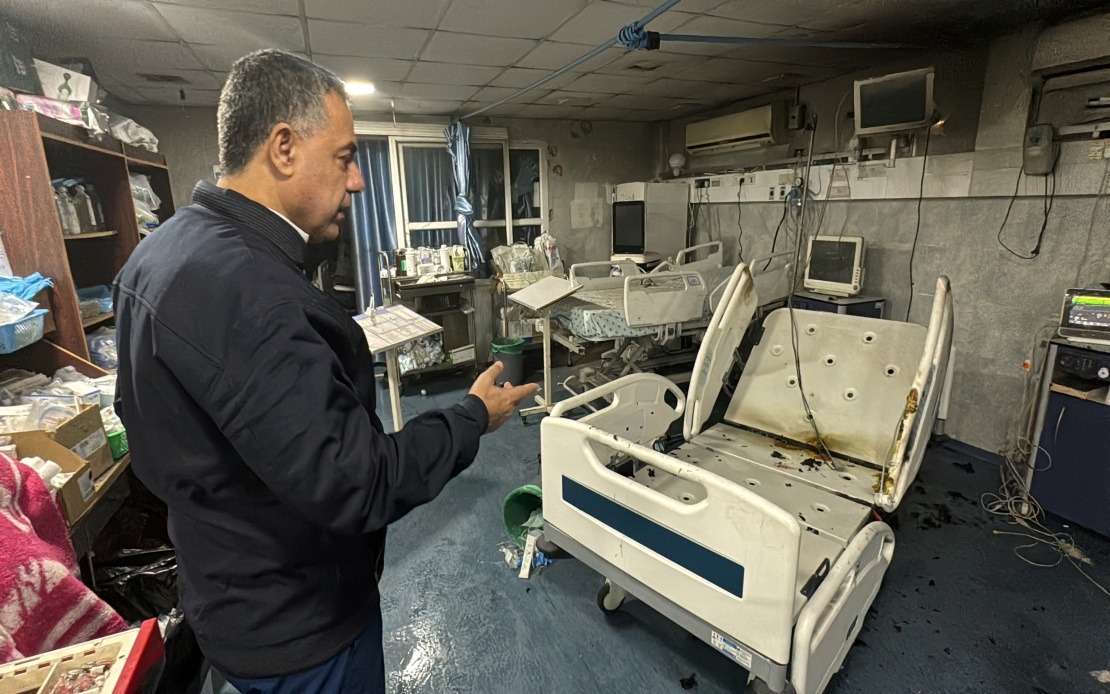
The plight of Dr Hussam Abu Safiya, who headed one of Gaza's most critical medical institutions, has become the focus of urgent international concern following allegations by Physicians for Human Rights Israel that his health has severely declined since his transfer to Nitzan Prison. The organisation's documented findings paint a troubling picture of a detainee whose physical and mental condition has markedly worsened, raising questions about the treatment of medical professionals caught in the Israel-Gaza conflict.
According to testimony provided by the human rights group's legal representative, Nasser Odeh, a visit to Dr Abu Safiya on July 2 revealed a man bearing visible signs of severe physical trauma. The physician presented with pronounced injuries across multiple areas of his head, including around the eyes, ears, and neck region—injuries so extensive that Odeh noted difficulty in recognising him from previous encounters. Beyond the visible wounds, the detainee displayed breathing complications and experienced repeated episodes of consciousness loss during the meeting, indicating potential internal injuries or serious medical complications that demanded immediate attention.
The circumstances surrounding the consultation itself underscored the restrictive conditions of his detention. Dr Abu Safiya was brought to meet his legal counsel while restrained with shackles on both hands and feet, accompanied by multiple masked prison guards. This arrangement mirrors detention protocols typically reserved for individuals deemed high-risk security threats, a categorisation that has troubled human rights observers given that the detainee is a civilian medical professional rather than a combatant or security suspect.
Physicians for Human Rights Israel has intensified its advocacy position by calling for Dr Abu Safiya's immediate release, alongside other medical professionals the organisation alleges are detained without formal charges or trial proceedings. The group's stance reflects broader concerns within the international medical community regarding the detention of healthcare workers during armed conflicts, a practice that human rights bodies consider potentially violative of international humanitarian law protecting medical personnel.
Naji Abbas, who oversees the Prisoners and Detainees Department at Physicians for Human Rights Israel, characterised the observations documented during the prison visit as deeply disturbing, placing this case among the most concerning incidents the organisation has tracked since the current conflict's escalation. Abbas noted that Dr Abu Safiya himself expressed fear about his safety while in custody, articulating concerns that he might not survive his detention—a statement that carries particular weight given the medical professional's own understanding of health risks and physical trauma assessment.
The timing of his apparent deterioration follows a significant development in his legal situation. According to the human rights group's analysis, Dr Abu Safiya's physical condition notably worsened after he challenged the legal grounds for his continued detention in court proceedings. This temporal correlation prompted Abbas to suggest that the sequence of events warrants an independent investigation to determine whether the health decline represents a consequence of conditions within the facility or reflects other causal factors requiring urgent examination.
For Malaysian and Southeast Asian observers, this situation underscores the broader humanitarian challenges that emerge when medical infrastructure and personnel become caught in armed conflict zones. The detention of hospital administrators and medical staff raises fundamental questions about civilians' protections under international conflict law, particularly regarding individuals whose roles are non-combatant and essential to civilian welfare. Medical professionals occupy a unique status under international humanitarian conventions, with specific protections designed to preserve their ability to provide care regardless of political allegiances.
The case also illustrates the vulnerability of healthcare systems in conflict environments. Kamal Adwan Hospital, where Dr Abu Safiya served as director, represents critical medical infrastructure for northern Gaza's population. The detention of its leadership disrupts institutional continuity and potentially affects the facility's operational capacity during a period when medical services remain desperately needed by civilian populations experiencing the consequences of prolonged conflict.
Israeli authorities, according to Physicians for Human Rights Israel's formal position, bear complete responsibility for safeguarding the health, safety, and life of any individual within their custody. The organisation has called for urgent intervention from relevant authorities and international bodies, emphasising that detainees' fundamental welfare rights remain binding regardless of the circumstances of their detention. This principle, established through international convention, holds that states must provide adequate medical care and protection from torture or cruel treatment to all persons under their control.
The allegations raise significant implications for regional stability and international relations. Concerns about detention conditions and treatment of healthcare workers can escalate tensions between parties to conflict and attract scrutiny from international human rights mechanisms. For Malaysia and other regional nations maintaining diplomatic positions on the conflict, documentation of such incidents informs broader assessments of humanitarian conduct and adherence to international legal standards.
The broader context includes ongoing international scrutiny of conflict-related detention practices across the Middle East. Human rights organisations have documented cases across multiple conflicts where medical professionals faced detention, restrictions, or targeting—situations that violate international humanitarian principles designed to protect those providing essential civilian services. The principle that hospitals and their staff deserve special protection under the Geneva Conventions remains a foundational element of international humanitarian law, though enforcement mechanisms remain inconsistent across different conflicts and regions.
Moving forward, the case of Dr Abu Safiya exemplifies the challenges humanitarian organisations face in documenting and publicising alleged abuses while operating within complex political environments. The documentation provided by Physicians for Human Rights Israel represents one of the few independent records of his condition, highlighting the critical role such organisations play in bearing witness to alleged violations and maintaining pressure for accountability.
Ultimately, the situation demands attention from international humanitarian bodies and diplomatic channels to ensure that medical personnel receive the protections international law affords them, and that any detainees have access to independent medical assessments and legal representation. The deterioration documented in Dr Abu Safiya's case underscores the urgency of addressing detention conditions and upholding humanitarian standards even during periods of intense conflict.

