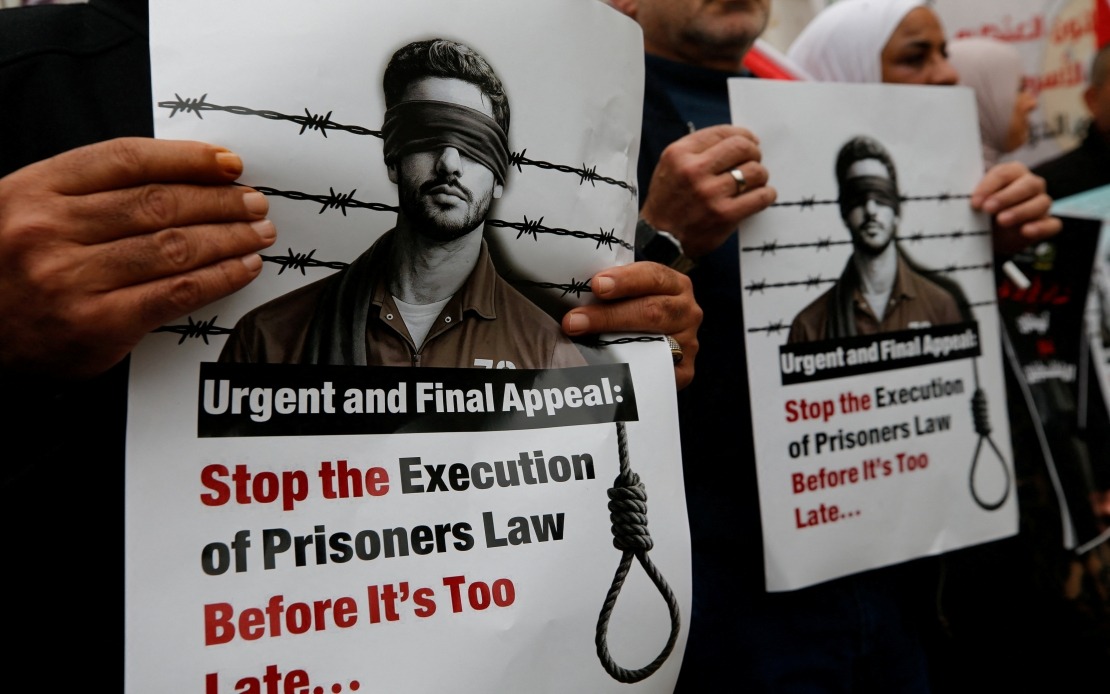
The Palestinian government has released a detailed account of what it characterises as systematic human rights violations perpetrated against Palestinian detainees held in Israeli prisons, raising fresh concerns about detention practices in the occupied territories. According to Situation Report #92 issued by the Palestine Prime Minister's Office on June 30, the scale of administrative detention without formal charges has reached alarming proportions, with documented cases of torture, denial of medical care, and degrading treatment affecting thousands of individuals currently in custody.
The report presents a catalogue of alleged abuse methodologies employed against detainees, including physical beatings, prolonged stress positions, electrocution, sleep deprivation, and deliberate starvation. Beyond these acute forms of violence, Palestinian prison institutions have documented instances of sexual violence and psychological trauma inflicted during interrogations. The allegations extend to systemic prison management practices that create conditions described as deliberately inhumane—inadequate nutrition and water provision, the purported intentional spread of infectious diseases, and the systematic denial of necessary healthcare to vulnerable populations including pregnant women and children.
The detention figures presented are particularly striking: more than 3,376 Palestinians are held as administrative detainees without being formally charged or tried. This form of detention, which permits authorities to hold individuals for extended periods without judicial proceedings, remains deeply controversial under international humanitarian law. The report notes that this figure excludes 360 Palestinian children currently held in Israeli facilities, highlighting the scope of youth incarceration in the occupied territories. The overall figure for detainees across the West Bank, including occupied Jerusalem, stands at more than 9,500 individuals.
Amongst the documented cases, the report drew particular attention to three pregnant Palestinian women currently imprisoned who allegedly face starvation, humiliation, harsh interrogation methods, strip searches, and denial of adequate prenatal healthcare. Such allegations raise specific concerns about the treatment of women detainees and the potential impact on foetal development and maternal health outcomes. The inclusion of these cases in an official government report underscores the severity claimed by Palestinian authorities regarding the situation of vulnerable populations within Israeli custody.
The broader humanitarian context surrounding these detention claims is substantial. Since the escalation of violence in early October 2023, Palestinian figures indicate that at least 73,054 Palestinians have been killed in Gaza, with at least 21,638 of these being children. An additional 173,480 have been injured. Beyond Gaza, the West Bank including occupied Jerusalem has seen 1,175 Palestinian deaths, including 246 children, with 12,919 others injured as of mid-June. The report also documents 11,200 Palestinians listed as missing, alongside the deaths of more than 1,700 health workers and 262 journalists and media personnel.
Military operations in the West Bank continue at a significant intensity according to the Palestinian account. During the week of June 22 to 28 alone, the report recorded 362 military assaults by the Israeli army, 47 shooting incidents excluding airstrikes, and 114 incidents attributed to settler violence. This pattern of operations and confrontations creates a broader environment of insecurity and tension affecting Palestinian civilians and contributing to demographic pressures on detention facilities.
Palestinian authorities have emphasised that individuals released from detention frequently exhibit severe physical and psychological trauma, with documented cases of detainees dying shortly after release due to the cumulative effects of abuse and neglect while in custody. This pattern, if substantiated through independent investigation, would suggest that detention conditions pose direct threats to the survival and wellbeing of individuals held without trial. The claim represents an escalation of concerns about the long-term health consequences of administrative detention practices.
Simultaneously, the Palestinian Cabinet has advanced a parallel domestic agenda focused on institutional reform and governance enhancement. President Mahmoud Abbas has approved amendments to the Value Added Tax law, enabling a comprehensive institutional development programme within the Ministry of Finance and establishing a Higher Council for Public Revenues. These measures aim to modernise financial administration in alignment with international standards, combat tax evasion and smuggling, and ensure sustainable delivery of essential public services. The reforms signal an effort to strengthen fiscal governance and institutional capacity despite the security challenges confronting the Palestinian territories.
Digital transformation has become another focal point for Palestinian institutional development. The Cabinet has endorsed the General Policy for the Telecommunications and Information Technology Sector covering 2026–2028, intended to accelerate digital governance and enhance public digital services. Complementing this initiative, the Palestinian government has approved the replacement of paper health insurance cards with smart card technology. This healthcare modernisation effort aims to improve data security, streamline health service administration, and provide a foundation for future digital health service expansions. These reforms suggest a governmental effort to establish modern institutional infrastructure despite ongoing political and security constraints.
For regional observers including Malaysian policymakers and analysts, the Palestinian situation presents a complex intersection of humanitarian concerns, detention law frameworks, and institutional development. The allegations of widespread detention without trial and systematic abuse, if substantiated through independent investigation, would raise serious questions about compliance with international humanitarian law and detention standards. Simultaneously, Palestinian efforts to modernise governance structures and financial administration reflect attempts to build institutional capacity that might eventually support conflict resolution and post-conflict reconstruction.
The detention figures and abuse allegations documented in the Palestinian report remain contested, with Israeli authorities typically presenting different accounts of detention practices and justifications based on security considerations. International human rights organisations and United Nations mechanisms have undertaken investigations into these allegations, though access to detention facilities and comprehensive documentation remain challenging. Malaysian and Southeast Asian governments, many with significant Palestinian diaspora communities, continue to monitor developments closely as they assess regional geopolitical implications and humanitarian dimensions of the Israeli-Palestinian conflict.

