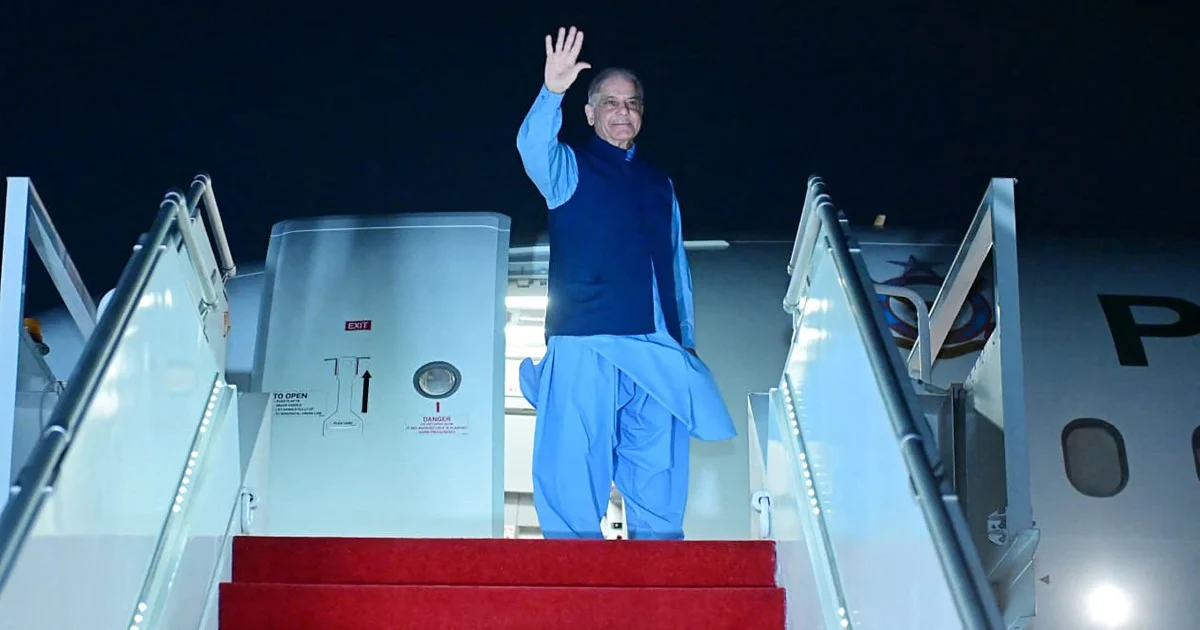
Pakistan's Prime Minister Shehbaz Sharif touched down in Switzerland on Sunday morning to take part in technical-level discussions between Washington and Tehran, signalling Islamabad's active engagement in attempts to defuse escalating tensions in the Middle East. The high-profile visit underscores Pakistan's traditional diplomatic role as an intermediary in regional disputes, a position it has cultivated for decades amid complex relationships with both the United States and Iran.
The technical talks represent a significant diplomatic initiative aimed at creating pathways for dialogue between two powers whose relationship has been marked by decades of mistrust and military confrontation. By hosting these discussions, Switzerland—a neutral nation with long-standing diplomatic infrastructure—provides the kind of trusted, insulated environment necessary for delicate negotiations between adversarial parties. Pakistan's participation in this process reflects Islamabad's investment in regional stability, particularly as instability in the Middle East carries direct implications for Pakistan's own security and economic interests.
The involvement of Pakistani leadership in the mediation effort carries symbolic weight, demonstrating that Islamabad views itself as a constructive stakeholder in broader Middle Eastern affairs. Pakistan's historical relationships with multiple regional and international powers position it uniquely to shuttle information, build confidence, and help identify common ground between parties. This diplomatic positioning has become increasingly important as tensions in the Middle East threaten to destabilise global energy markets and create security challenges that ripple across South Asia.
For Malaysia and Southeast Asia, any de-escalation in US-Iran hostilities carries tangible benefits. The Middle East conflict has direct ramifications for regional shipping lanes and energy prices, particularly affecting the Strait of Hormuz, through which enormous quantities of global oil and natural gas transit daily. Disruptions to this critical waterway during periods of heightened US-Iran tensions immediately increase energy costs for import-dependent Southeast Asian economies, including Malaysia.
Pakistan's role as a mediator gains additional credibility from its geographic position as a bridge between South Asia and the Middle East, and its capacity to maintain working relationships across geopolitical divisions. Islamabad has invested considerable diplomatic capital in preventing regional escalation, aware that any widening conflict could trigger refugee flows, terrorism spillover, and economic disruption affecting its own population and stability.
The technical nature of the talks suggests both sides are moving beyond rhetorical posturing toward substantive discussions on specific mechanisms for de-escalation. Such talks often involve detailed discussions on military-to-military communications, verification protocols, sanctions relief frameworks, and confidence-building measures designed to reduce the risk of accidental or miscalculated conflict. Pakistan's presence lends credibility to the process and may facilitate behind-the-scenes communications between the main parties.
From a Southeast Asian perspective, Pakistan's diplomatic activism in the Middle East demonstrates how regional players pursue peace in areas beyond their immediate borders. Malaysia and other ASEAN nations facing their own territorial disputes and security challenges can observe how middle-power states like Pakistan navigate multilateral diplomacy without compromising their own interests. The Swiss location and technical focus suggest serious negotiations rather than symbolic gestures, offering hope for tangible progress in one of the world's most volatile regions.
Prime Minister Shehbaz Sharif's departure from Pakistan came at a time when domestic economic challenges demand his attention, indicating the seriousness with which Islamabad views its role in these negotiations. Pakistan's own economy remains vulnerable to external shocks, particularly those affecting energy supplies and global financial markets, making regional stability directly relevant to national prosperity. By engaging actively in conflict resolution, Islamabad positions itself as a responsible international actor while simultaneously working toward outcomes beneficial to its own strategic interests.
The timing of these talks reflects broader international efforts to prevent further escalation in the Middle East. Multiple nations and international organizations have expressed concern about the humanitarian and economic costs of sustained conflict. The involvement of a country with Pakistan's diplomatic reach suggests the international community recognises that traditional great-power mediation requires supplementation by credible regional voices capable of maintaining relationships across factional lines.
Looking forward, the outcomes of these technical discussions could establish frameworks for sustained dialogue or serve as confidence-building steps toward higher-level negotiations. Success would require both sides to move beyond maximalist positions and accept incremental progress toward de-escalation. Pakistan's participation provides witness and implicit validation to whatever agreements emerge, lending them legitimacy within the broader Muslim world and among non-aligned nations.
For Malaysia and the broader Southeast Asian region, a successful de-escalation in US-Iran relations would ease pressure on global energy markets, stabilise shipping costs, and create conditions for more predictable international relations. Pakistan's diplomatic engagement demonstrates that middle powers retain significant influence in shaping regional outcomes, even when lacking the military capabilities of larger powers. The success or failure of these Swiss talks will offer important lessons for how countries manage high-stakes mediation efforts in an increasingly multipolar world.

