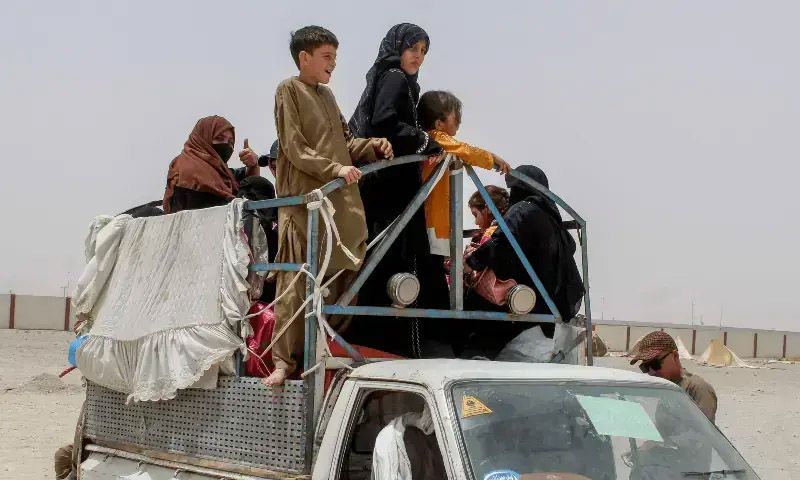
Pakistan's domestic authorities have executed one of the region's most extensive immigration enforcement operations in recent years, deporting roughly 2.59 million Afghans without valid documentation since the start of 2023. The scale of this migration management effort underscores the mounting pressure faced by the Pakistani government in managing an influx of undocumented residents, particularly from neighbouring Afghanistan, whilst attempting to regulate its own labour market and security landscape.
The Punjab province, Pakistan's most populous region and economic engine, has emerged as the focal point of this deportation drive. Provincial authorities have processed a minimum of 138,342 Afghan nationals through their 36 active detention facilities, completing the administrative paperwork necessary for expulsion and arranging their passage back across the border. This represents a significant administrative undertaking, requiring coordination between multiple government agencies to manage the logistical complexities of processing, housing, and transporting such substantial numbers of people.
Officials from Pakistan's home department have articulated the legal framework underpinning these operations with unambiguous clarity. The stated position emphasises that residency in Pakistan requires valid documentation; individuals lacking proper visas are considered to be in violation of immigration law and therefore subject to mandatory deportation. This policy represents a hardline approach to immigration enforcement that prioritises legal status above other considerations, reflecting broader concerns about border security and irregular migration patterns in the region.
The operational mechanics of the deportation scheme reveal the systematic nature of Pakistan's enforcement response. Government authorities have conducted comprehensive surveys and targeted examinations in commercial zones and residential neighbourhoods, identifying undocumented Afghan residents and subjecting them to arrest and detention. Once apprehended, detainees are transferred to holding centres where they undergo registration processes, receive accommodation, and are prepared for expulsion through the Torkham border crossing, which serves as a primary transit point between the two nations.
The detention infrastructure supporting this operation has expanded considerably to accommodate the volume of individuals moving through the system. With 36 functional holding centres operating across Punjab alone, the province has constructed the apparatus necessary to process thousands of migrants simultaneously. At any given moment, these facilities house numerous detainees awaiting finalisation of their deportation procedures, representing a substantial commitment of resources to immigration enforcement.
The broader implications of this campaign extend beyond simple border management. For Afghanistan, the return of 2.59 million nationals represents a significant demographic and economic shock, particularly given the country's ongoing humanitarian challenges and economic fragility. Many returning Afghans may lack resources or social infrastructure to reintegrate successfully, potentially compounding existing vulnerabilities within Afghan society and straining the capacity of border communities to absorb such large population inflows.
Within Pakistan itself, the deportation drive reflects domestic political calculations surrounding employment, security, and resource allocation. Undocumented populations compete with Pakistani citizens for informal sector employment opportunities, whilst the government argues that uncontrolled immigration creates security risks. The intensive enforcement campaign signals to the domestic electorate that the authorities are taking decisive action on issues that resonate with voter concerns about employment competition and national security.
The government has deployed a public engagement component to augment its enforcement operations. Citizens are actively encouraged to report suspected undocumented Afghan residents through an emergency hotline designated as 15, creating a crowdsourced surveillance mechanism to identify targets for deportation. The authorities have simultaneously offered reassurance that informants' identities will remain confidential, attempting to overcome potential hesitation among the public to participate in reporting neighbours or colleagues.
This immigration enforcement strategy must be understood within the context of Pakistan-Afghanistan bilateral relations, which remain complex and multifaceted. Whilst Pakistan has hosted Afghan populations for decades—particularly since the Soviet invasion and subsequent conflicts—recent years have witnessed escalating tension around migration management. Pakistan's decision to intensify deportations signals a shift toward stricter immigration control, potentially reflecting frustration with Afghanistan's inability to manage its own displaced populations and absorb returnees.
The scale of Pakistan's operation raises questions about the coordination mechanisms with Afghan authorities and international organisations focused on migration and humanitarian affairs. Large-scale repatriation movements require careful planning to prevent humanitarian complications, including ensuring basic provisions for returnees and facilitating their reintegration into Afghan communities. The extent to which Pakistan coordinates such logistics with international partners remains unclear from available information.
For Malaysian observers, Pakistan's experience offers relevant insights into the challenges confronting nations hosting significant migrant populations. Southeast Asia's own irregular migration dynamics—encompassing Rohingya populations, migrant workers, and cross-border movement—parallel dynamics unfolding in South Asia. Pakistan's enforcement-focused approach contrasts with varied strategies employed across Southeast Asia, where considerations of humanitarian obligation, economic utility, and diplomatic relations create more nuanced policy frameworks.
The sustainability of Pakistan's aggressive enforcement campaign remains uncertain. Maintaining such intensive operations requires consistent political commitment and substantial resource allocation over extended periods. The humanitarian dimensions of managing mass deportations, particularly during adverse weather conditions or border security volatility, present ongoing practical challenges that may complicate the government's implementation capacity.
Ultimately, Pakistan's deportation campaign represents a critical moment in how South Asian nations manage irregular migration. The initiative prioritises legal compliance and formal documentation requirements over other considerations, establishing a precedent that may influence neighbouring countries' immigration policies and shape future bilateral arrangements regarding population movements across the region's porous borders.

