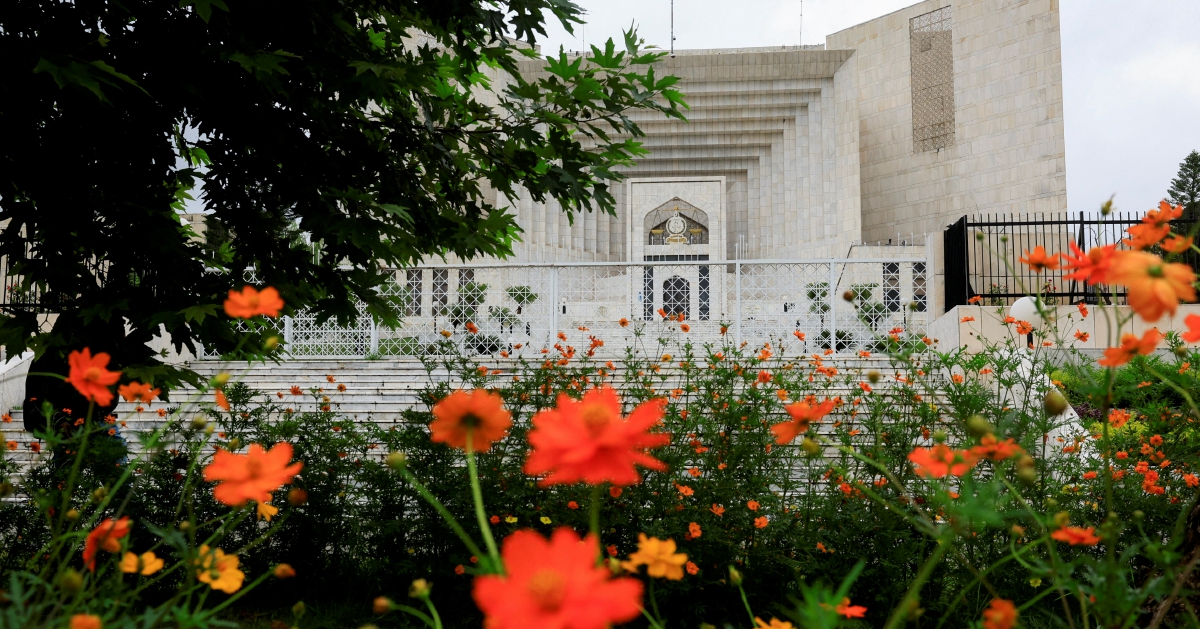
Imran Khan, the dominant political figure across Pakistan and its erstwhile prime minister, has been transported to a medical facility for diagnostic evaluations following a directive from Pakistan's highest court. The relocation took place after his political faction confirmed the development in statements released on Friday morning. This move represents a significant intervention by the judiciary into Khan's detention circumstances and underscores the continued institutional tensions surrounding the former leader's imprisonment.
Khan's transfer came at a crucial juncture in Pakistan's turbulent political landscape, where the former cricket star-turned-politician has maintained substantial grassroots support despite his legal entanglements. The Supreme Court's order to facilitate his medical assessment appears to reflect judicial concerns regarding his health status while in custody. Such interventions by Pakistan's apex court underscore the pronounced role the judiciary has assumed in mediating high-profile cases involving prominent political figures, a pattern that has become increasingly characteristic of Pakistan's legal system in recent years.
The former prime minister's case has attracted considerable attention both domestically and internationally, given his status as one of South Asia's most recognisable political personalities. His detention has been connected to multiple legal charges, and his continued imprisonment remains contentious among his supporters, who view his prosecution as politically motivated. The Supreme Court's decision to order medical examinations suggests that questions about Khan's wellbeing during incarceration had reached sufficient prominence to warrant judicial intervention.
For Malaysian observers, Khan's situation illustrates the complexities that can arise when prominent political figures face legal proceedings in polarised environments. Pakistan's institutional dynamics, particularly the interplay between its political establishment, military structures, and judiciary, differ markedly from Southeast Asian contexts, yet they offer comparative insights into how democracies handle the detention of former leaders. Khan's case demonstrates that even populous democracies with established constitutional frameworks can experience significant contestation over the treatment of high-profile political prisoners.
The timing of this hospital transfer carries particular significance given Khan's persistent relevance to Pakistani politics. His party has maintained electoral viability and grassroots mobilisation capacity despite his incarceration, suggesting that his legal status directly intersects with electoral dynamics. The Supreme Court's intervention to ensure medical care could be perceived as acknowledgment of this political reality, or alternatively, as a procedurally appropriate response to humanitarian concerns independent of political considerations.
From a regional perspective, Khan's detention exemplifies broader governance challenges facing South Asian democracies, including questions about the appropriate balance between accountability mechanisms and political stability. The involvement of Pakistan's Supreme Court in ordering his medical assessment reflects how judicial institutions navigate politically sensitive cases involving former heads of government. For Malaysia and other ASEAN nations with comparable institutional structures, Khan's case offers cautionary lessons about the institutional pressures that can mount when senior political figures become ensnared in legal proceedings.
The medical evaluation itself carries potential implications for Khan's legal trajectory. Health assessments can influence sentencing decisions, affect imprisonment conditions, or inform potential amnesty or early release considerations. In Khan's case, the hospital transfer might provide documentation of his physical and mental state during incarceration, which could factor into subsequent legal proceedings or public discourse surrounding the propriety of his detention.
Khan's enduring popularity despite incarceration reflects the deep organisational networks and ideological commitments his movement has cultivated across Pakistan's electorate. His supporters have consistently organised demonstrations and mobilisation efforts, maintaining that his prosecution represents politically motivated persecution rather than legitimate law enforcement. The Supreme Court's decision to order his medical assessment occurred within this context of persistent public contestation regarding his legal status and treatment in custody.
The institutional mechanisms Pakistan has deployed in Khan's case—including Supreme Court interventions regarding detention conditions—differ from approaches adopted in other democracies. While some systems prioritise strict separation between political processes and judicial proceedings, Pakistan's experience demonstrates how courts can become drawn into the management of high-profile political cases, particularly when questions arise concerning prisoners' welfare or constitutional protections.
Looking forward, Khan's hospital examination may generate documentation that becomes relevant to multiple aspects of his ongoing legal situation. The findings could influence public discourse, affect his legal team's defence strategies, or provide grounds for procedural interventions by his supporters. Additionally, the Supreme Court's activism in ordering the assessment signals that Pakistan's judiciary views itself as responsible for safeguarding constitutional protections even for politically contested figures, a principle with broader implications for how Pakistan's legal system manages sensitive cases involving former state office holders.

