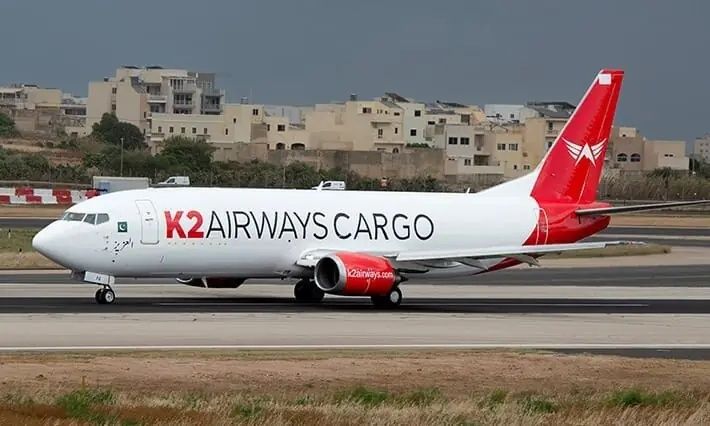
Pakistan mounted a comprehensive search and rescue operation on Wednesday following the disappearance of a K2 Airways Boeing 737-400 freighter aircraft in the Arabian Sea, with Prime Minister Shehbaz Sharif confirming that the five-member crew perished in the crash. The private cargo vessel vanished during its approach to Karachi International Airport after departing from Sharjah in the United Arab Emirates, marking another tragedy in Pakistan's troubled aviation safety record.
According to the Pakistan Airports Authority, the aircraft experienced critical difficulties late Tuesday evening while descending toward its destination approximately 155 nautical miles west of Karachi. Controllers observed the plane executing a rapid descent accompanied by sudden heading changes before radar contact was abruptly lost. The crew had previously reported navigational system malfunctions to air traffic control, providing early indication of the technical problems that would prove catastrophic.
Flightradar24, the Switzerland-based flight tracking service, released preliminary telemetry data revealing an alarming flight pattern in the aircraft's final moments. The data indicated the plane initially descended, then climbed briefly, before plummeting in a sudden and dramatic loss of altitude. This sequence suggested either a catastrophic system failure or the crew's unsuccessful attempts to recover from an emergency situation.
Prime Minister Sharif expressed profound sorrow over the incident and moved swiftly to mobilize state resources. He directed Pakistan's civil aviation authorities, navy, and air force to escalate search and recovery operations, emphasizing the importance of deploying all available assets to locate the wreckage. The government extended formal condolences to the families of the deceased crew members, acknowledging the profound loss.
Naval vessels and merchant ships operating in the Arabian Sea were deployed alongside military aircraft to comb the waters west of Karachi. The search zone extended across one of the world's busiest shipping lanes, complicating efforts to locate the wreckage amid significant maritime traffic. International maritime coordination protocols were activated to ensure that commercial vessels in the vicinity remained alert for any debris or signs of the missing aircraft.
K2 Airways, the operator of the lost aircraft, is a private Pakistani freight carrier that provides both domestic and international cargo services. The Boeing 737-400, manufactured in 1999, had undergone significant modifications since its initial production. The airframe originally served as a passenger aircraft for Russia's Aeroflot and Indonesia's Garuda Indonesia before being converted to cargo configuration in 2012, extending its operational life in the freight transport sector.
The disappearance represents the latest in a series of aviation incidents that have plagued Pakistan's aerospace sector. The nation has experienced multiple fatal accidents over the past decade, several occurring within or near Karachi airspace, resulting in significant loss of life. These recurring incidents have raised persistent questions about maintenance standards, crew training protocols, and regulatory oversight within Pakistan's aviation infrastructure.
The international aviation community has taken note of Pakistan's safety challenges. The European Union imposed a four-year ban on Pakistan International Airlines, the nation's flagship carrier, citing deficiencies in safety management and licensing compliance. Although authorities lifted this restriction in 2024 following improvements in regulatory framework and operational procedures, the broader industry continues facing scrutiny regarding adherence to international aviation standards and best practices.
For Malaysian and Southeast Asian aviation stakeholders, this incident underscores the critical importance of rigorous safety protocols and preventive maintenance across the region's growing cargo operations. As regional air freight demand expands significantly, ensuring that all operators—particularly private carriers—maintain stringent safety standards becomes increasingly vital. The K2 Airways tragedy serves as a cautionary reminder that vintage aircraft, regardless of modification history, require exemplary operational discipline and comprehensive technical oversight.
Investigators will likely focus on the navigational system issues reported by the crew and the sequence of events leading to the aircraft's descent. Pakistani aviation authorities, working with international accident investigation specialists, face the urgent task of recovering the flight data recorders and cockpit voice recorders from the Arabian Sea. These devices, commonly known as black boxes, typically survive high-impact crashes and will provide crucial insights into the technical failures and crew actions immediately preceding impact.
The search operation's success will depend substantially on environmental factors including sea currents, water depth, and visibility conditions in the Arabian Sea. Recovery operations in this region are technically demanding, requiring specialized deep-water search equipment and experienced personnel. Malaysia's own maritime search and rescue capabilities, refined through previous incidents, may offer valuable expertise if requested through regional cooperation mechanisms.
Beyond the immediate tragedy, this incident will likely prompt reviews of Pakistan's air cargo regulatory framework and maintenance certification processes. Regional civil aviation authorities across Southeast Asia may also reassess oversight protocols for foreign operators and vintage aircraft modifications. The tragedy reinforces the necessity for transparent accident investigation procedures and industry-wide implementation of investigation findings to prevent similar occurrences.

