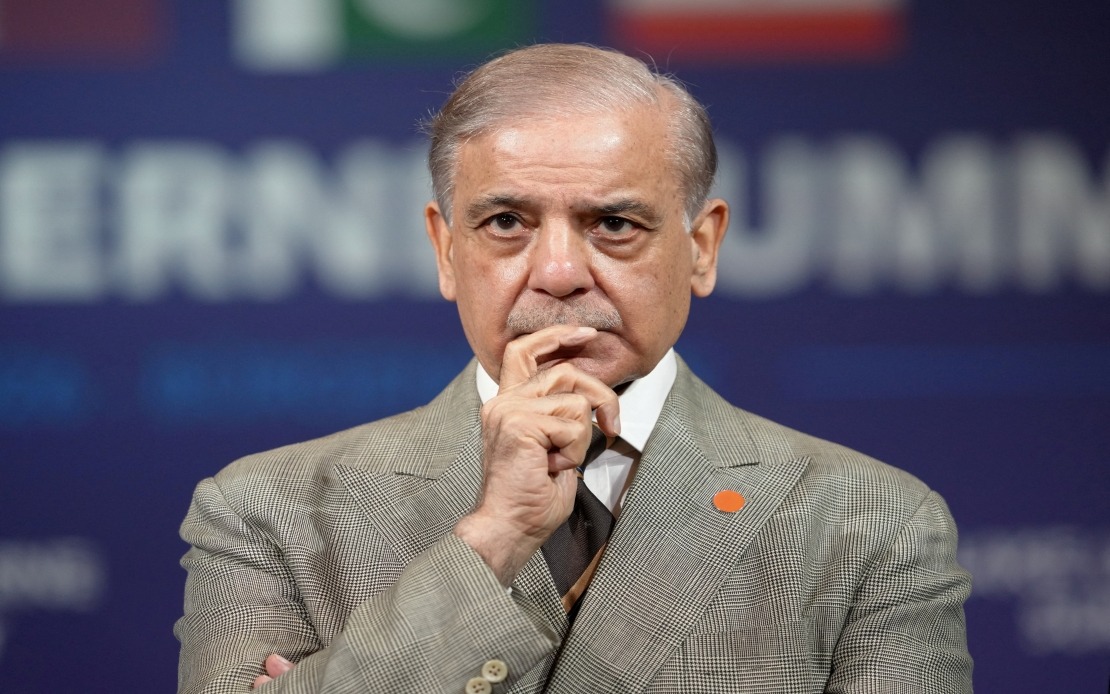
Prime Minister Shehbaz Sharif's visit to Istanbul has resulted in a significant commitment from Pakistan and Turkey to deepen their economic relationship, with both nations setting ambitious targets for trade expansion and sectoral collaboration. During discussions with Turkish President Recep Tayyip Erdogan on Saturday, the two countries reaffirmed their intention to reach US$5 billion in annual bilateral trade, signalling a substantial pivot toward closer commercial integration at a time when both nations face economic pressures requiring strategic regional partnerships.
The visit underscored Turkey's importance as an economic partner for Pakistan beyond traditional diplomatic ties. Shehbaz addressed a dedicated business conference bringing together major Turkish corporations, seeking to translate political goodwill into concrete investment opportunities. This two-pronged approach—high-level government engagement coupled with direct private sector involvement—reflects both countries' recognition that sustained economic growth requires sustained business momentum.
A particularly noteworthy initiative emerging from the talks is the proposed Pakistan-Turkey digital corridor, discussed during Shehbaz's meeting with Turkcell chief executive officer Ali Taha Koc. This initiative aims to facilitate secure data flows across borders and integrate digital infrastructure more comprehensively, positioning both nations to benefit from the digital economy's expansion. For Malaysia and the broader Southeast Asian region, such bilateral digital infrastructure projects are increasingly critical as nations compete for technology investment and digital talent, making this development relevant to regional competitiveness dynamics.
Energy cooperation featured prominently in the discussions, reflecting both countries' ongoing efforts to secure reliable power supplies and diversify their energy portfolios. Pakistan's chronic energy shortages and Turkey's strategic position between energy producers and consumers create natural complementarities. Similarly, cooperation in critical minerals extraction and processing aligns with global supply chain shifts, particularly as Western nations seek alternatives to Chinese mineral processing dominance. These areas offer scope for both countries to capture value in manufacturing and industrial development.
The composition of Pakistan's delegation demonstrated the breadth of sectoral ambitions. Deputy Prime Minister and Foreign Minister Ishaq Dar attended alongside ministers overseeing maritime affairs, power generation, petroleum resources, privatisation, information technology, and telecommunications. This comprehensive representation signalled that Pakistan views the Turkey relationship as spanning multiple economic pillars rather than concentrating on isolated sectors.
Turkish companies present at the conference included major industrial players like Koc Holding, one of Turkey's largest conglomerates, alongside Arcelik in home appliances, Aygaz in gas distribution, and Demir Export. The participation of these established firms suggests serious commercial intent rather than exploratory discussions. Koc Holding's presence is particularly significant, as the conglomerate's diversified interests in energy, manufacturing, and infrastructure position it to pursue substantial investments across Pakistan's priority sectors.
The emphasis on manufacturing and industrial investment reflects both nations' strategic interests in moving up the value chain. Pakistan, with its large labour force and emerging manufacturing capabilities, seeks to attract foreign direct investment that generates employment and exports. Turkey, having developed manufacturing expertise and export networks, can serve as a technical and financial partner in this transformation. Such cooperation could strengthen Pakistan's industrial base while providing Turkish companies access to South Asian markets.
From a geopolitical perspective, strengthening Pakistan-Turkey ties carries broader implications for the region. Both nations maintain extensive engagement with Central Asia, the Middle East, and increasingly with Southeast Asia. Enhanced economic cooperation between them could facilitate trilateral arrangements with other countries, creating new trade routes and investment corridors. For Malaysian policymakers tracking regional economic dynamics, Pakistan-Turkey collaboration represents one among several recalibrations of South and West Asian partnerships that may reshape trade flows.
The transportation sector, mentioned explicitly in the joint commitment, warrants particular attention given Pakistan's geographic position along potential Belt and Road Initiative corridors and Turkey's role as a transit hub between Europe and Asia. Investment in port facilities, rail networks, and road infrastructure could unlock significant economic potential for both nations while creating opportunities for Malaysian companies operating in regional logistics and infrastructure.
The timing of this visit also reflects Pakistan's broader efforts to stabilise its economy following periods of macroeconomic turbulence. Attracting foreign direct investment from established Turkish companies could provide crucial capital inflows and technical expertise. For Turkey, the engagement represents efforts to expand its economic footprint in South Asia at a time when regional powers are competing for influence through economic partnerships.
Privatisation featured among the discussion topics, suggesting Pakistan may be seeking Turkish expertise and investment in assets being transferred to private management. Given Turkey's experience with privatisation across infrastructure and industrial sectors, this cooperation could accelerate Pakistan's reform agenda while providing Turkish investors with substantial opportunities.
The digital connectivity emphasis reflects a global trend where nations increasingly view digital infrastructure as foundational to economic competitiveness. A Pakistan-Turkey digital corridor could serve as a prototype for broader regional digital integration initiatives, potentially creating models that other South and Southeast Asian nations could emulate. For Malaysian technology and telecommunications companies, understanding these emerging regional digital frameworks is essential for identifying partnership and investment opportunities.
Moving forward, the challenge for both governments will be translating announced ambitions into executed projects. The US$5 billion trade target, while substantial, requires sustained policy support, infrastructure investment, and regulatory harmonisation. How effectively Pakistan and Turkey implement their pledges will signal to other regional actors the credibility of their partnership framework and potentially encourage comparable initiatives elsewhere in the region.

