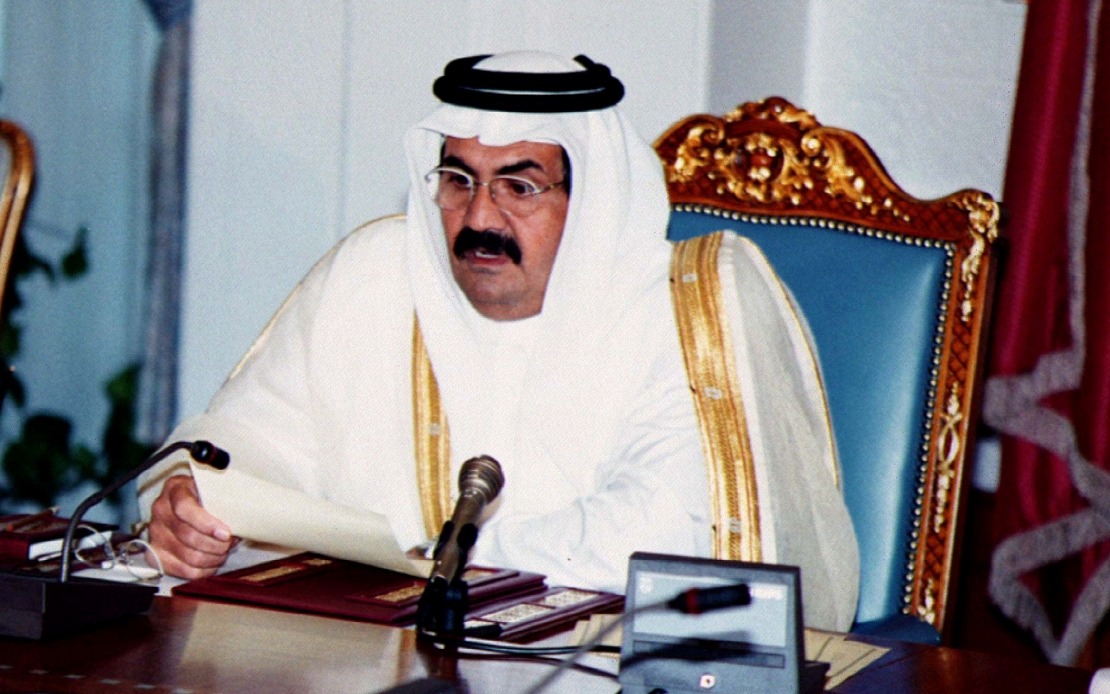
Pakistan's Prime Minister Shehbaz Sharif and Maldives President Mohamed Muizzu have travelled to Qatar to pay their respects following the death of former Emir Sheikh Hamad Bin Khalifa Al Thani, marking a significant diplomatic gesture amid regional mourning. The senior delegations arrived on Monday to offer condolences to current Emir Sheikh Tamim Bin Hamad Al Thani and members of the royal household. Sheikh Hamad passed away on Sunday at the age of 74, prompting an outpouring of tributes from world leaders and a wave of ceremonial acknowledgements across multiple nations.
Shehbaz Sharif's delegation from Pakistan included his brother and former Prime Minister Nawaz Sharif, alongside Deputy Prime Minister and Foreign Minister Senator Ishaq Dar and Information Minister Attaullah Tarar. The Pakistani contingent was expected to spend just one day in Doha, underscoring the urgency and significance of the visit. This high-level representation reflects the importance both Pakistan and the Maldives place on their bilateral relationships with Qatar, one of the Gulf region's most influential and wealthy states.
The former Qatari leader's tenure fundamentally reshaped the nation's position in global affairs. Sheikh Hamad ruled Qatar for eighteen years, from 1995 until his voluntary abdication in 2013, a period that witnessed extraordinary economic expansion and rising geopolitical prominence. Under his governance, Qatar transformed itself from a relatively minor Gulf producer into a major financial and diplomatic powerhouse, leveraging natural gas wealth to establish itself as a key player in Middle Eastern affairs.
Leaders across the Islamic world and beyond have highlighted Sheikh Hamad's transformative legacy, particularly his role in modernising Qatar's infrastructure and institutions. Bangladesh Prime Minister Sheikh Hasina, in her formal message to the current Emir, specifically referenced the late leader's contributions to regional peace, economic development, educational advancement, and international cooperation. These words encapsulate the broad consensus among regional observers that Sheikh Hamad's three decades of involvement in Qatar's leadership, though he formally ruled for only eighteen years, left an indelible mark on the nation's trajectory.
Maldives President Mohamed Muizzu's presence at the funeral rites reflects the Indian Ocean island nation's strong ties with Qatar, a relationship built on trade, investment, and strategic cooperation. Muizzu's commitment to attending personally demonstrates how significant regional leaders view their connections to the Gulf states. For smaller nations like the Maldives, maintaining robust relationships with wealthy Gulf monarchies carries particular weight, given the economic and security dimensions of such partnerships.
The passing of Sheikh Hamad resonates throughout South Asia in ways that extend beyond formal diplomatic protocol. Pakistan and India both declared Monday as a national day of mourning, a rare unified gesture that underscores the late emir's standing in South Asian affairs. This coordinated response, while perhaps unexpected given the fraught bilateral relationship between Islamabad and New Delhi, speaks to Sheikh Hamad's broader influence and the respect he commanded across diverse political contexts.
Shehbaz Sharif's delegation composition carries additional significance within Pakistan's domestic political landscape. The inclusion of Nawaz Sharif, currently serving as opposition leader despite his former presidency, alongside sitting government ministers, illustrates how matters of state and international relations sometimes transcend partisan divisions. Such moments of national consensus, though infrequent in Pakistani politics, carry weight when they occur and often signal the genuine importance of the issue at hand.
Sheikh Hamad's economic legacy particularly resonates with Southeast Asian and South Asian governments seeking models of rapid development. His vision transformed Qatar from an economy dependent primarily on oil and pearls into a diversified powerhouse with sovereign wealth funds, a major port facility, and significant investments worldwide. The Qatar Investment Authority, established during his era, has become one of the world's most significant institutional investors, with holdings across multiple continents including substantial interests in Asian markets.
The funeral proceedings also highlight Qatar's contemporary role as a diplomatic hub and mediator in regional conflicts. Sheikh Hamad established many of the institutional frameworks that enable Qatar's current mediation activities, from its renowned Al Jazeera network to its hosting of international forums. This diplomatic infrastructure, largely built during his tenure, continues to shape how regional powers engage with one another.
For Malaysia and other Southeast Asian nations observing these developments, the funeral of Sheikh Hamad offers perspective on the deep historical connections linking the Islamic world's various regions. Qatar's influence extends across Asia through investment, education partnerships, and religious institutions. The attendance of high-level delegations from Pakistan and the Maldives reinforces the interconnected nature of modern Islamic geopolitics, where developments in the Gulf directly impact relationships and cooperation across South Asia and beyond.
The succession from Sheikh Hamad to Sheikh Tamim represents a transition from the founding architect of modern Qatar to the current custodian of his vision. While Sheikh Hamad stepped back from executive authority in 2013, he remained an influential figure within Qatar's royal structure. His passing thus marks a symbolic closing of an era, even as the institutional legacies he created continue to shape regional dynamics. The international mourning period reflects recognition that the late emir's contributions extended well beyond Qatar's borders, touching the interests and aspirations of nations across the Middle East, South Asia, and beyond.

