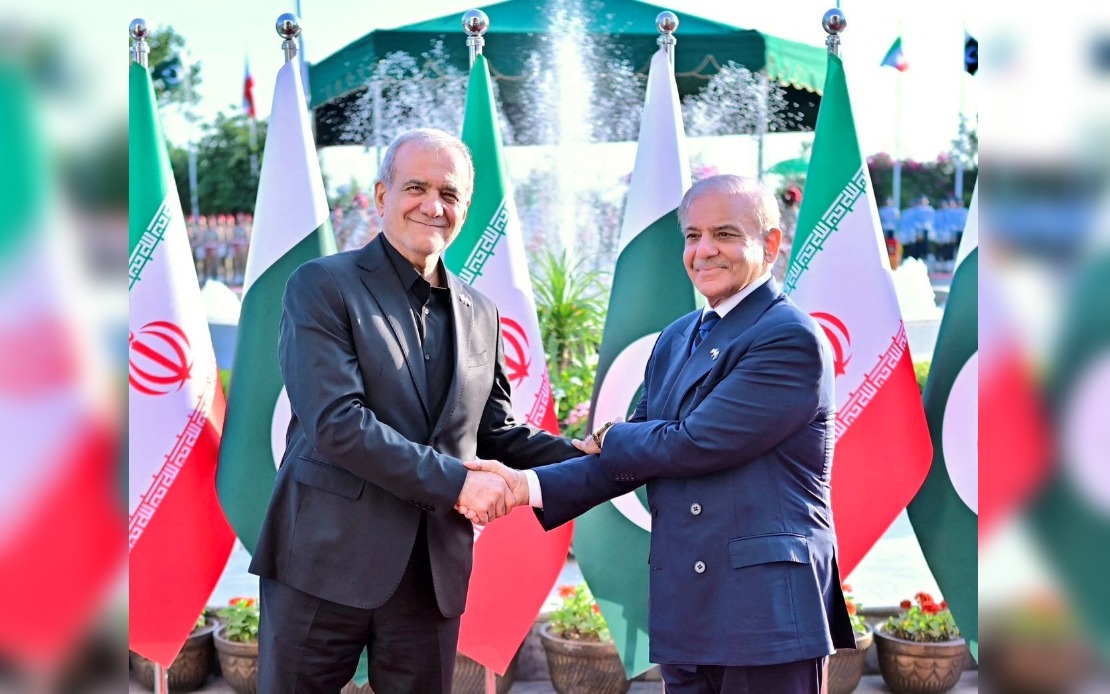
Pakistan and Iran have signalled their intention to resurrect the Islamabad-Tehran-Istanbul freight train corridor, a vital artery for regional commerce that has lain dormant for over two years. The initiative emerged from discussions between Pakistan's Railway Minister Muhammad Hanif Abbasi and Iranian Interior Minister Eskandar Momeni during the latter's visit to Islamabad on Wednesday, reflecting renewed commitment from both nations to unlock cross-border economic potential at a time when supply chain resilience and alternative trade routes have become increasingly strategic priorities.
The ITI corridor represents a transformative opportunity for South Asia and the wider region. When operational, it would establish a continuous freight link spanning Pakistan, Iran, and Turkey while simultaneously serving as a gateway to Central Asian markets, Russian territories, and European destinations. For Malaysia and other Southeast Asian economies, the restoration of this route carries indirect but meaningful implications, as it would diversify global logistics pathways and potentially reduce shipping congestion on traditional maritime routes through the Strait of Malacca and beyond.
The corridor's history tells a story of promise interrupted. The service initially operated until its discontinuation over a decade ago, only to be briefly resurrected in December 2021 after sustained diplomatic and infrastructural groundwork. However, persistent logistical hurdles and operational complications forced a suspension in 2022, exposing the vulnerability of cross-border rail projects to technical challenges and coordination failures between nations. The current revival attempt must therefore contend with these precedents, requiring robust frameworks and realistic timelines to avoid repeating past setbacks.
Both governments acknowledged during their deliberations that the corridor's restoration would meaningfully amplify bilateral and trilateral commerce. A Pakistani government statement emphasised that reconnecting the ITI pathway would substantially elevate trade volumes among the three nations whilst simultaneously strengthening broader regional integration. This framing reflects an understanding that in an era of shifting geopolitical alignments and economic interdependencies, infrastructure connectivity has become inseparable from political influence and commercial advantage.
Pakistan's commitment to the initiative is evident in its substantial railway modernisation agenda. The nation is undertaking extensive upgrades to its Main Line-3, the critical rail corridor traversing Sindh and Balochistan provinces and functioning as the primary infrastructure link with Iran. This upgrade project is slated to commence within the current fiscal year and reach completion by December 2029, according to Abbasi. The multi-year investment underscores Pakistan's recognition that existing infrastructure deficiencies have constrained the viability of cross-border freight movements and that genuine revival requires not merely diplomatic agreement but physical infrastructure enhancement.
Iran, for its part, is advancing complementary modernisation efforts on its side of the frontier. Momeni indicated that Iran anticipates completing modernisation of the Zahedan–Mirjaveh railway line within approximately one month, signalling accelerated progress on Iranian infrastructure. However, he simultaneously pressed Pakistan to expedite construction of the standard-gauge rail line connecting Mirjaveh to Taftan in Balochistan, emphasising that seamless cross-border operations depend on coordinated development rather than unilateral action by either party. This choreography of bilateral infrastructure projects reflects the interdependent nature of regional connectivity.
For Malaysian stakeholders, the implications extend beyond logistics. A functioning ITI corridor would rebalance regional trade patterns and supply chains. Businesses currently routing goods through conventional maritime pathways might gain access to speedier, cost-effective overland alternatives, particularly for trade destined to European and Central Asian markets. The corridor would also strengthen the competitive position of overland routes relative to maritime ones, potentially reshaping freight economics across the Indo-Pacific region.
The timing of this renewed initiative warrants scrutiny. Both Pakistan and Iran face international pressures and economic constraints that make regional trade cooperation increasingly attractive as a counterweight to external isolation. For Pakistan, restoring connectivity with Iran and Türkiye represents a diversification of economic partnerships beyond traditional South Asian frameworks. For Iran, the corridor offers a legitimate conduit for integrating into broader Eurasian trade networks whilst circumventing some international restrictions through formalised regional commerce.
However, formidable obstacles remain. The previous suspension revealed that diplomatic goodwill alone cannot overcome logistical complexity, customs procedures, security concerns, and the reality of maintaining expensive railway infrastructure across difficult terrain and international borders. Both nations must establish institutional mechanisms ensuring sustained coordination, transparent dispute resolution, and realistic expectations about operational timelines and costs. The December 2029 deadline for Pakistan's Main Line-3 completion suggests a five-year pathway before full corridor operationalisation, requiring patience and political continuity in both countries.
The broader strategic context cannot be ignored. The corridor exists within a landscape increasingly defined by alternative infrastructure megaprojects, including the Belt and Road Initiative and Central Asian connectivity schemes. The ITI service must prove competitive and reliable relative to these alternatives whilst simultaneously navigating geopolitical sensitivities involving multiple actors across South Asia, the Middle East, and beyond. Success would demonstrate that pragmatic regional cooperation on infrastructure can transcend political differences, potentially establishing precedents for other stalled connectivity initiatives across Asia.
For Malaysia's policy community and business sector, monitoring this corridor's development offers lessons in how regional connectivity projects navigate implementation challenges and political vicissitudes. The corridor's revival, should it prove durable, would also create new competitive dynamics in regional shipping and logistics that Malaysian ports and logistics providers must understand and adapt to. The initiative represents infrastructure ambition constrained by real-world implementation complexities, a tension that resonates across Asian connectivity projects generally.

