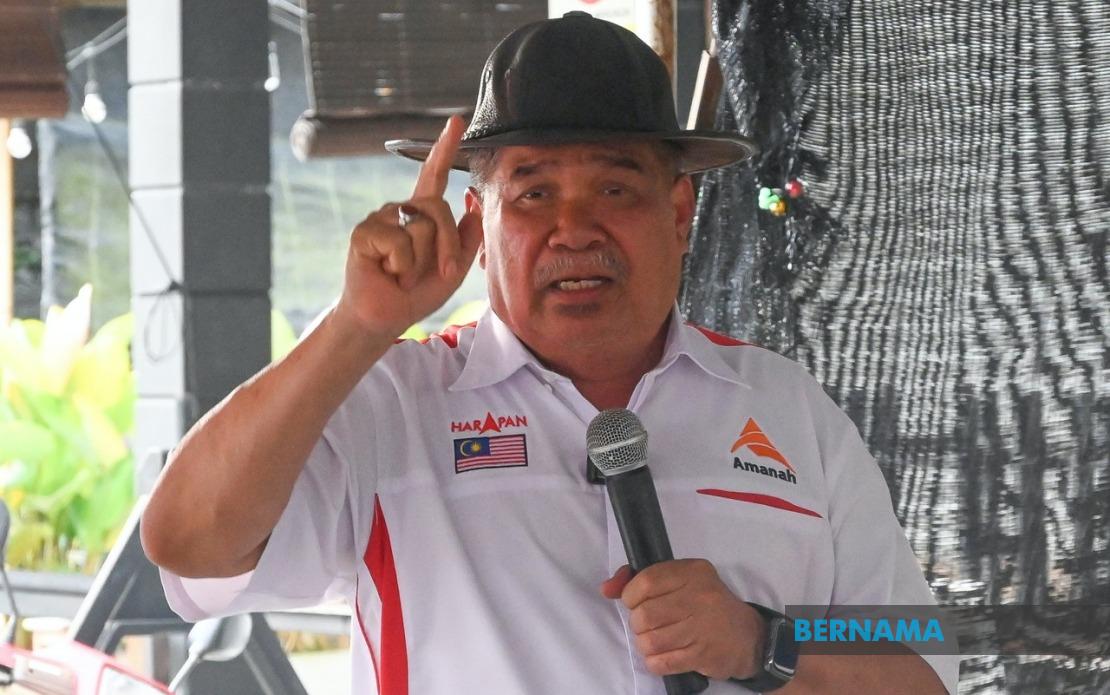
Pakatan Harapan's leadership has reaffirmed its commitment to placing the interests of ordinary Malaysians ahead of partisan concerns, even as opposition coalitions consolidate their political positions. Speaking through social media, Amanah President Datuk Seri Mohamad Sabu rejected suggestions that the ruling coalition should respond with panic to the growing cooperation between Barisan Nasional and Perikatan Nasional, instead advocating for a measured approach grounded in substantive governance and public service.
The Amanah chief's remarks come at a significant juncture for Malaysia's political landscape. The alignment between BN and PN represents a potentially formidable challenge to PH's parliamentary majority, compelling the coalition to recalibrate its political strategy. Rather than engaging in tit-for-tat manoeuvring, Mohamad suggested that PH should concentrate its energy on demonstrating tangible results in policy delivery and economic management—the traditional battleground where incumbent governments ultimately prove their legitimacy.
Central to Mohamad's argument is the assertion that Prime Minister Datuk Seri Anwar Ibrahim's administration is fulfilling its constitutional obligations toward Islam, the Malay-Muslim majority, and indigenous rights through concrete policy mechanisms rather than inflammatory rhetoric. This framing seeks to distinguish PH's approach from what it implicitly characterises as the fear-mongering tactics of competing political forces. By emphasising "real benefits" over symbolic gestures, the message attempts to reclaim the mantle of credible Malay-Muslim advocacy from rivals who, in PH's view, exploit anxiety rather than address substantive grievances.
A particularly noteworthy element of Mohamad's commentary is his pointed critique of political narratives that portray the Malay community as perpetually threatened or diminished. This represents a strategic pivot in how PH frames its relationship with Malaysia's largest demographic group. Rather than matching opposition parties' emphasis on existential risks and defence mechanisms, the coalition is positioning itself as the architect of Malay advancement through education, technological capability, and economic participation. The logic here is that a community preoccupied with survival cannot aspire to excellence, and that genuine empowerment requires confidence-building rather than threat-amplification.
As Minister of Agriculture and Food Security, Mohamad's portfolio encompasses several constituencies directly relevant to rural and semi-urban Malay voters. His comments can be read partly as a defence of his ministry's work and partly as a broader articulation of how PH intends to reconnect with communities that have shown receptivity to opposition messaging. The emphasis on building "self-reliance" and rejecting dependency on state handouts appears calibrated to counter a persistent criticism that PH has diluted support for Bumiputera programmes. Instead, Mohamad argues that true Bumiputera advancement lies in skills acquisition, technological mastery, and competitive capability—a narrative that aligns with broader economic modernisation goals.
The reference to constitutional protections for Islam, Malay Rulers, the Malay language, and Bumiputera rights serves to anchor PH's position within the established constitutional framework. This is strategically important because it allows the coalition to present itself as a guardian of the social contract while simultaneously arguing that the current government implements these safeguards more effectively and with greater integrity than alternatives. By embedding these protections within a narrative of national stability and international respect, PH attempts to reshape the conversation from zero-sum communal competition to collective national progress.
Mohamad's characterisation of the contemporary Malay community as increasingly mature and resistant to "endless political sentiment games" warrants careful analysis. This optimistic assessment may reflect genuine demographic shifts toward issue-based voting among younger and more educated segments of the Malay-Muslim population. However, it could also represent wishful thinking or an attempt to rhetorically preempt opposition claims of cultural victimhood. The veracity of this observation will become evident in electoral behaviour and grassroots sentiment in coming months.
For Southeast Asian observers, PH's strategy represents a broader repositioning of how centre-left and reformist coalitions in the region might compete against populist and identity-mobilising rivals. Rather than ceding communal and religious advocacy to opponents, PH is attempting to reclaim it through a development-focused and confidence-building framework. This approach hinges on delivering economic benefits, reducing corruption, and improving public service efficiency—the material foundations upon which electoral mandates ultimately rest.
The coalition's determination to avoid what Mohamad terms "political games based on sentiment and division" also reflects an acknowledgement that the Malaysian electorate, particularly its Malay-Muslim majority, has grown more sophisticated and selective in its political choices. The failed predictions about PH's collapse following the Sheraton Move and subsequent realignments suggest that Malaysian voters are less rigidly locked into communal voting blocs than conventional wisdom once assumed. PH's gamble is that sustained delivery on governance and economic issues will prove more durable than opposition coalitions' reliance on cultural and religious messaging.
Looking ahead, the government faces the dual challenge of maintaining internal coalition cohesion—the partnership between the Democratic Action Party, Parti Keadilan Rakyat, and Amanah encompasses distinct ideological orientations—while simultaneously projecting a unified message to voters. Mohamad's emphasis on constitutional protections and constitutional patriotism may serve partly to address concerns within PH's own ranks about whether secular and religious-nationalist elements can coexist without compromising core principles. By framing these protections as matters of stable governance rather than zero-sum competition, Mohamad offers a template for managing this internal tension.

