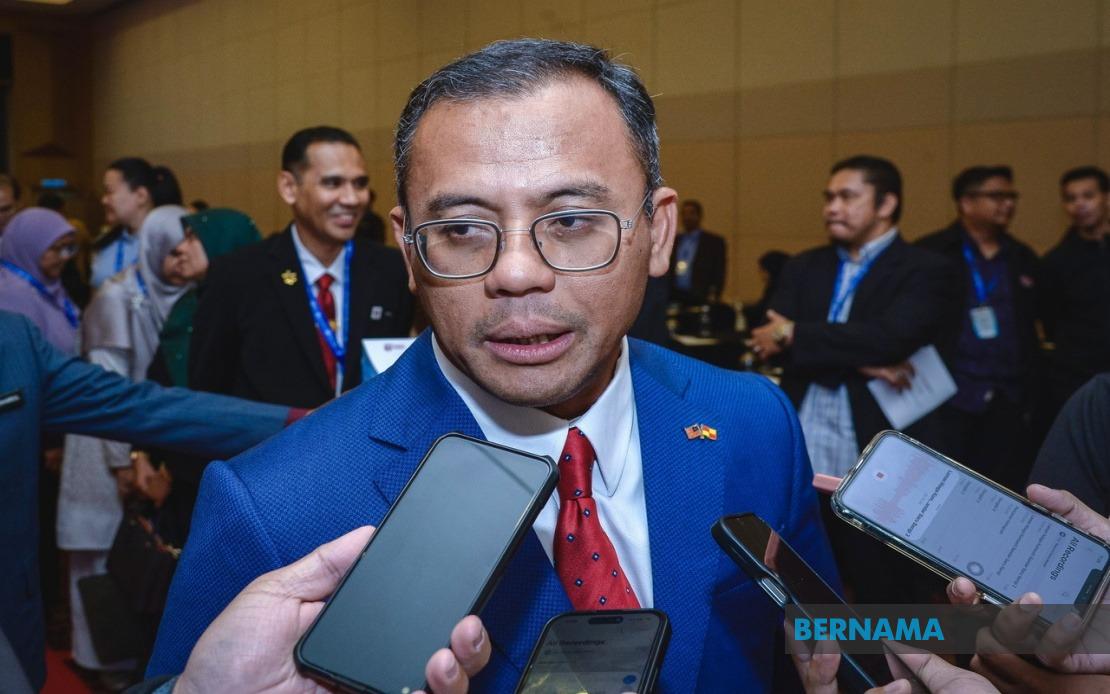
Pakatan Harapan has signalled its readiness to engage in political cooperation with other parties and coalitions, though with a clear caveat: any such arrangement must be grounded in the pursuit of political stability and the advancement of the people's interests. This position was articulated by Amirudin Shari, a senior figure within PH's Presidential Council and vice-president of PKR, during remarks made in Bangi on Saturday. The statement represents an important clarification of PH's tactical flexibility at a time when Malaysian politics is marked by considerable uncertainty about electoral timing and coalition realignments.
Amirudin's comments came in response to recent media speculation suggesting that Selangor's PH machinery might be receptive to working alongside Bersatu, particularly at the state level where such arrangements could yield electoral advantages. However, the Selangor Menteri Besar moved swiftly to distance the state-level party organisation from any concrete negotiations, emphasising that no formal discussions or binding agreements have materialised between Selangor PH and Bersatu. This distinction between theoretical openness and practical reality underscores the cautious approach that PH leadership intends to maintain as it navigates an increasingly fragmented political landscape.
The principle that PH leadership invokes—using stability and public welfare as the litmus test for cooperation—reflects a pragmatic understanding of Malaysian politics in the post-2018 era. Rather than closing the door entirely to parties outside its existing coalition with DAP and Amanah, PH appears to be keeping multiple options in view. This includes not only Bersatu and the broader Perikatan Nasional (PN) grouping but theoretically any other political entity willing to operate under the same foundational premises. Such flexibility suggests that PH recognises the volatile nature of current parliamentary mathematics and the value of preserving strategic optionality.
Yet Amirudin's remarks also make clear that any meaningful discussion about cooperation cannot proceed at the state or local level in isolation. Instead, such matters must be evaluated and decided at PH's central leadership tier, where a more comprehensive assessment of national political conditions can be conducted. This insistence on centralised decision-making serves multiple purposes: it prevents fragmented, localised agreements that might contradict broader strategy; it ensures consistency across different state governments under PH's stewardship; and it allows the coalition's top leadership to weigh cooperation proposals against other variables, such as the timing of the next general election and state-level electoral schedules.
The backdrop to these remarks includes the upcoming Melaka state election, which will test voter sentiment at a time when Perikatan Nasional holds sway in that particular state. Some political observers have suggested that PH-Bersatu cooperation at the state level could be mutually beneficial, allowing both coalitions to present stronger electoral prospects than they might achieve in isolation. However, the strategic calculus remains complex, and what might advantage PH in one state could prove disadvantageous in another or at the national level.
Amirudin's statement that "external ideas or views" regarding potential cooperation have been circulating reflects the reality of Malaysian politics, where political operatives and analysts are constantly testing possibilities and floating hypothetical scenarios. The Selangor Menteri Besar acknowledges that some of these ideas may stem from broader national political realignments or from calculations specific to state elections. By characterising such speculation as external rather than emanating from PH itself, he creates space for leadership to evaluate proposals without appearing either rigidly dogmatic or opportunistically unprincipled.
For Malaysian readers, the significance of this positioning lies in what it reveals about the coalition dynamics shaping national governance. PH emerged from the 2018 election as a transformative force but has since had to contend with the defection of key allies, internal tensions, and the reconstitution of rival blocs. By articulating clear principles—stability and people's welfare—that would guide any future cooperation, PH leadership is attempting to signal both adaptability and principled governance. This resonates with voters who grew weary of what they perceived as unprincipled political manoeuvring before 2018.
The emphasis on rational evaluation at the central level also speaks to PH's attempt to present itself as serious about institutional decision-making processes. Rather than allowing individual politicians or state-level organisations to make ad hoc deals, the coalition is insisting on deliberative review at the top tier. This approach may frustrate those seeking quick political resolution, but it reflects an understanding that durable coalitions require careful construction and cannot survive if built on rushed accommodations made without proper consideration of long-term implications.
Looking forward, Amirudin's comments position PH as neither rigidly isolated nor desperately willing to work with anyone. Instead, the coalition is presenting itself as pragmatic but principled, open to opportunities but guarded in execution. This middle path may become increasingly important as Malaysia heads toward electoral contests where no single bloc possesses commanding parliamentary majorities. The willingness to talk to potential partners, combined with insistence on clear foundational principles, gives PH negotiating room without surrendering its identity or political credibility. For the broader political system, such flexibility—tempered by principled gatekeeping—may prove essential to the kind of stable coalition governance that Malaysian voters have increasingly demanded.

