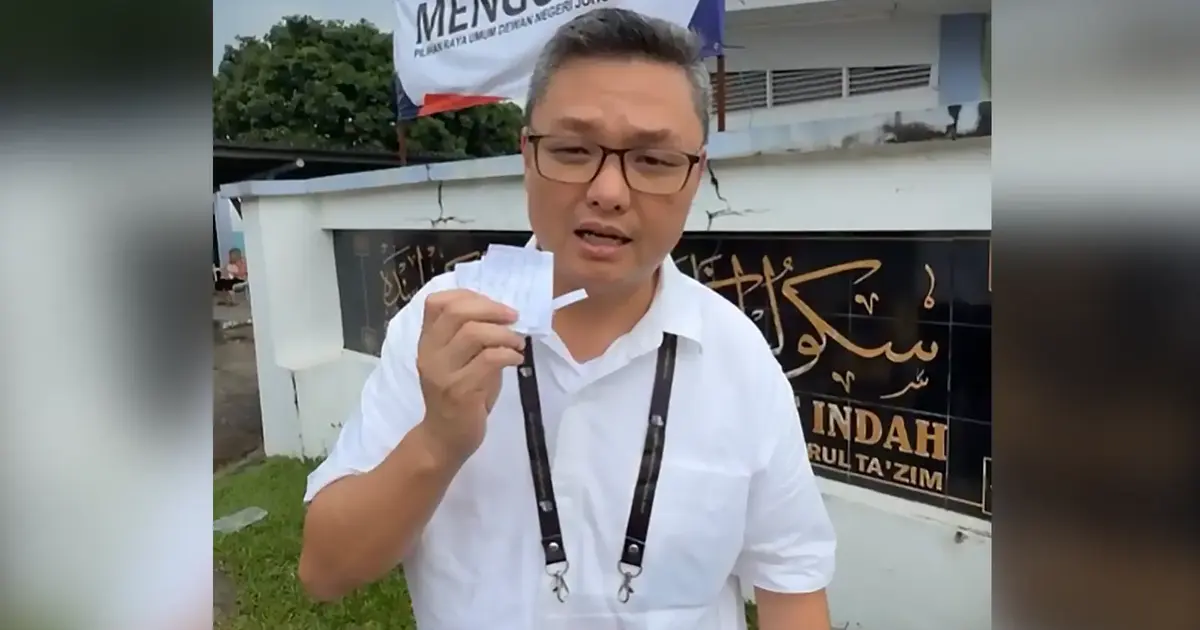
A Pakatan Harapan representative has escalated concerns about potential ballot secrecy violations by lodging a formal complaint with the Election Commission, alleging that a Barisan Nasional counting agent improperly documented which voters cast which ballots during the vote tabulation process. The accusation, made by Tee Boon Tsong, strikes at the heart of electoral integrity standards that have underpinned Malaysian democratic practice for decades. The alleged conduct, if substantiated, would represent a serious breach of the fundamental principle that voters' choices remain confidential and that election officials and party representatives do not track individual voting patterns.
Tee's complaint centres on the assertion that the counting agent employed handwritten notes to systematically record the voting behaviour of specific individuals, a practice that explicitly contravenes established election conduct guidelines. Such record-keeping during the counting phase creates a direct link between voter identity and ballot choice, undermining the confidentiality protections that form the bedrock of free and fair elections. The complaint underscores growing scrutiny of counting procedures and the roles played by party representatives who observe the tallying process at polling stations. In Malaysia's competitive political environment, where margins have tightened in recent electoral cycles, accusations of procedural irregularities during vote counting carry particular weight.
The implications of the alleged breach extend beyond a single incident at one polling station. If counting agents routinely or systematically record voter identities alongside their ballot choices, it could create opportunities for voter intimidation, coercion, or retaliation in subsequent elections. Political parties or individuals with access to such records might theoretically use the information to pressure voters, track community voting patterns, or influence family and workplace dynamics. These risks are especially acute in constituencies with tight-knit communities or hierarchical social structures where knowledge of voting preferences could affect personal relationships or economic interests. For Malaysian voters, particularly in rural and semi-rural areas, the protection of ballot secrecy is not merely procedural—it is essential to exercising genuine electoral freedom.
Tee has specifically called for the Election Commission to confiscate the handwritten notes as part of its investigation, a request that suggests the documentary evidence remains accessible and could potentially be preserved for forensic examination. The request implies that the notes may still exist with the counting agent, party officials, or other individuals present during the tallying process. Securing this evidence would be crucial for the Election Commission to verify the allegations and determine the scope of any violation. The request also raises questions about whether similar documentation might have occurred at other polling stations or in previous elections, suggesting the need for a broader investigation into counting procedures and agent conduct across multiple electoral contests.
The Election Commission's response to this complaint will carry significant implications for electoral credibility in Malaysia. A thorough investigation would need to examine not only whether the specific allegations are accurate, but also whether any guidelines or training for counting agents adequately address ballot secrecy requirements. The EC would need to determine whether the alleged conduct was isolated to one individual or reflective of broader practices, and whether any sanctions or procedural reforms are necessary to prevent recurrence. The transparency and rigour of the investigation itself will influence public confidence in the election administration system and in the party representation mechanisms that operate within it.
This complaint arrives amid broader international and domestic focus on electoral integrity in Southeast Asia. Malaysia's election system has generally been regarded as more structured and transparent than those in some neighbouring countries, yet periodic allegations of irregularities persist. Each formal complaint and subsequent investigation contributes to a cumulative record of how the system responds to credible concerns. For Malaysian voters and international observers, the manner in which such allegations are handled—whether with seriousness, urgency, and impartiality—speaks to the health of democratic institutions. The complaint also reflects the heightened attention that both ruling and opposition parties now devote to counting procedures, signalling that electoral competition increasingly extends into the technical and procedural dimensions of vote tabulation.
The role of counting agents from political parties represents a delicate balance in Malaysian elections. These observers serve an important function in allowing parties to monitor fairness and ensure their interests are protected, yet their presence also creates potential for misconduct if conduct standards are insufficiently clear or enforced. The alleged behaviour by the BN counting agent exemplifies the tension between legitimate party representation and the need to maintain electoral integrity safeguards. Clear, unambiguous guidelines addressing what information counting agents may record—and explicit prohibitions on documenting voter identities in relation to ballot choices—would help prevent similar situations. Training and accountability mechanisms for counting agents remain areas where the Election Commission could strengthen procedural rigour.
The complaint's significance also lies in what it suggests about inter-party confidence in electoral administration. When one major coalition alleges that agents from another are engaging in potentially systematic ballot secrecy violations, it indicates a breakdown in the presumption that all participants will adhere to established norms. Such allegations, even when ultimately unproven, contribute to public scepticism about election fairness and can influence voter turnout and enthusiasm in subsequent contests. The Election Commission's handling of this matter will therefore have consequences extending well beyond the specific incident, affecting the broader political climate and citizens' faith in democratic processes.
Moving forward, the Election Commission faces an opportunity to use this complaint as a catalyst for strengthening electoral procedures. Regardless of whether the specific allegations are upheld, the underlying issue—how to prevent the documentation of voter identity-ballot linkages—deserves systematic attention. This might involve revised guidelines for counting agents, new training protocols, physical separation of counting processes to prevent individual voter tracking, or technological solutions that record vote totals without reference to specific voters. International best practices from other democracies offer models for how vote counting can be observed by party representatives while maintaining absolute ballot secrecy. Malaysian election officials can draw on this experience to refine procedures and reinforce public confidence in the integrity of the democratic process.

