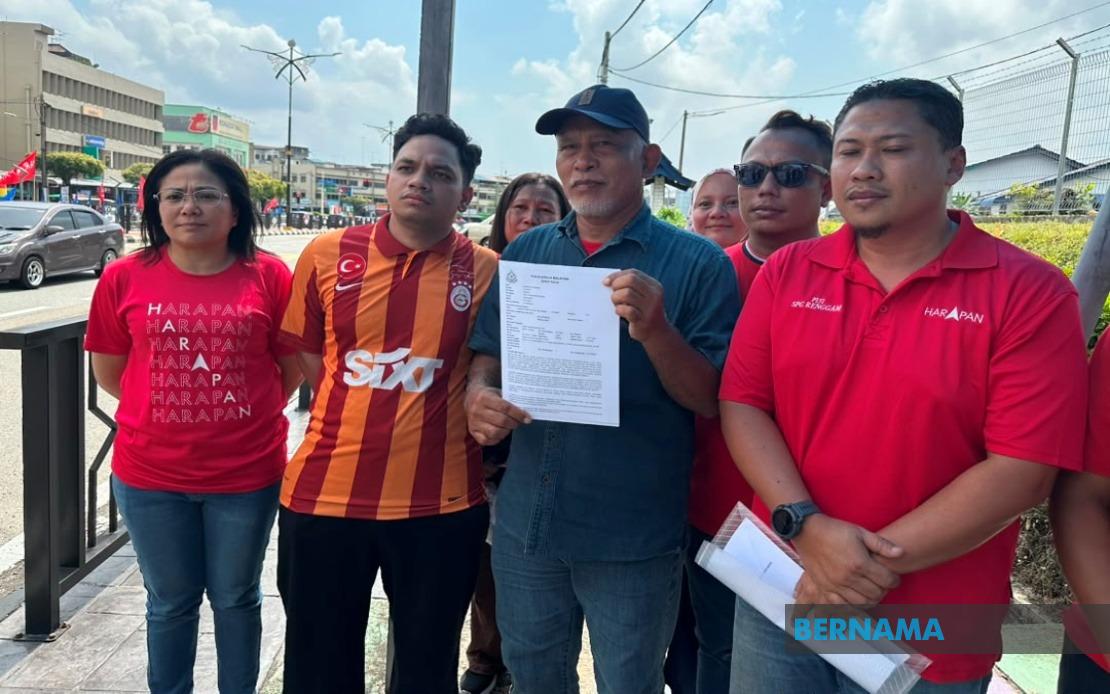
The Pakatan Harapan campaign team for the Machap state seat has escalated allegations of electoral impropriety by submitting a formal police complaint against Johor Menteri Besar Datuk Onn Hafiz Ghazi at Simpang Renggam district police headquarters. The move reflects growing tensions in the state election race as polling day approaches this Saturday, with accusations centring on the mobilisation of vocational education students for partisan political purposes.
According to Khiru Nasir Rohani, the PH representative, there exists a systematic pattern of coordinating TVET institution enrolees to participate in programmes designed to advance Barisan Nasional's electoral prospects. The allegation goes beyond isolated incidents, suggesting an orchestrated campaign structure that deliberately taps into student populations to manufacture political support. Khiru Nasir, who simultaneously holds the position of Simpang Renggam Amanah deputy division chief, presented the complaint as evidence of institutional misuse for party-political gain.
The core legal complaint hinges on potential violations of the Election Offences Act 1954, with particular focus on provisions governing undue influence and the improper deployment of official position or educational infrastructure for campaigning purposes. These are serious allegations that strike at fundamental democratic principles, as they suggest that government apparatus and educational institutions have been weaponised to benefit one political coalition. Such practices, if substantiated, undermine the neutrality that election authorities are meant to preserve.
The flashpoint incident that precipitated the complaint involved approximately 172 TVET students allegedly being compelled to attend a programme in Kluang on July 4. Participants reportedly encountered open campaigning at the event aimed at supporting state election candidates from Barisan Nasional. The framing of educational activities as campaign vehicles raises questions about whether student attendance was genuinely voluntary or administratively coerced through institutional channels. Such blurring of boundaries between educational and political spheres concerns democracies worldwide.
Khiru Nasir has explicitly called upon three critical institutions—the Royal Malaysia Police, the Malaysian Anti-Corruption Commission (MACC), and the Election Commission (EC)—to jointly undertake comprehensive investigations. This multi-agency appeal suggests that the alleged misconduct spans both electoral violations and potential corruption domains, requiring coordination across enforcement bodies. The request reflects confidence that institutional safeguards exist to address such breaches, though scepticism about their effectiveness persists in Malaysian political discourse.
The timing of this complaint during active campaigning for 56 state seats demonstrates how electoral contests frequently become venues for accusations of procedural impropriety. With 172 candidates competing across the Johor statehouse, the race has evidently grown contentious. The fact that PH chose formal legal channels rather than merely public statements suggests the campaign team views the allegations as substantive enough to warrant official documentation and investigation.
For vocational education students and their institutions, these allegations carry broader significance. TVET colleges serve as essential pipeline institutions for Malaysia's technical workforce development, and their reputation for independence from partisan politics is crucial for maintaining student trust and institutional credibility. When vocational educational spaces become contested territory for electoral advantage, the institutions themselves risk becoming politicised, potentially compromising their educational missions and student recruitment from all backgrounds.
The incident underscores persistent tensions in Malaysian electoral practice regarding the use of government resources and institutional infrastructure during campaign periods. Despite regulatory frameworks designed to maintain neutrality, allegations of misuse surface regularly across state and federal elections. The challenge for election authorities involves distinguishing between legitimate government activities that occur during campaign periods and improper political mobilisation disguised as administrative or educational initiatives.
For Johor's political landscape specifically, the complaint represents an escalation tactic by the opposition coalition seeking to establish a narrative about incumbent party misconduct before Saturday's polling. Whether the allegations gain traction with voters or authorities depends on investigation findings and media amplification. The complaint's success in shaping the election narrative may prove as significant as the underlying factual questions about what actually transpired during the Kluang programme.
The broader electoral implications extend to Southeast Asian governance questions about the integrity of balloting systems and the prevention of institutional capture by ruling coalitions. Malaysia, as a mature democracy with contested elections, serves as a bellwether for regional democratic health. Allegations of this nature, particularly involving educational institutions and youth demographics, suggest that despite institutional checks, creative methods of gaining political advantage continue to emerge.
As authorities examine the complaint, several investigative questions will be critical: whether documentation exists proving student coercion; what the Kluang programme's stated educational purpose was versus its actual content; whether attendance records indicate voluntary participation; and whether institutional guidelines were followed in mobilising student groups. These operational details will determine whether the allegations constitute genuine electoral violations or represent contested interpretations of ambiguous administrative actions.

