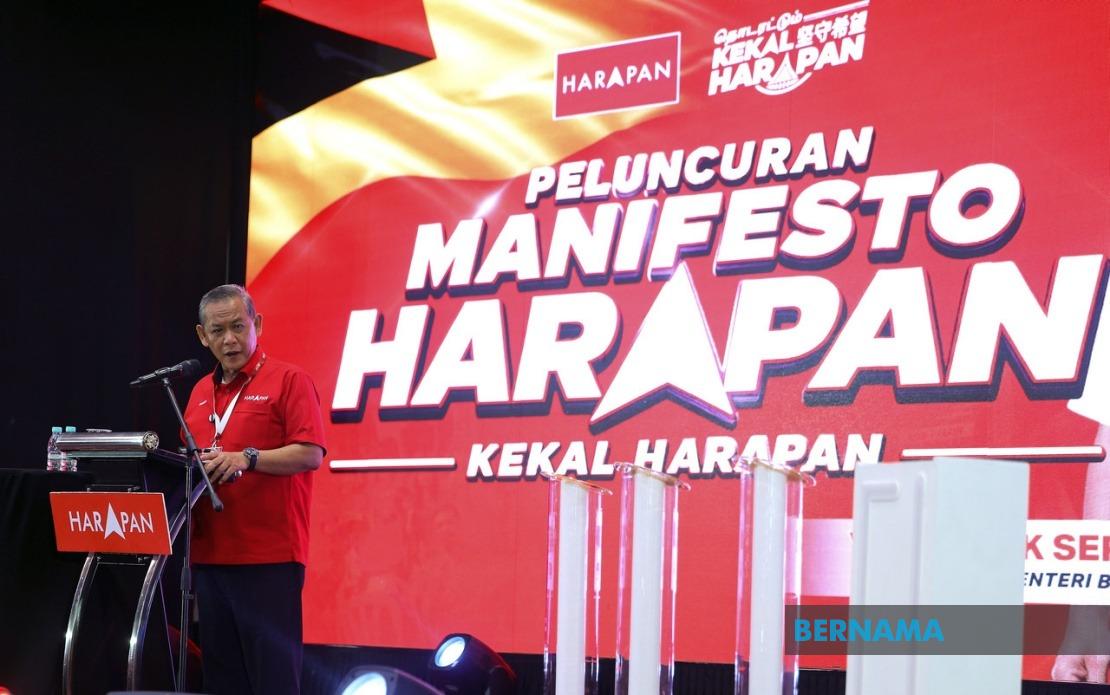
Pakatan Harapan formally introduced its election manifesto for the upcoming 16th Negeri Sembilan state election in Seremban on July 20, laying out an ambitious ten-point agenda aimed at securing voter support in the crucial peninsular state. The manifesto, branded 'Negeri Sembilan Kekal Harapan' (Negeri Sembilan Stays With Harapan), was unveiled by Negeri Sembilan PH chairman and incumbent Menteri Besar Datuk Seri Aminuddin Harun, signalling the coalition's determination to retain control of a state that has remained a PH stronghold since the 2018 general election.
The centerpiece of PH's platform rests on establishing what it characterises as responsive and transparent governance alongside an expanded People's Wellbeing Scheme (Skim Sejahtera Rakyat or SSR). This dual emphasis reflects PH's effort to distinguish itself through promises of administrative integrity and targeted social support, two themes that have resonated with Negeri Sembilan voters in previous electoral contests. By positioning governance reform at the forefront of its pitch, PH seeks to remind constituents of the contrast it claims to represent against earlier administrations in the state.
Job creation emerges as a substantial economic component, with PH committing to generate 30,000 high-income employment opportunities whilst simultaneously building a competitive state economy. This pledge addresses persistent concerns among younger voters and those displaced by structural economic shifts, particularly as manufacturing sectors evolve and service industries expand. The manifesto's emphasis on job quality rather than quantity suggests PH recognises that underemployment and low wages, rather than mere unemployment, constitute the primary economic anxiety for many Negeri Sembilan residents.
Housing affordability and land administration feature prominently in the manifesto, with proposals to construct 20,000 affordable residential units and resolve longstanding land disputes. These commitments carry particular weight in Negeri Sembilan, where rapid urbanisation in districts surrounding Kuala Lumpur has driven property prices beyond the reach of middle-income households. The land resolution pledge addresses a chronic issue affecting both urban and rural constituents, from informal settlers to indigenous communities navigating bureaucratic complexities.
Educational quality and accessibility constitute another major plank, reflecting recognition that families across Malaysia prioritise schooling standards and educational opportunity for their children. PH's commitment to ensure quality education for all voters attempts to position the coalition as invested in human capital development and social mobility, themes with broad appeal across diverse demographics in a state with mixed urban-rural composition.
The manifesto further pledges to strengthen healthcare delivery and strategic infrastructure development, two services directly affecting daily quality of life. Better healthcare access resonates particularly with older voters and those in peripheral areas who currently face travel burdens when seeking specialised medical care. Infrastructure investments promise improved connectivity, economic dynamism and improved service delivery across the state.
Tourism and cultural heritage development represents a distinctive component, reflecting Negeri Sembilan's historical significance and emerging potential as a visitor destination. This sector-specific focus suggests PH views tourism-led economic diversification as central to creating sustainable livelihoods beyond traditional industries. The pledge also acknowledges cultural preservation concerns among communities with deep historical roots in the state.
Youth and women empowerment initiatives demonstrate PH's awareness that demographic cohorts voting for the first time and women voters constitute decisive electoral blocs. These commitments range from economic participation to leadership development, reflecting recognition that inclusive governance requires deliberate institutional changes benefiting historically marginalised groups.
The manifesto's inclusion of Felda Development Plan implementation signals engagement with rural constituencies and agricultural livelihoods, an important consideration given Negeri Sembilan's significant rural population. Similarly, agricultural modernisation and food security pledges acknowledge farming communities' ongoing struggles with commodity prices and climate vulnerability, concerns that extend beyond Negeri Sembilan to resonate across Malaysia's agricultural heartlands.
Interfaith unity appears as the manifesto's final commitment, a particularly salient promise in contemporary Malaysia's polarised religious and ethnic environment. By explicitly pledging to promote harmony across faith lines, PH signals its continued positioning as a multiethnic, multireligious coalition committed to social cohesion as both moral principle and pragmatic governance philosophy.
Negeri Sembilan represents strategically important territory in Malaysia's political landscape. The state's relatively compact electorate and mixed urban-rural composition make it particularly sensitive to changes in voter sentiment across different demographic segments. PH's comprehensive manifesto attempts to construct a broad coalition spanning economic anxieties, social aspirations and governance expectations, recognising that electoral victory requires addressing the diverse preoccupations of Negeri Sembilan's varied communities.

