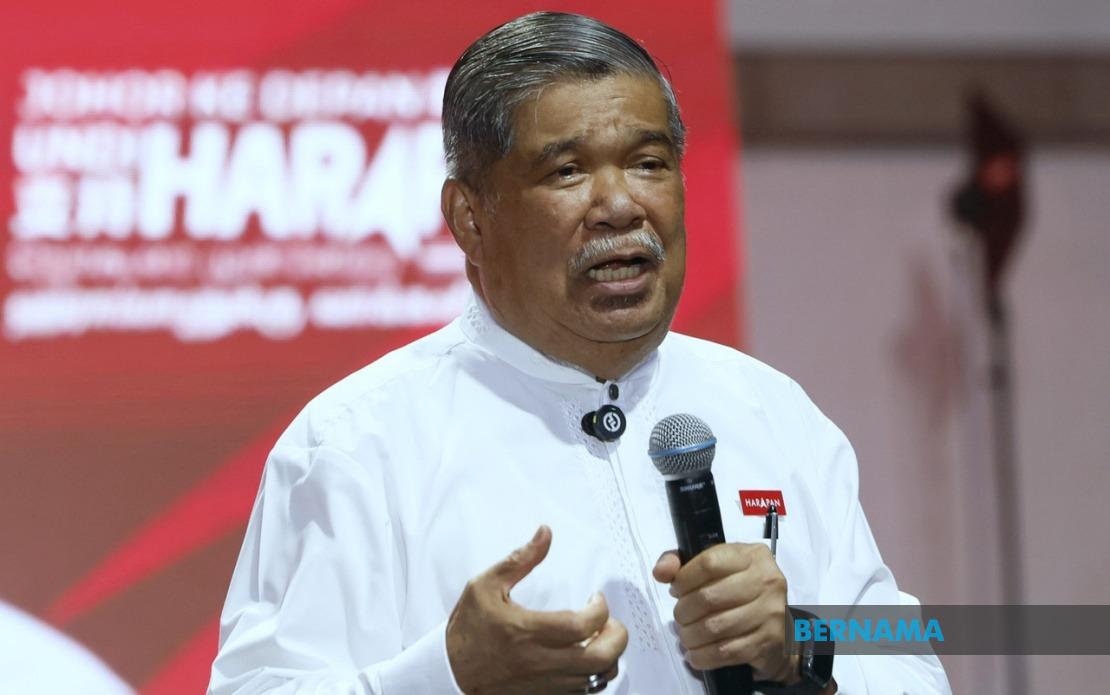
Pakatan Harapan's leadership has dismissed concerns about a strategic directive from PAS instructing its supporters to vote for Barisan Nasional candidates in Johor state election seats where the party is not standing, signalling the coalition's confidence in its campaign machinery as polling day approaches. Amanah president Datuk Seri Mohamad Sabu, who also holds the Agriculture and Food Security portfolio, made clear during a campaign stop in Permas Jaya that such tactical manoeuvres would not distract from PH's planned engagement with voters across the state's 56 contested seats.
The Amanah leader emphasised that PH would proceed with its scheduled campaign activities without deviation, framing the coalition's resolve as a reflection of its fundamental conviction rather than a dismissal of rival tactics. His remarks highlight the intensifying competition ahead of the July 11 polling day, with all 56 seats contested between PH and BN—a significant shift from previous state contests where some seats went uncontested or saw different coalition alignments. This complete contestation across all seats underscores the high stakes surrounding Johor's governance direction, particularly given the state's economic importance and strategic proximity to Singapore.
Crucially, Mohamad Sabu grounded PH's competitive advantage not in tactical manoeuvring but in what he characterised as the coalition's distinctive political foundation: genuine multiracial and multi-religious cooperation. This emphasis carries particular weight in Johor's electoral context, where communal considerations have historically influenced voter behaviour. According to Mohamad Sabu, this inclusive political model provides both political stability and economic dividends, serving as a bulwark against divisive appeals based on narrow identity lines rather than substantive governance performance. The framing suggests PH intends to contest the election primarily on grounds of administrative competence and inclusive representation rather than matching BN's traditional identity-based mobilisation strategies.
The Amanah president accordingly called on Johor voters to evaluate candidates based on demonstrable competence, service records, and commitment to justice rather than yielding to communal sentiment. This messaging, while ideologically consistent with PH's founding principles, also reflects a pragmatic calculation about which electoral narratives favour the coalition. DAP strategic director Liew Chin Tong, who serves as Deputy Finance Minister, reinforced this thrust during the same campaign event, adding substantive policy content to PH's pitch. Liew shifted attention toward governance alignment between state and federal levels as a prerequisite for implementing strategic development initiatives that benefit ordinary Johoreans.
The emphasis on federal-state coordination carries immediate practical relevance in Johor's context. Several major initiatives depend on this alignment, including the overhaul of public transport systems, infrastructure improvements at international border crossings, and investment attraction strategies. The Johor-Singapore Special Economic Zone represents a flagship project where federal-state coordination becomes essential for realising job creation potential—a concern Liew highlighted as particularly acute for younger Johoreans who currently cross the border to Singapore for employment. This exodus of talent to the neighbouring city-state represents both an economic loss for Johor and a demographic pressure point affecting long-term competitiveness.
Liew identified low voter turnout, particularly among younger demographics, as the critical variable determining election outcomes in contemporary Johor contests. His analysis of the 2022 state election outcome points to how reduced participation benefited BN, with participation further depressed by travel restrictions that prevented many Johor-based workers in Singapore from returning home to cast votes. The pandemic-era restrictions have since lifted, potentially enabling higher turnout among this ordinarily more mobile segment of the electorate. How this constituency participates in the July 11 poll could materially shift the competitive balance, particularly if younger voters view a change in state government as instrumental to improved job market conditions and quality of life outcomes.
The DAP leader explicitly advocated redirecting campaign discourse in the second campaign phase away from purely partisan attack narratives toward substantive policy discussion. This positioning appeal addresses bread-and-butter concerns that resonate across communal lines: the creation of well-compensated employment opportunities, improvements to public transport infrastructure, flood management and drainage system maintenance, preparations for demographic ageing, and childcare facility expansion. These issues represent concrete governmental responsibilities where competence and resource allocation become measurable, offering PH terrain where governance track records matter more than identity signalling.
Johor's specific circumstances make several of Liew's emphasis points particularly salient. Flooding represents a recurrent challenge in certain districts, with maintenance of drainage infrastructure and water management systems requiring sustained technical competence and budgetary prioritisation. The state's demographic shift toward an older population creates urgencies around healthcare delivery and social support systems that state governments directly influence. Meanwhile, childcare facility shortages constrain labour force participation, particularly among women, making this a live policy concern affecting both household economics and labour supply dynamics. These are domains where federal-state coordination either enables or impedes effective response.
The upcoming early voting scheduled for July 7 followed by main polling on July 11 creates a compressed campaign window—approximately one week from the Permas Jaya event where Mohamad Sabu and Liew spoke. This timeline concentrates campaign intensity during what both leaders identified as the decisive phase, where coalition discipline, voter mobilisation capacity, and ability to frame the contest narrative become crucial. PH's decision to emphasise multiracial cooperation, federal-state alignment, and policy substance over rival tactical positioning reflects strategic choices about which battlegrounds favour the coalition's organisational strengths and political identity.
The contest carries implications extending beyond Johor's immediate governance. A PH victory would represent consolidation of the coalition's recovery from its 2022 electoral setback, demonstrating renewed capacity to win competitive state-level contests where BN traditionally maintained advantage. Conversely, a BN hold would validate the durability of UMNO-led politics despite federal-level displacement, potentially emboldening internal debates within BN about whether federal coalition dynamics remain salvageable. Either outcome influences the broader trajectory of Malaysian coalition politics heading toward the next federal elections, making Johor's result substantially consequential for national political development.

