Pakatan Harapan has made clear that any decision regarding the appointment of Johor's next Menteri Besar will rest entirely with the Sultan of Johor, should the coalition secure victory in the forthcoming state election scheduled for July 11. The position, a critical one in state governance, will be determined according to the monarch's constitutional prerogative rather than through coalition negotiations or internal party arrangements. This stance represents PH's acknowledgment of the traditional role played by sultans in Malaysia's federal system, where the head of state retains significant constitutional powers over executive appointments in their respective states.
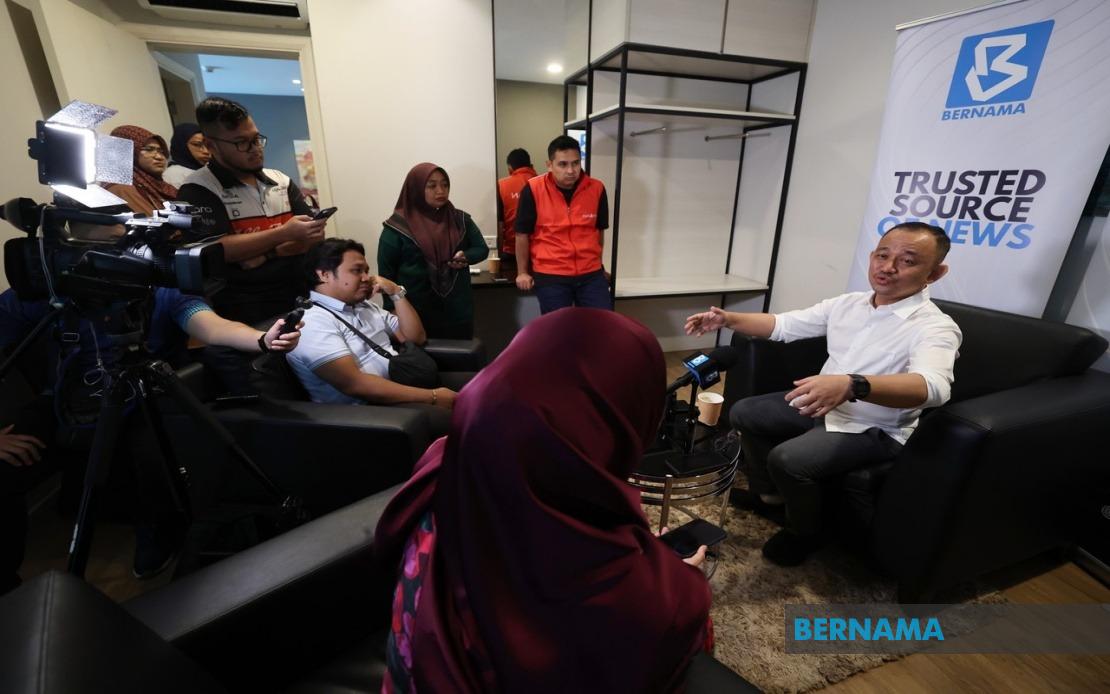
Dr Maszlee Malik, the PH candidate contesting the Puteri Wangsa state seat, articulated this position in an exclusive interview, explicitly stating that the coalition has deliberately refrained from internal discussions about the Menteri Besar position. The decision to avoid such discussions reflects PH's strategic priority of concentrating its campaign efforts on grassroots engagement and policy platforms aimed at addressing public concerns rather than becoming embroiled in succession speculation that could distract from its electoral messaging. By placing the appointment matter squarely within the Palace's domain, PH appears intent on avoiding the appearance of attempting to circumvent constitutional processes or override established protocols governing state governance.
The timing of Maszlee's clarification is significant, as online discussions and social media speculation had begun circulating names of potential Menteri Besar candidates from within the PH ranks, with Maszlee himself mentioned as a possible contender. Rather than entertaining such conjecture or leveraging it for political advantage, the PH representative chose to redirect focus toward the broader party platform and the qualifications of its wider candidate pool. This approach suggests a deliberate messaging strategy designed to maintain goodwill with the Palace while simultaneously projecting internal party discipline and respect for institutional hierarchies that have traditionally governed Malaysian politics.
Maszlee emphasized that PH's electoral strategy hinges on presenting voters with a comprehensive team rather than relying on the perceived charisma or prominence of any single individual. By framing all 56 candidates contesting on PH's behalf as a unified "Avengers" roster, the coalition seeks to distribute political capital across multiple personalities and policy areas, reducing dependency on any one figure for electoral credibility. This team-centric approach may also serve as a hedge against personality-driven politics, a concern that has periodically destabilized Malaysian coalitions when individual leaders become the focal point of intra-party tensions or public controversy.
The constitutional framework governing the Menteri Besar appointment underscores the distinct character of Malaysia's constitutional monarchy. Unlike prime ministerial appointments at the federal level, which involve a more complex consultation process, the State Constitution vests the Sultan with direct authority over this executive choice. In Johor's case, this prerogative is particularly meaningful given the state's historical significance and the Sultan's considerable standing within the state's political and cultural landscape. The Sultan's discretion is not unlimited—the appointee must be able to command majority support in the state assembly—but the selection process itself remains a royal function rather than an automatic delegation to the party or coalition with the most seats.
PH's deference to the Sultan's authority carries implications for how Malaysian coalitions engage with traditional institutions in an era of competitive electoral politics. By explicitly acknowledging the Palace's role before the election results are even determined, PH signals respect for constitutional arrangements and suggests it will not seek to pressure or lobby the Sultan in ways that might be perceived as attempting to bind his hands. This approach contrasts with scenarios in other states where political parties have occasionally sought to influence sultans' decisions through various informal channels or by leveraging their electoral mandates to claim an entitlement to appoint specific individuals.
The election itself is scheduled to take place on July 11, with early voting occurring on July 7, providing voters with an accelerated campaign period to evaluate the competing coalitions and their policy platforms. The 16th Johor state election will determine not only the composition of the state assembly but also, indirectly, which coalition leader the Sultan may approach in his deliberations regarding the Menteri Besar position. However, the Sultan is not obligated to select from the majority coalition's preferred candidate, a reality that adds an element of uncertainty to post-election negotiations and coalition-building exercises.
PH's emphasis on its candidate roster and service-delivery agenda reflects lessons drawn from previous electoral campaigns and coalition experiences. By maintaining focus on what the party can offer voters in terms of governance and policy implementation rather than becoming consumed by questions of leadership succession, PH aims to project stability and purpose. The coalition's messaging also serves to preempt criticism that it is more concerned with power distribution among its own ranks than with advancing public interests, a charge that has at times plagued Malaysian political coalitions during contentious periods.
The broader context for this election includes Johor's strategic importance to the Malaysian federation. As Malaysia's second-largest state by population and a significant economic hub, the state's governance direction influences regional development, investment flows, and policy frameworks affecting commerce and industry across Southeast Asia. A change in state government could therefore have ramifications extending beyond Johor's borders, particularly for neighboring Negeri Sembilan, Pahang, and the federal territories, as well as for Singapore and other regional economic partners who maintain substantial ties with Johor.
Maszlee's remarks also highlight the disciplined communication strategy PH has adopted heading into the election. By having a candidate directly address speculation and clarify the coalition's position on constitutional procedures, PH demonstrates organizational capacity and message control. The willingness to defer the Menteri Besar question to the Sultan, rather than attempting to manage expectations or lobby for particular outcomes, suggests a coalition that has internalized lessons about respecting Malaysia's constitutional framework and the sensitivities surrounding royal institutions.
Looking ahead, the outcome of the July 11 election will determine whether PH's respectful stance toward the Sultan's prerogative translates into actual governance responsibilities or whether the coalition remains in opposition. If PH succeeds in forming government, the Sultan will then face the substantive task of selecting a Menteri Besar from among the assembly members. The coalition's upfront acknowledgment of this royal function may facilitate smoother post-election consultations, as the Sultan will not perceive any attempt by PH to predetermine or constrain his decision-making process.

