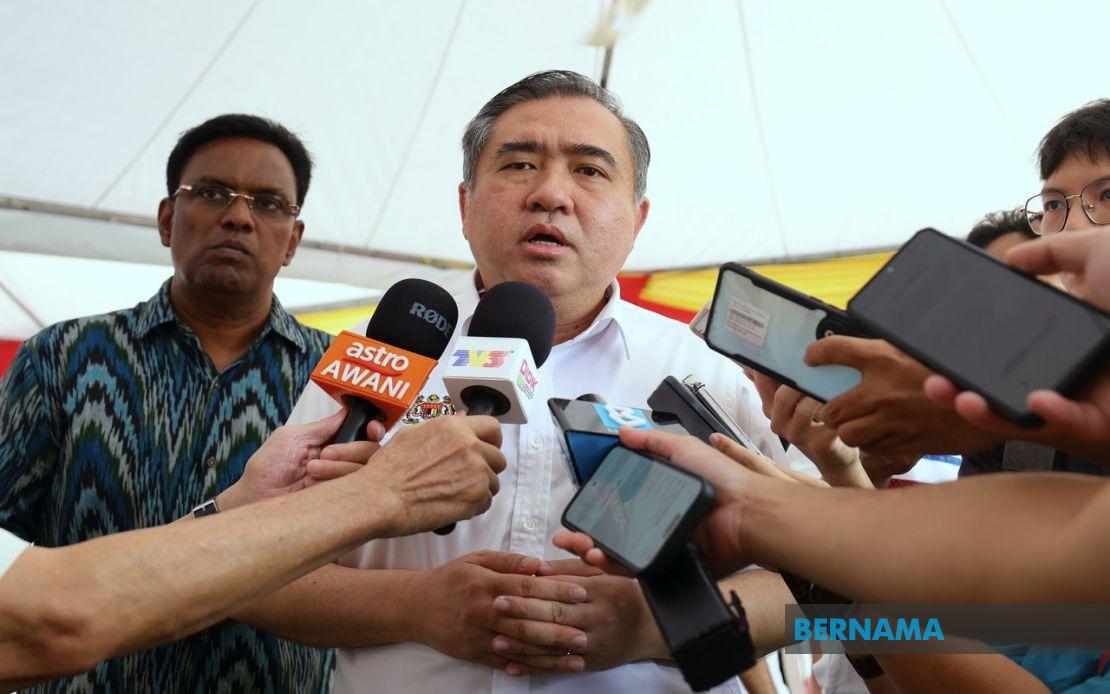
Pakatan Harapan has signalled it stands prepared for whatever political manoeuvres its rivals might deploy in the race for Negeri Sembilan, including a possible formal alliance between Barisan Nasional and Perikatan Nasional. Speaking in Seremban, DAP secretary-general Anthony Loke downplayed concerns about opposition coordination, framing the anticipated contest as a straightforward competition that will ultimately hinge on electoral outcomes rather than pre-election political posturing.
Loke's remarks came as speculation mounted over seat-sharing negotiations between BN and PAS, the main component of PN, for the state election. Rather than responding with alarm to reports of opposition cooperation, the Transport Minister adopted a composed stance, suggesting that Pakatan Harapan had already factored such developments into its strategic planning. His reference to the recent Johor state election—where similar multi-party opposition competition unfolded—indicated that the coalition had drawn lessons from that contest and felt adequately positioned to navigate comparable dynamics in Negeri Sembilan.
The PH strategy centres on consolidating its own internal machinery and deepening cohesion among its three constituent parties: PKR, DAP, and Amanah. Loke stressed that rather than becoming distracted by opposition tactics, the coalition would channel energy into maximizing its electoral prospects in contested seats. This represents a calculated decision to project confidence and discipline, messaging to party grassroots and supporters that leadership remains focused on winning rather than reacting defensively to competitor announcements. The emphasis on party unity carries particular weight in a state where Pakatan Harapan's fragility has occasionally surfaced in past political manoeuvres.
When pressed on claims that Chinese voters might drift towards opposition parties, particularly the Malaysian Chinese Association within the BN fold, Loke adopted a measured response. He acknowledged that all parties routinely claim strong public backing during election campaigns, but stressed that only the ballot box determines genuine voter sentiment. This acknowledgement implicitly recognizes that Chinese community support—historically contested ground between DAP and MCA—remains fluid and cannot be taken for granted, even in constituencies where Pakatan Harapan has performed strongly in recent cycles. Rather than dismissing such concerns, Loke's framing suggested the coalition must earn continued support through demonstrable governance performance.
A central pillar of Pakatan Harapan's campaign will be the track record of the Negeri Sembilan state government since 2018, helmed by Menteri Besar Datuk Seri Aminuddin Harun. Loke identified this governmental performance as the coalition's most significant asset in persuading voters to maintain confidence in the incumbent administration. By pivoting the narrative towards achievements and continuity, PH attempts to position itself as the steady, proven choice against potentially untested opposition combinations. This approach reflects a recognition that in state elections, local governance and delivery of basic services often weigh more heavily with voters than national political theatre.
Loke himself, as the incumbent Chennah assemblyman, embodies this continuity narrative. His dual role as both a state legislator and federal Transport Minister allows him to connect local constituency concerns with ministerial capacity to direct resources. This positioning is strategically useful in rural constituencies like those around Seremban, where infrastructure development and rural service delivery directly affect voter calculations. His presence at the MADANI Adopted Village and Adopted School launching events underscored this connection between state-level politics and tangible federal-level resource allocation.
The government's MADANI programmes—aimed at delivering assistance and upgrading rural infrastructure—received Loke's robust defence against suggestions that they represent opportunistic pre-election positioning. He characterized the initiatives as permanent, ongoing commitments implemented continuously by all ministries since 2025 rather than temporary electoral stunts. This reframing attempts to neutralize opposition claims that Pakatan Harapan government is rushing development projects to curry favour with voters. Whether this messaging resonates depends partly on whether such initiatives reach constituencies beyond obvious political battlegrounds, thus demonstrating genuine commitment rather than targeted electoral strategy.
Separately, Loke addressed the political turmoil in Melaka, where DAP withdrew from the state administration following disputes over the appointment of nominated assembly members. He characterized the party's decision as irreversible and emphasized that the state government had since reorganized legislative seating arrangements, suggesting closure on the matter. However, the Melaka situation carries implications for Negeri Sembilan political calculations, as it demonstrates potential fragility within Pakatan Harapan coalitions when governance or power-sharing issues surface. The willingness of Melaka DAP to exit administration over principle signals that component parties retain capacity to create internal crises, a vulnerability that could undermine the unity messaging Loke emphasized.
The Negeri Sembilan election arrives at a juncture when Malaysian politics increasingly features multi-polar competition, with neither the traditional BN-versus-Pakatan framework nor clear ideological boundaries dominating voter choice. The possibility of BN-PN cooperation complicates the landscape further, potentially fragmenting the anti-Pakatan vote in some constituencies while concentrating it in others. For Pakatan Harapan, this environment demands precise targeting and robust ground organization rather than assuming demographic or historical voting patterns will hold without reinforcement.
Loke's public confidence should be read partly as necessary political messaging—public displays of uncertainty or concern would undermine morale among supporters and party officials preparing for campaigning. Yet his reference to lessons from Johor suggests genuine learning from that contest, where Pakatan Harapan's performance proved mixed despite earlier expectations. If the coalition can maintain the internal discipline and unity Loke repeatedly invoked, it possesses reasonable prospects of retaining power in Negeri Sembilan. The coming weeks will test whether such unity holds across constituencies, local party structures, and among the coalition's diverse voter coalition—a challenge that transcends opposition tactical manoeuvres and cuts to the heart of Pakatan Harapan's own cohesion.

