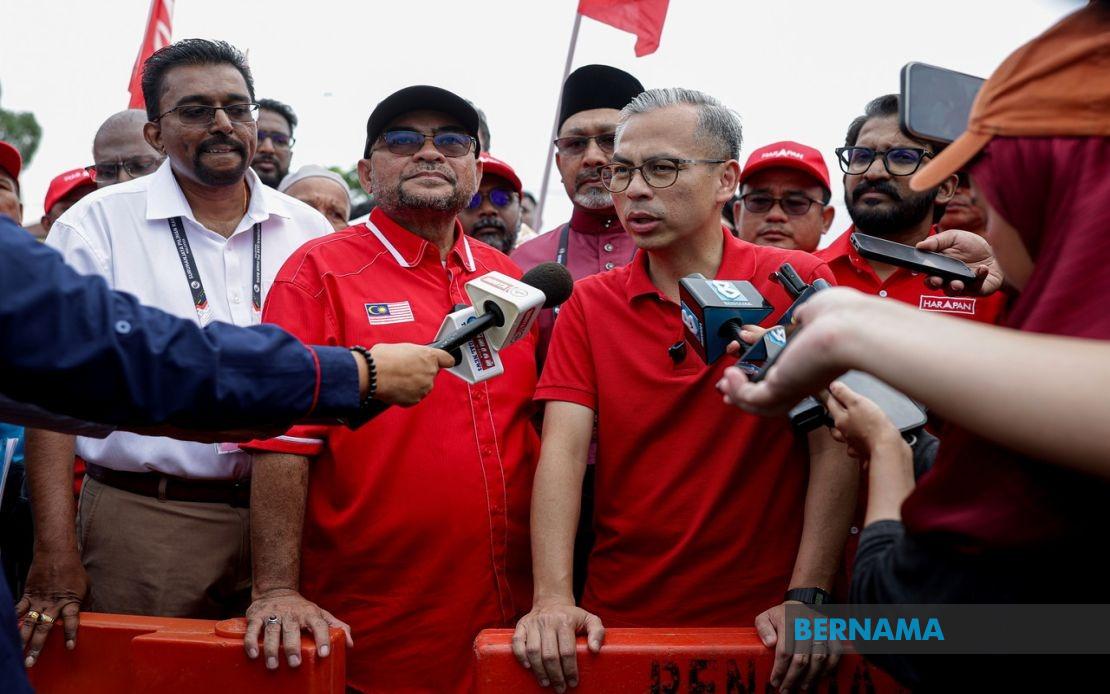
Pakatan Harapan's campaign strategy for the upcoming Negeri Sembilan state election rests squarely on defending the incumbent administration's economic credentials and persuading voters that continuity serves their interests better than change. Communications director and Communications Minister Datuk Seri Fahmi Fadzil articulated this approach in Jempol after the candidate nomination process, positioning Menteri Besar Datuk Seri Aminuddin Harun's tenure since 2018 as a blueprint for stability and prosperity that should be extended through the poll.
The emphasis on proven governance reflects a calculated gambit by the coalition. Rather than launching an expansive platform of new promises, PH strategists have chosen to foreground tangible achievements they argue voters can measure themselves. Fahmi specifically cited three performance pillars: substantially higher zakat collections, improved state revenue intake, and a consistent flow of foreign direct investment that has materialised in major infrastructure projects including port construction. For a state seeking to diversify its economic base and attract regional investors, these metrics carry weight, particularly among business communities and middle-income constituencies concerned with economic predictability.
The focus on administrative continuity carries particular significance in the Malaysian political context, where state elections frequently hinge on perceptions of competence and delivery rather than ideology alone. Aminuddin's administration has operated for six years, a tenure long enough to generate a track record but short enough to avoid the fatigue that sometimes accompanies entrenched leadership. By framing the election as a referendum on whether that record merits continuation, PH attempts to position itself as the cautious, proven choice against untested alternatives.
Within this broader framework, PH is tailoring messaging to specific constituencies and voter concerns. In the Jeram Padang seat, a four-way contest, the coalition's candidate G. Manivannan—a lawyer serving as political secretary to Prime Minister Datuk Seri Anwar Ibrahim—is expected to emphasise employment opportunities and economic mobility for younger voters. This granular approach reflects recognition that state elections demand micro-level engagement; even within a single campaign narrative, different seats require distinct emphasis depending on local demographics and priorities.
The Jeram Padang contest itself illuminates the fragmented opposition landscape PH confronts. Manivannan faces incumbent Datuk Mohd Zaidy Abdul Kadir of Barisan Nasional, representing the traditional Umno-led coalition; R. Sri Sanjeevan of Bersatu, the splinter party that fractured the Malay-Muslim political base; and Dayana Dal, standing as Asli's sole Orang Asli candidate. This four-way split suggests that no single opposition force commands overwhelming support, a dynamic that potentially works in PH's favour provided it can retain its existing vote coalition.
The broader Jempol parliamentary constituency, encompassing four state seats being contested, reflects similar fragmentation. Serting will see a three-way battle between PH's Yaacob Mahmood, Perikatan Nasional incumbent Mohd Fairuz Mohd Isa, and Bersatu's Muhammad Noraffendy Mohd Salleh. Palong presents another triangular contest with BN incumbent Datuk Mustapha Nagoor defending against PH's Muhammad Zahin Zinal Abidin and Bersatu's Rebin Birham. Only in Bahau does a clearer picture emerge, with incumbent DAP representative Teo Kok Seong facing sole BN challenger Chong Fui Ming of MCA. The proliferation of three and four-cornered fights works to the advantage of a cohesive coalition that can mobilise its base efficiently.
Fahmi's invocation of the two-week campaign period also underscores rising anxieties about electoral conduct in Malaysia's polarised environment. His explicit appeal to candidates, party machinery, and online actors to avoid inflammatory rhetoric touching on religion, race, and the institution of monarchy—the so-called 3Rs—signals PH's concern that competing narratives could deteriorate into community-dividing confrontation. For a state with its own ethnic and religious complexities, maintaining campaign civility becomes both a virtue and a practical political necessity.
The warning against disinformation and false claims reflects broader challenges facing Malaysian elections in the digital age. Social media dynamics can rapidly amplify unverified allegations, potentially poisoning voter sentiment and undermining faith in electoral processes. By positioning itself as the custodian of responsible campaigning, PH attempts to occupy the moral high ground, though such appeals risk appearing hollow if any coalition faction itself engages in dubious practices.
Fahmi's pledge to monitor media welfare throughout the campaign represents an uncommon intervention by a Communications Minister into electoral affairs. While framed as a protective measure, it also signals PH's interest in shaping how the campaign narrative develops in news coverage. Media practitioners operating in Malaysia's complex press environment—where ownership concentration and political proximity shape editorial choices—may face subtle pressures regardless of Fahmi's avowed protective stance.
The Election Commission's timeline, with early voting on July 28 and polling day on August 1, compresses the campaign into an intense fourteen-day period. This condensed schedule favours the incumbent, which can leverage state machinery and administrative advantage more readily than challengers needing to build momentum from scratch. PH's strategy of emphasizing continuity and existing achievements therefore aligns naturally with the compressed calendar.
For Malaysian observers, the Negeri Sembilan contest offers a microcosm of current political dynamics: a fragmented opposition split between BN, PN, Bersatu, and smaller parties; a PH-led government seeking to consolidate rather than expand; and electoral mechanics that increasingly reward coalition discipline over ideological clarity. Whether voters prioritise economic stability and proven administration, as PH's campaign presumes, or whether they opt for change remains to be seen. The outcome will carry implications beyond Negeri Sembilan, signalling to both federal leadership and opposition forces how effectively incumbency and track record translate into electoral support in Malaysia's decentralised political system.

