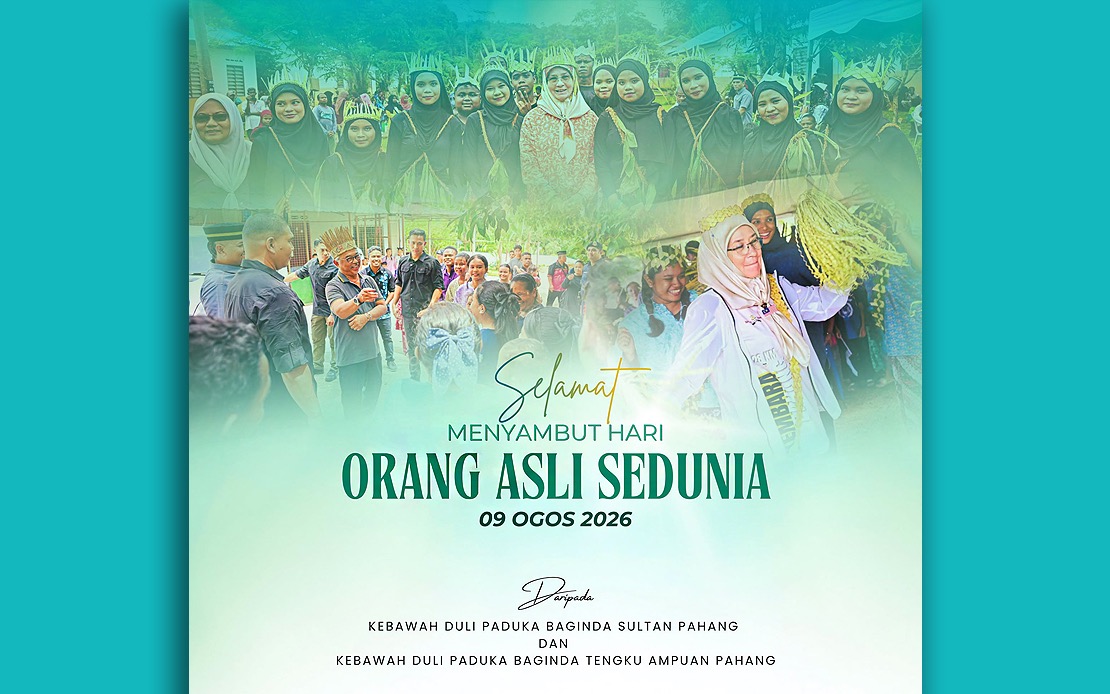
The Sultan of Pahang, Al-Sultan Abdullah Ri'ayatuddin Al-Mustafa Billah Shah, and Tengku Ampuan Pahang Tunku Azizah Aminah Maimunah Iskandariah have used a prominent occasion to formally recognize the enduring contributions made by the Orang Asli community to Pahang's rich tapestry of cultural identity. In a statement released through official channels on August 9, the royal couple acknowledged how indigenous peoples have been instrumental in preserving and enriching the state's distinctive customs and traditions, positioning them as custodians of invaluable heritage that extends beyond Pahang's borders into Malaysia's broader national identity.
The royal recognition carries significance beyond ceremonial appreciation, addressing substantive gaps in development that have historically affected Orang Asli communities across the peninsula. Their Royal Highnesses specifically identified education as a priority area requiring immediate attention and investment, recognizing that educational advancement remains foundational to breaking cycles of economic marginalization that have constrained opportunities for indigenous populations. This explicit mention signals awareness that systemic barriers have limited access to quality schooling in Orang Asli settlements, a reality that extends across multiple states including Pahang, where remote locations and infrastructural constraints continue to impede educational delivery.
Beyond education, the royal statement encompasses a comprehensive development framework encompassing economic advancement and skills acquisition. The acknowledgment that Orang Asli communities require targeted support in building human capital reflects growing recognition among Malaysia's leadership that indigenous peoples possess significant untapped potential that could benefit both their own communities and the broader state economy. When effectively equipped with vocational training, entrepreneurial support, and market access, Orang Asli artisans and producers have demonstrated capacity to generate sustainable livelihoods while maintaining traditional practices that form the foundation of their cultural identity.
Crucially, the statement balances development aspirations with cultural preservation, explicitly cautioning against the risk that modernization efforts might inadvertently erode the very heritage that constitutes the community's core identity. This nuanced position acknowledges a tension that has troubled development initiatives across Southeast Asia, where aggressive economic integration has sometimes resulted in cultural dilution and loss of traditional knowledge systems. By insisting that heritage protection remain central to any development agenda, the royal household has effectively framed Orang Asli cultural preservation not as peripheral to progress but as integral to it.
The timing of this statement, coinciding with preparations for the 2026 International Day of the World's Indigenous Peoples, positions Pahang's leadership within a broader global discourse on indigenous rights and recognition. Malaysia has committed to participating meaningfully in international indigenous peoples' advocacy, and regional recognition from prominent state figures helps elevate these commitments beyond diplomatic obligation toward genuine domestic priority. Pahang, as a state with substantial Orang Asli populations distributed across its territorial expanse, carries particular responsibility for demonstrating substantive progress in this domain.
The royal message also carries implicit messaging about unity and social cohesion, urging Pahang residents to embrace respect and cooperation toward maintaining harmony across diverse communities. This framing addresses potential social friction that can arise when development initiatives disproportionately benefit certain groups or when cultural dynamics shift rapidly due to external pressures. By positioning Orang Asli welfare as everybody's concern, the statement attempts to build broader constituency support for policy measures that might otherwise be perceived as narrowly targeted.
For Malaysian policymakers and development agencies, this royal endorsement provides political air cover for initiatives aimed at improving Orang Asli conditions, removing potential obstacles that bureaucratic caution might otherwise create. When state leadership explicitly articulates concern for indigenous welfare and development, implementing agencies gain clearer mandate and reduced internal friction when allocating resources and formulating programs targeting these communities. This institutional benefit should not be underestimated, as development implementation often falters not due to funding constraints but due to administrative ambiguity about priorities and sufficient political will.
The statement's implications extend beyond Pahang, as royal pronouncements from any Malaysian sultanate typically influence discourse and policy thinking across other states facing similar demographic realities and development challenges. Selangor, Perak, and other states with significant Orang Asli populations may find themselves under increased pressure to articulate similarly comprehensive frameworks, potentially catalyzing a regional shift toward more robust indigenous development programming. This diffusion effect represents a meaningful avenue through which state-level advocacy can gradually reshape national policy trajectories.
Looking forward, the effectiveness of this royal recognition will ultimately depend on translating rhetoric into concrete programmatic action, adequate budget allocation, and sustained implementation across multiple government agencies. Previous declarations of commitment to Orang Asli development have sometimes resulted in limited tangible improvement due to coordination failures, competing bureaucratic priorities, and insufficient resource commitment. The test for Pahang's leadership will be whether this public statement translates into measurable improvements in school enrollment rates, household incomes, skills certification achievements, and demonstrated cultural preservation initiatives over coming years.
The statement also implicitly recognizes that Orang Asli issues transcend development economics and touch on fundamental questions of rights, dignity, and recognition within Malaysia's multiethnic democracy. By elevating these concerns to the highest state level, Pahang's royal household has signaled that indigenous welfare represents not merely a social program but a question of principle and national identity. This reframing potentially opens space for more ambitious policy conversations about land rights, resource access, and participatory governance—issues that have long animated indigenous advocacy but sometimes remained peripheral to mainstream political discourse.

