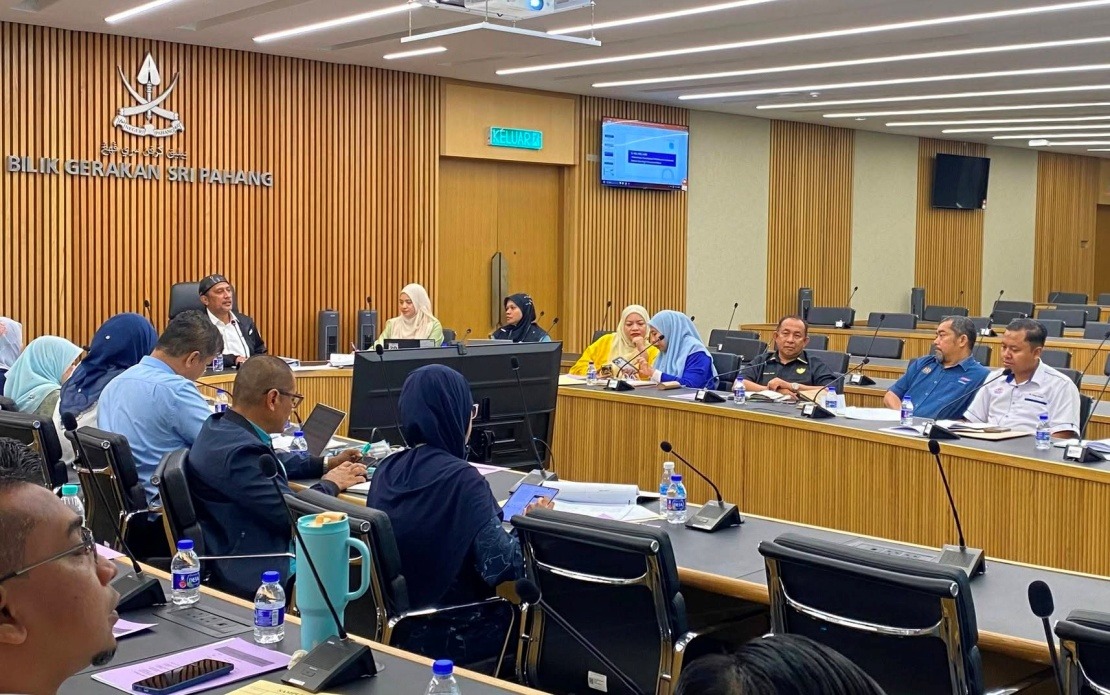
The Pahang state government has formally requested the Department of Orang Asli Development (JAKOA), the Pahang Land and Mines Office (PTG), and local land authorities to undertake a comprehensive examination of potential remedies for an unresolved land dispute affecting the indigenous community in Kampung Sungai Cot, Maran. The initiative represents an attempt to navigate the complex intersection of Orang Asli rights and existing land allocation decisions through structured administrative channels.
According to Datuk Seri Syed Ibrahim Syed Ahmad, who chairs the Pahang state committee overseeing Islamic religious affairs, rural development, and indigenous matters, the state administration intends to address the situation with careful legal scrutiny and collaborative consultation to identify outcomes benefiting all stakeholders. This approach underscores recognition that Orang Asli land claims often involve competing interests that demand sensitivity to both historical land use patterns and formal governance frameworks.
The dispute centres on overlapping territorial claims that emerged when land in the area was simultaneously claimed by twelve Orang Asli individuals based on submissions to JAKOA and approved for corporate development through a November 4, 2015 decision by the state's 32nd Executive Council (MMK). This chronological overlap created administrative ambiguity about which claim held precedence, reflecting a broader pattern across Malaysia where indigenous land assertions sometimes conflict with earlier government land allocation decisions.
Subsequent discussions facilitated by JAKOA narrowed the active claimant pool to six individuals still pursuing their territorial claims. However, these discussions revealed a persistent evidentiary challenge: while the claimants maintained the land represented their ancestral territory, investigating authorities could not substantiate these assertions through official records or documented evidence currently held by relevant agencies. This gap between oral histories and formal documentation remains a persistent obstacle in Malaysian Orang Asli land cases.
The scale of Orang Asli settlements in Pahang demonstrates why resolving individual disputes carries broader significance. The state currently accommodates 264 registered Orang Asli villages with a combined population exceeding 90,000 residents. Of these settlements, thirty villages have received formal recognition through gazettal procedures under Section 6 and Section 7 of the Orang Asli Act 1954 and Section 62 of the National Land Code, establishing clearer legal standing for indigenous presence.
Beyond the Kampung Sungai Cot situation, Pahang has progressively expanded direct land ownership rights for Orang Asli communities. The state government has approved land ownership transfers to the indigenous population across sixteen villages, utilizing provisions under Section 76 of the National Land Code. This mechanism provides more secure tenure than temporary use rights and reflects official acknowledgment that formalized ownership strengthens Orang Asli economic stability and social wellbeing.
The processing pipeline for additional land recognition demonstrates ongoing demand among Orang Asli communities for formal territorial designation. Seventy-five applications for land gazettement affecting Orang Asli villages remain under active review. Among these, thirty-one applications have advanced sufficiently to warrant consideration by the MMK at forthcoming meetings, while forty-four applications encounter complications due to overlapping claims that require resolution before gazettement can proceed. A further 143 applications remain in preliminary surveying stages conducted by JAKOA, suggesting the queue will remain substantial for years.
The existence of numerous applications caught within overlapping claim resolution processes indicates that the Kampung Sungai Cot situation represents a systemic challenge rather than isolated occurrence. Many Malaysian Orang Asli communities occupy territories where historical occupation patterns intersect with government land allocation decisions predating contemporary indigenous rights awareness. Resolving these intersections demands methodologies that balance formal legal requirements with recognition of Orang Asli historical presence.
For Southeast Asian context, Malaysia's approach to Orang Asli land disputes occurs within regional environments where indigenous peoples across Thailand, Cambodia, Laos, and Indonesia face analogous tenure insecurity. The regional trend involves indigenous groups possessing long-established land relationships that lack formal title protection and sometimes conflict with state-approved concessions or development allocations. Malaysia's administrative mechanisms, including JAKOA's dispute resolution role and Section 6/7 gazettal procedures, represent comparative regional attempts to institutionalize indigenous land recognition.
The Pahang government's decision to request multi-agency examination signals recognition that individual disputes often benefit from coordinated institutional engagement rather than single-agency handling. JAKOA brings specialized indigenous affairs expertise, PTG provides land administration authority, and district offices offer grassroots implementation capacity. This coordination model could establish precedent for similar disputes elsewhere across Malaysia, potentially improving resolution efficiency while strengthening transparency.
The timeline for resolving the Kampung Sungai Cot dispute remains undefined, reflecting broader administrative delays affecting Orang Asli land recognition processes. The accumulation of 143 applications in survey stages and 44 in overlap resolution suggests bureaucratic capacity constraints may extend processing timelines considerably. For affected Orang Asli residents, extended uncertainty perpetuates economic vulnerability and complicates long-term livelihood planning.
Successful resolution of this dispute could provide valuable institutional learning for addressing similar cases elsewhere. The approach of requesting formal multi-agency examination, combined with investigative scrutiny of evidentiary claims, establishes replicable methodology. However, resolution success ultimately depends on whether agencies can either substantiate ancestral claims through archival research, facilitate negotiated settlement between claimants and corporate approval holders, or identify alternative allocations addressing indigenous needs without invalidating corporate approvals.

