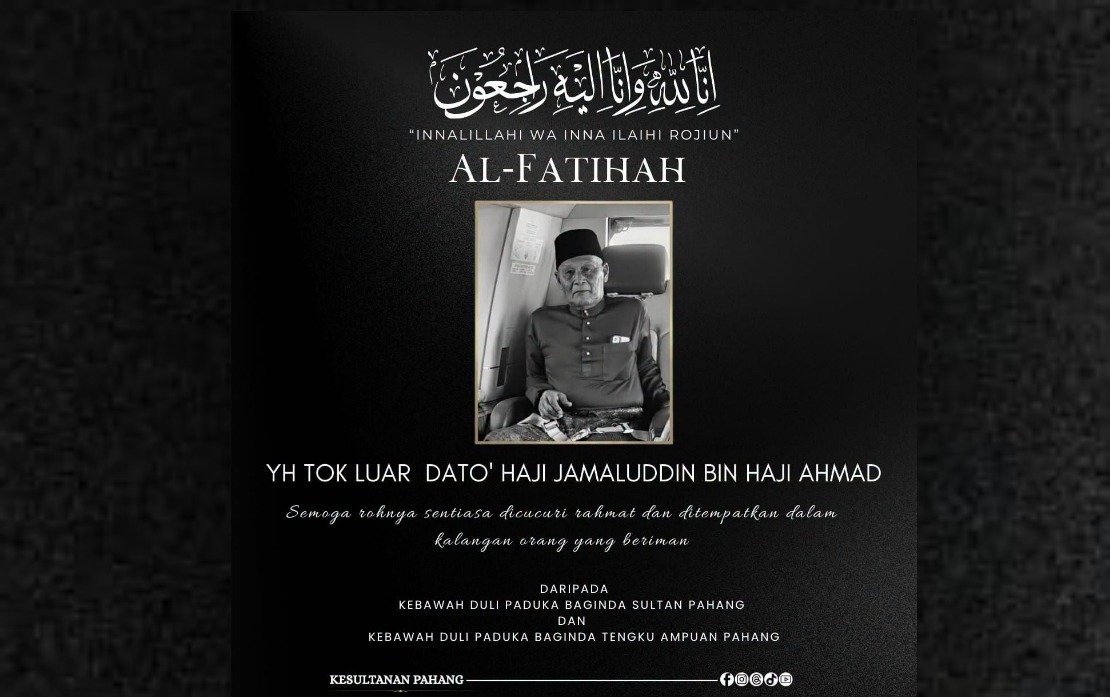
The Sultan of Pahang Al-Sultan Abdullah Ri'ayatuddin Al-Mustafa Billah Shah and Tengku Ampuan of Pahang Tunku Azizah Aminah Maimunah Iskandariah issued formal condolences following the death of Tok Luar Datuk Jamaluddin Ahmad on June 28. The respected figure passed away at Tengku Ampuan Afzan Hospital (HTAA) at 6.48 am, prompting an immediate expression of sympathy from Pahang's royal household through an official statement posted to the Kesultanan Pahang Facebook page.
In their message, the Sultan and Tengku Ampuan characterised Jamaluddin as a figure of steadfast loyalty to the Pahang Sultanate institution. This description carries particular weight in Pahang's political and social landscape, where the sultanate occupies a central role in the state's governance and cultural identity. The royal family's decision to publicly acknowledge his contributions underscores the significance Jamaluddin held within palace circles and among traditional power structures in the state.
The statement conveyed the royal household's profound sadness at the loss, reflecting the protocol and respect extended to individuals recognised as stalwart pillars of the Pahang establishment. Such public gestures by the Sultan and Tengku Ampuan serve not only as a mark of personal respect but also as an acknowledgment of the deceased's role within the broader institutional framework of the sultanate. In Malaysian tradition, royal condolences carry ceremonial and symbolic importance beyond ordinary expressions of sympathy.
According to the official announcement, Their Royal Highnesses included prayers for Jamaluddin's spiritual welfare, asking that his soul receive divine mercy and that his transgressions be forgiven. The statement further requested that his righteous deeds be accepted and that he be placed among the faithful and virtuous servants of Allah. These religious invocations reflect Malaysia's Islamic traditions and the sultanate's role as guardian of Islamic values within the state.
The royal family simultaneously extended compassion toward Jamaluddin's relatives, expressing hope that they would be granted the emotional fortitude, inner strength, and patience necessary to navigate their bereavement. Such considerations for the family's wellbeing are standard in Malaysian royal protocols, acknowledging that loss reverberates through entire households and extended networks. The gesture demonstrates the palace's recognition of grief as a collective experience within Pahang's elite circles.
The final invocation in the statement, "May Allah SWT shower His mercy upon his soul and place him among the righteous. Al-Fatihah," represents a traditional closing prayer commonly used in Islamic Malaysia when marking significant deaths. The reference to Al-Fatihah, the opening chapter of the Quran, carries profound spiritual significance and is frequently recited as a final benediction for the deceased. This formulaic but meaningful conclusion reinforces the religious and cultural dimensions of the royal household's grief.
Tok Luar Jamaluddin's passing marks the loss of someone embedded within Pahang's institutional memory and traditional governance structures. The title "Tok Luar" itself signifies a position of respect and authority within Pahang's sultanate system, suggesting he held responsibilities related to palace administration or ceremonial functions. His decades of service to the institution would have positioned him as a repository of knowledge regarding historical practices and protocols.
The timing and nature of the royal response indicate that Jamaluddin's death was considered a matter warranting immediate and formal palace acknowledgment. Rather than allowing the news to circulate without comment, the Sultan and Tengku Ampuan chose to issue a structured statement, ensuring that the official narrative around his passing and his contributions remained anchored in the sultanate's perspective. This proactive communication strategy helps shape public understanding of significant losses within palace circles.
In the broader Malaysian context, the mourning of palace loyalists by the Sultan and Tengku Ampuan reflects continuities in how royal institutions engage with their networks of supporters and functionaries. Such figures often represent bridges between formal state structures and traditional community leadership, making their loss significant not merely as personal tragedies but as transitions within established hierarchies. Pahang's sultanate, as one of Malaysia's constitutional monarchies, maintains particular emphasis on these interconnected relationships.
The death of figures like Tok Luar Jamaluddin also prompts reflection on the succession and transmission of institutional knowledge within sultanate systems. As individuals with deep historical memory and established protocols pass away, institutions must determine how their accumulated wisdom and relationships are preserved or adapted. The royal family's public commemoration serves partly to honour this accumulated institutional capital.
The statement from the Kesultanan Pahang Facebook page demonstrates how modern communication channels have transformed royal messaging in Malaysia. Rather than relying solely on traditional court announcements or newspaper publications, the sultanate now engages directly with the public through social media platforms, allowing broader and more immediate dissemination of official positions and expressions. This digital approach maintains ceremonial dignity while embracing contemporary communications infrastructure.

