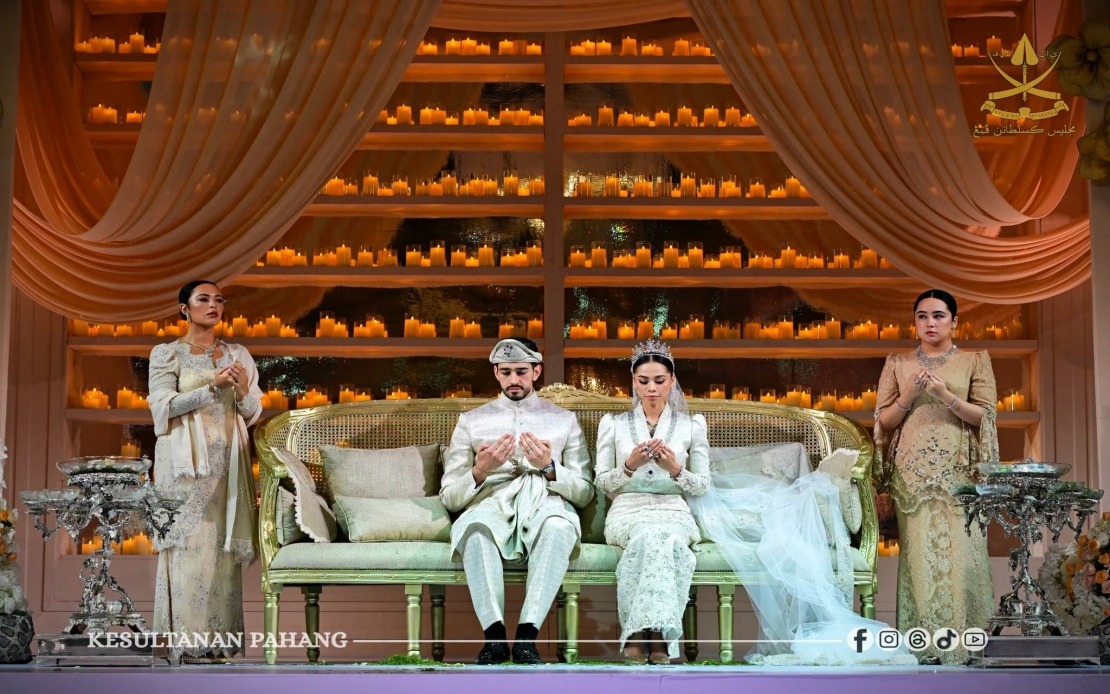
Pahang's reigning monarch, Sultan Al-Sultan Abdullah Ri'ayatuddin Al-Mustafa Billah Shah, graced the wedding celebration of his daughter Tengku Puteri Raja Tengku Puteri Ilyana Alia and her spouse Christopher Lionel Froggatt, with the reception held at a hotel in Kuala Lumpur. The occasion brought together members of the royal household and state officials to mark the union of the princess with her international partner, reflecting contemporary patterns within Malaysia's royal families of welcoming cross-cultural marriages.
The Sultan's presence at the reception underscored the ceremonial importance placed on the occasion, with his entourage including Tengku Hassanal Ibrahim Alam Shah, the Regent of Pahang, alongside other senior and junior members of the extended royal family. This multi-generational attendance demonstrated the collective significance the Pahang palace attaches to formal royal events and the celebration of its younger generation's milestones.
State representation at the event included Pahang Menteri Besar Datuk Seri Wan Rosdy Wan Ismail, whose attendance reflected the formal recognition extended to major royal functions within the state administration. The presence of Shaikh Mohammed Hamad Tahnoon Al Nahyan, serving as a representative of the United Arab Emirates President, added an international diplomatic dimension to the proceedings. This suggests the bridegroom's background and family connections extend to the Gulf region, highlighting how Malaysian royal occasions increasingly feature cross-border participation, particularly among affluent and diplomatically connected families.
Following traditional Pahang royal protocol, the newly married couple took their positions on the ceremonial dais before the commencement of formal rituals. The 'Istiadat Menyuap Nasi Semangat' ceremony, conducted by Tengku Puteri Seri Lela Wangsa Tengku Tan Sri Meriam Sultan Ahmad Shah, represents one of Malaysia's most enduring royal wedding traditions. This symbolic feeding ritual, deeply rooted in Malay palace customs, emphasizes the nourishment and sustenance expected to characterise the couple's new life together.
The Sultan himself took an active ceremonial role, performing the 'Istiadat Bersanding dan Merenjis' alongside family members. These traditional practices, where water is sprinkled upon the couple by elders and senior royals, carry spiritual and cultural significance within Malay-Muslim society. The Sultan's direct participation in these rituals rather than merely observing demonstrates the personal investment Malaysian monarchs maintain in orchestrating and blessing significant family milestones, preserving continuity with ancestral customs even as the institution modernizes.
In a gesture affirming his paternal blessing and honour toward the newlyweds, Sultan Al-Sultan Abdullah performed the 'Istiadat Meletakkan Panca Bicara', a ceremonial practice representing the five pillars of wisdom and authority. This formal benediction, performed by a reigning monarch, carries substantial symbolic weight within Malay royal tradition and signals both acceptance of the match and the Sultan's seal of approval upon the union. The layering of multiple ceremonial acts demonstrates how Malaysian royal weddings function as repositories of cultural identity and continuity.
A prayer offering was subsequently recited by Pahang Mufti Datuk Dr Asmadi Mohamed Naim, integrating Islamic spiritual elements into the proceedings. This blend of traditional Malay palace customs with Islamic religious components reflects the foundational role Islam plays within Malaysia's constitutional monarchy framework. The Mufti's formal participation ensures that religious legitimacy and divine blessing accompany the secular ceremonial elements, a practice consistent across Malaysian royal functions at all state levels.
The wedding reception illustrated how contemporary Malaysian royal families navigate the intersection of tradition and modernity. Tengku Puteri Raja Tengku Puteri Ilyana Alia's marriage to Christopher Lionel Froggatt, while maintaining elaborate Malay-Muslim ceremonial traditions, also reflects evolving social attitudes within elite Malaysian circles toward international unions. The formality of the state-level attendance and the preservation of intricate royal protocols suggest that such marriages, far from representing a departure from tradition, are being ceremonially integrated into established royal frameworks.
For Malaysian and regional observers, the event demonstrated the durability of constitutional monarchy institutions in Southeast Asia. The Pahang sultanate's ceremonial apparatus, operating with apparent seamless coordination across multiple state officials and international representatives, underscores how these institutions continue commanding respect and drawing broad participation. The Sultan's hands-on engagement in each ceremonial stage, rather than delegating responsibilities, reinforces the personalized nature of Malaysia's monarchy, where senior royals remain directly involved in family and state affairs.
The incident also highlights how Malaysia's royal families serve as cultural ambassadors for Malay-Muslim traditions. Through meticulously documented and widely publicized royal ceremonies, the monarchy reinforces cultural practices among the broader population. When senior royals like the Sultan personally execute traditional rituals, they validate these customs for contemporary society, ensuring that cultural continuity occurs not through passive inheritance but through active, deliberate reenactment by respected institutions.
Looking forward, the wedding reception exemplifies how Malaysian royal occasions function as multi-layered events serving diplomatic, cultural, and familial purposes simultaneously. The inclusion of UAE representation alongside state officials and family members suggests how regional royal networks continue strengthening through matrimonial and social connections. For Malaysia's image within ASEAN and the broader Muslim world, such events reinforce perceptions of stability, religious commitment, and institutional continuity that enhance the nation's regional standing.

