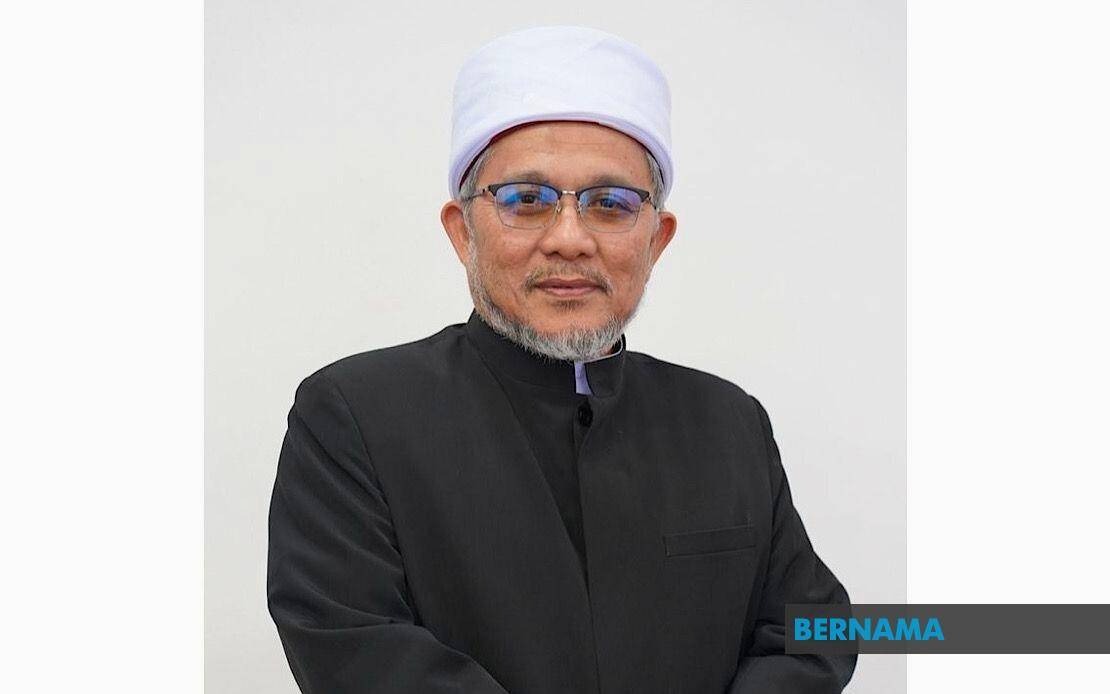
The Pahang State Mufti Department and the Pahang Islamic Religious and Malay Customs Council have jointly reaffirmed a directive from Al-Sultan Abdullah Ri'ayatuddin Al-Mustafa Billah Shah regarding the central place of mosques and suraus within the state's religious infrastructure. The announcement, made through Pahang Mufti Prof Datuk Dr Asmadi Mohamed Naim, clarifies the sovereign's position on where Friday prayers should continue to be held across the state, establishing a clear framework for religious observance in Pahang.
The statement comes at a moment when proposals have surfaced nationally to establish Friday prayer facilities within commercial shopping centres. While some have welcomed this initiative as a pragmatic response to urban realities, Pahang's religious leadership has taken a firmer stance. The Mufti emphasised that the Sultan has reviewed such suggestions but determined that existing authorised structures remain the appropriate venues for congregational prayers in the state.
Central to Pahang's position is the constitutional foundation upon which state religious authority rests. According to the Ninth Schedule of the Federal Constitution, mosques and suraus fall under the purview of state governance, giving individual sultans substantial discretion in overseeing religious facilities within their territories. The Mufti's statement stressed that MUIP operates as the designated representative of the Sultan in this custodial role, underscoring the hierarchical relationship between state leadership and religious administration.
The Sultan's decree emphasises that only mosques and authorised Friday prayer suraus, or SKJ establishments as they are formally designated, should conduct Friday prayers in Pahang. This distinction is crucial, as not all suraus possess the regulatory approval to host Jemaah prayers—the congregational gatherings that form the cornerstone of Islamic community worship. The specificity of this requirement reflects deep theological and administrative considerations woven into Malaysia's plural religious system.
Asmadi detailed the methodical approach Pahang has adopted in ensuring adequate prayer facilities meet community needs. Rather than pursuing rapid expansion into novel venues, the state has concentrated on strategic placement of existing and planned mosques. The Sultan Ahmad 1 State Mosque in Kuantan, the Tepian Putra Mosque, the forthcoming Bandaraya Mosque, and Al-Shafie Mosque in Kota SAS collectively represent this considered infrastructure development. These establishments have been sited with reference to population distribution and worship patterns across the state.
The theological underpinnings of Friday prayer requirements add another dimension to Pahang's reasoning. Under the Syafi'i school of Islamic jurisprudence, which prevails in Malaysia, Friday prayers must satisfy multiple conditions that extend beyond mere venue availability. These include conducting prayers during the Zohor period, assembling no fewer than 40 congregants, following prescribed sermon protocols involving two formal addresses, and ensuring that worship locations do not overlap in their catchment areas. Shopping malls, however centrally situated, may struggle to satisfy these cumulative requirements consistently.
The overlap principle carries particular weight in densely populated areas. If Friday prayers operated simultaneously in proximate venues such as a shopping mall and a nearby mosque, the congregation could fragment, potentially falling below the 40-person threshold at individual locations. This fragmentation would invalidate the religious standing of prayers conducted in either location under Syafi'i jurisprudence. Pahang's adherence to this principle demonstrates how constitutional authority, theological law, and practical administration converge in shaping religious policy.
This pronouncement from Pahang arrives as Minister in the Prime Minister's Department (Religious Affairs) Datuk Dr Zulkifli Hasan recently signalled openness to experimenting with shopping mall prayer facilities. Following positive experiences in the Federal Territories, the Minister had welcomed states' initiatives to pilot such arrangements. Yet Pahang's response reveals that receptivity to innovation at the federal level does not automatically translate into uniform implementation across Malaysian states, each of which maintains distinct religious authorities and preferences.
The divergence between federal and state approaches illustrates the complex federalism embedded within Malaysia's religious governance. While the federal government may encourage experimentation and explore new models for accommodating worship in contemporary urban landscapes, states retain constitutional discretion to determine their own religious policies. Pahang's position reflects a preference for consolidation and strengthening of established institutions rather than diversification into alternative venues.
For Malaysian Muslims navigating increasingly urbanised environments, particularly in Pahang's commercial centres, this reaffirmation signals that traditional mosque and surau infrastructure remains the endorsed pathway for Friday worship. Workers and shoppers seeking to fulfil congregational prayer obligations cannot expect sanctioned facilities within retail complexes but must arrange their schedules around dedicated prayer venues. This has implications for both individual practice and business operations in the state.
The Mufti's emphasis on MUIP's representational authority also reinforces the role of state Islamic institutions in maintaining religious cohesion and orthodoxy. By clarifying that the council operates as the Sultan's direct agent in religious stewardship, the statement reasserts institutional hierarchy at a time when religious authority in Malaysia faces multiple pressures—from urbanisation, generational change, and diverse theological interpretations. The declaration serves to centre state-sanctioned religious bodies as the legitimate arbiters of worship arrangements.
Looking ahead, Pahang's stance will likely influence how other states evaluate similar proposals. As Malaysia navigates the tension between religious tradition and contemporary convenience, individual state decisions become reference points for broader national conversation. Whether Pahang's cautious approach will endure or whether mounting pressure for mall-based prayers will eventually prompt reconsideration remains uncertain, but for now, the Sultan's decree has clearly repositioned established mosques and suraus as the definitive locus of Friday worship in the state.

