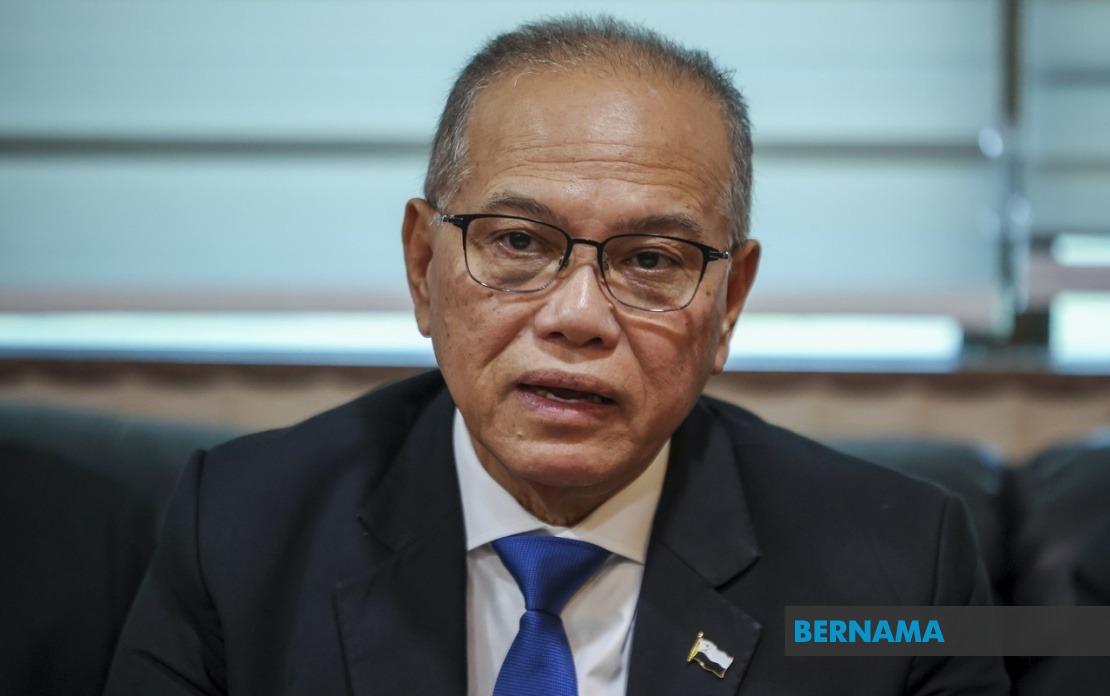
Pahang's fiscal performance through August demonstrates the state government's solid financial standing heading into the final months of 2026. Menteri Besar Datuk Seri Wan Rosdy Wan Ismail revealed during the recent Pahang State Legislative Assembly sitting that the state has accumulated RM921.72 million in revenue, positioning it well within reach of its full-year target of RM1.279 billion. The figure represents 72 per cent collection of the annual goal, suggesting that the remaining four months should comfortably yield the outstanding RM357.28 million needed to surpass projections.
The state's revenue trajectory reflects broader economic momentum across Pahang's key sectors. Gross Domestic Product growth has accelerated from RM68.8 billion in 2024 to RM71 billion in 2025, a gain of approximately RM2.2 billion that underscores the durability of the state's economic expansion. This consistent expansion matters significantly for East Coast Malaysia, where economic diversification beyond palm oil and traditional primary industries remains a strategic priority. Pahang's performance suggests that policy interventions and infrastructure investments are beginning to generate tangible returns in terms of measurable output and revenue generation.
Investment commitments further strengthen the outlook for sustained growth. The state government has recorded RM11.47 billion in committed investments as of August 2026, demonstrating that both domestic and foreign investors maintain confidence in Pahang's business environment and development trajectory. Of particular note is that realised investments have reached RM1.044 billion, indicating that announced projects are translating into concrete capital deployment rather than remaining as aspirational pledges. This distinction between committed and realised investments is crucial for assessing genuine economic activity and employment creation.
The revenue collection's consistency enables the government to pursue targeted assistance programmes aimed at improving household welfare. The Makmur Pahang Initiative, allocated RM173.93 million across the 2024-2026 period, exemplifies this approach. The initiative's funding has grown substantially from year to year, beginning with RM38.8 million in 2024 before expanding to RM50.54 million in 2025 and climbing further to RM84.59 million in 2026. This escalating investment pattern suggests that the programme has demonstrated effectiveness in delivering benefits and thus warrants increased resource commitment. The doubling of 2026 allocation compared to 2024 reflects confidence that such spending yields meaningful improvements in living standards.
For Malaysian readers beyond Pahang, the state's financial discipline holds broader implications. East Coast economies often operate within tighter fiscal constraints than those in more developed regions, making prudent revenue management essential for sustaining public services and development projects. Pahang's achievement of strong collection rates without apparent reliance on excessive borrowing demonstrates that sound financial governance at state level remains achievable even within Malaysia's decentralised federation structure. The state's willingness to allocate increasing resources to direct welfare programmes suggests political confidence that the revenue base can sustain such commitments.
Looking forward, Menteri Besar Wan Rosdy signalled intention to further increase allocations for the Makmur Pahang Initiative through the upcoming state budget. This commitment requires not only that 2026 revenue targets will be met, but that the government anticipates even stronger collection in 2027. Such forward-looking planning indicates confidence that economic momentum will persist and that the factors driving current growth—investment inflows, GDP expansion, and sectoral diversification—will continue supporting the revenue base. Whether this optimism proves justified will depend on broader regional and global economic conditions.
The response to Datuk Mohd Sharim Md Zain's parliamentary question specifically addressed the state government's progress against the broader Pahang 1st agenda, which encompasses economic performance metrics and direct benefit distribution. The revenue and investment figures serve as performance indicators demonstrating that the underlying economic strategy is producing measurable results. This framing positions fiscal success not merely as an accounting achievement but as evidence of successful policy implementation and delivery of the administration's political commitments.
Revenue stability carries particular significance in Malaysian federalism, where states depend partly on federal transfers while maintaining responsibility for numerous essential services. Pahang's strong own-source revenue collection reduces dependency on federal allocations and provides greater autonomy in spending decisions. This financial independence allows the state to pursue development priorities aligned with local needs rather than constraints imposed by federal budget cycles. The percentage-of-target metric—72 per cent through late August—also provides predictability useful for quarterly financial planning and mid-year budget adjustments if necessary.
The disclosed figures must be understood within Pahang's historical context and relative performance among Malaysian states. East Coast states have traditionally faced development challenges compared to more industrialised peninsular regions, making sustained economic growth and revenue generation significant achievements. The consistency of performance across multiple metrics—revenue collection, GDP growth, investment commitments, and welfare spending—suggests the government has constructed a sustainable approach rather than relying on temporary windfalls or one-time factors. This matters for evaluating whether Pahang's current trajectory represents genuine structural improvement or cyclical upswing.

