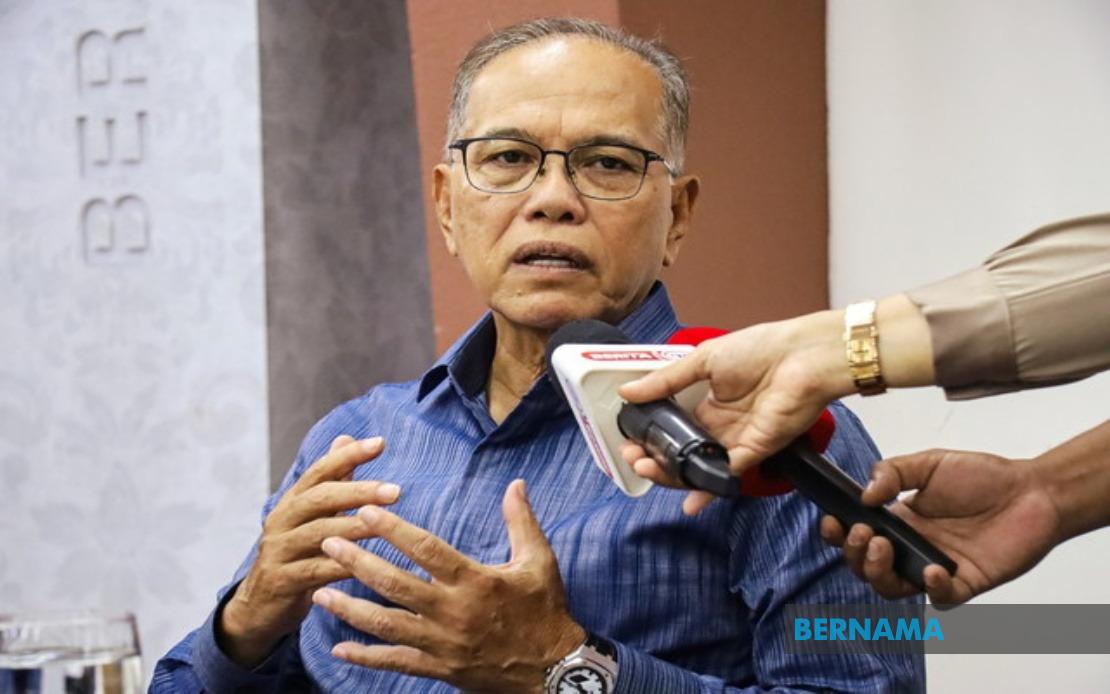
The Pahang chapter of Barisan Nasional is signalling strong commitment to preserving its power-sharing arrangement with Pakatan Harapan beyond the current political cycle, with state leadership indicating the coalition could remain intact through to the 16th General Election. Menteri Besar Datuk Seri Wan Rosdy Wan Ismail articulated this position while attending an official state development event, underscoring the stability that has characterised the state administration since the Unity Government framework took shape.
The stability of Pahang's governing arrangement carries particular significance within Malaysia's fractious post-election political landscape. When voters delivered a fragmented mandate in the 15th General Election, the state legislature reflected this complexity, with Barisan Nasional and Perikatan Nasional each securing 17 seats from a 42-member assembly, whilst Pakatan Harapan claimed eight seats. Against this backdrop, the November 2022 agreement between Barisan Nasional and Pakatan Harapan to form a joint administration represented a pragmatic choice that has since weathered various political pressures. The state regent's consent to this arrangement and the subsequent appointment of Wan Rosdy as Menteri Besar provided institutional legitimacy to a coalition that defied the adversarial norms of Malaysian state politics.
Wan Rosdy's reaffirmation comes as political calculations around the next general election increasingly dominate discourse among both national and state-level leaders. By publicly committing to the status quo, the Pahang Barisan Nasional chapter appears intent on avoiding the destabilisation that has plagued other state administrations where governance coalitions have fractured under pressure from rival factions or competing electoral strategies. The Menteri Besar framed the continuation as dependent on broader discussion within the coalition framework, a careful formulation that acknowledges the need for consensus whilst simultaneously signalling Pahang's preference for continuity.
Simultaneously, Wan Rosdy left space for tactical flexibility by indicating that Pahang Barisan Nasional remains receptive to forming alliances with other political entities as it prepares for electoral contests. This apparent contradiction—commitment to the current partner combined with openness to new arrangements—reflects the nuanced calculations that state leaders must manage in Malaysia's coalition-dependent political system. Rather than representing insincerity, such positioning allows leaders to maintain existing working relationships whilst preserving options should the broader political environment shift.
The state government's ongoing focus on bread-and-butter governance concerns underscores how the Unity Government framework has enabled continuity in policy implementation. During the event where these remarks were made, Wan Rosdy announced fresh allocations totalling RM118,000 distributed across 118 tertiary students preparing to pursue studies overseas, with Egypt and New Zealand identified as primary destinations. The initiative demonstrates how sustained governance coalitions can channel resources toward developmental priorities without the disruptions that occur when administrations face constant internal challenges to their legitimacy.
The geographic scope of Pahang's education initiatives reveals strategic thinking about skills acquisition and brain circulation. By facilitating access to higher education across multiple countries, the state government reflects awareness that contemporary human capital development requires exposure to diverse educational systems and institutional environments. The administration's commitment to channelling an additional USD1,000 per student through Yayasan Pahang for those studying in Jordan and Morocco indicates sophisticated engagement with regional education hubs beyond traditional anglophone destinations, potentially positioning Pahang graduates with language skills and cross-cultural competencies relevant to the Islamic-majority economies within Southeast Asia and the broader Middle Eastern region.
Wan Rosdy's observations regarding curriculum considerations reveal governance priorities that extend beyond simple financial support. The emphasis on ensuring that available courses incorporate Islamic elements addresses a constituency concern within a predominantly Muslim state, whilst the parallel focus on vocational relevance signals awareness that educational investment must align with economic opportunities accessible to returning graduates. This balanced approach to education policy—combining religious and cultural sensitivities with practical economic orientation—has historically characterised effective governance in Malaysian states with BN leadership.
The Makmur Pahang Initiative itself represents a multi-year commitment to educational accessibility, suggesting that the state administration views such programmes as foundational to longer-term development strategy rather than temporary allocations dependent on electoral cycles. The stated intention to continuously expand and enhance the initiative to address evolving student needs indicates institutional thinking that transcends immediate political considerations. Such programmatic consistency becomes sustainable when governing coalitions can operate without constant survival pressures.
From a regional perspective, Pahang's approach to education policy reflects broader Southeast Asian patterns wherein state governments increasingly compete to position their populations advantageously within knowledge-intensive economic sectors. The state's willingness to fund overseas education, particularly in fields combining religious scholarship with technical competence, aligns with how developed regional economies invest in human capital. As Malaysia and Southeast Asia navigate transitions away from resource extraction and manufacturing-dependent models, the capacity of state administrations to facilitate educational advancement becomes a differentiator between progressive and stagnating regions.
The broader political implications of Pahang's governing stability merit consideration within the context of Malaysia's transition toward more competitive and coalition-dependent politics. Whilst national headlines often focus on dramatic political realignments and electoral uncertainties, the quiet continuity of functioning state administrations like Pahang's provides the institutional foundation upon which broader political stability depends. When state governments operate without constant internal threats, they can focus resources on service delivery and development rather than political survival, creating conditions within which ordinary Malaysians experience governance as functional rather than fractious.
Looking toward the 16th General Election and beyond, Wan Rosdy's comments suggest that the Pahang Barisan Nasional leadership views the current arrangement as serving state interests sufficiently well to warrant preservation. This assessment implicitly contrasts with states where coalition breakdowns have generated instability or where governance has become hostage to competing elite factions. The positioning also reflects confidence that current partners can cooperate productively through the coming electoral cycle, potentially establishing a model that other state administrations might emulate as they navigate Malaysia's evolving political economy.

