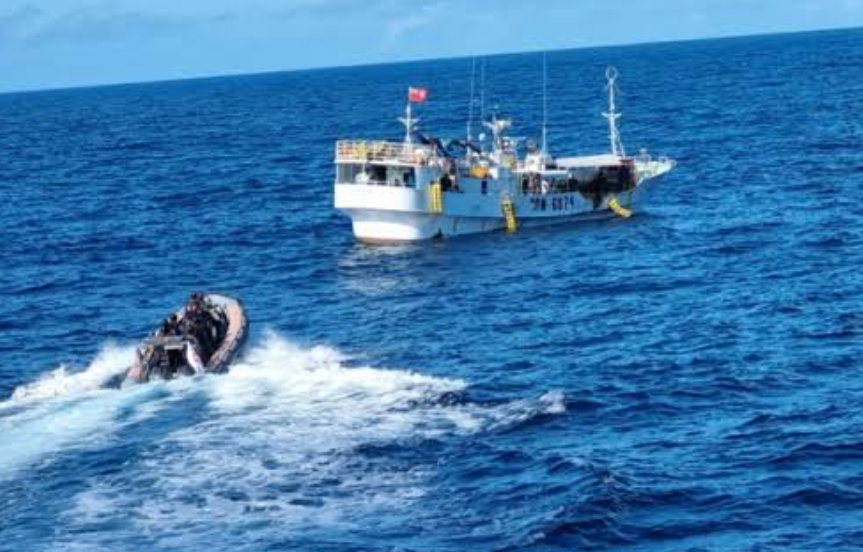
Pacific island nations have intensified enforcement efforts against illegal fishing operations in their territorial waters, with authorities in Kiribati, Palau and Papua New Guinea detaining four vessels flagged to China and Indonesia this month for breaching fishing regulations or operating without proper licences. The enforcement action represents part of a broader surveillance initiative coordinated by 11 island nations that resulted in boardings of more than 100 vessels across an expanse of 28 million square kilometres between early and mid-August, according to the Pacific Islands Forum Fisheries Agency.
The operation underscores growing tensions in the region over control of valuable fishing resources and revenue streams. The Western Pacific contains approximately half the world's tuna catch, yet Pacific island nations themselves process or handle only 15 per cent of this harvest. Despite their geographic ownership of these waters through exclusive economic zones, the small island states depend heavily on foreign fishing access fees—a dependency that has created both economic opportunity and vulnerability to overexploitation.
The financial stakes for Pacific economies are substantial. Annual access fees and export earnings from tuna fisheries generate approximately US$500 million and US$1.2 billion respectively for island nations, while supporting the livelihoods of roughly one-third of Pacific households. This revenue stream has become increasingly critical for nations facing economic pressures from climate change and geopolitical shifts. However, the dominance of long-distance foreign fleets in these waters means that much of this wealth remains concentrated outside the region, even as local communities bear potential costs of resource depletion.
The enforcement operation, known as Operation Island Chief, involved sophisticated maritime surveillance capabilities including aerial reconnaissance by an Australian military aircraft, patrols by a United States Coast Guard vessel, and coordination with local Pacific maritime police forces. The scale of the operation—boarding vessels across an area larger than the entire European continent—illustrates both the logistical challenge and commitment required to monitor these vast ocean spaces. Beyond the four vessels formally detained, authorities identified an additional 16 vessels as "of interest," though the FFA declined to release further details about their activities or nationalities.
The detention of illegal fishing vessels carries particular sensitivity in the Pacific context because of the significant presence of Chinese commercial fishing interests in the region. Large Chinese long-distance fishing fleets operate extensively throughout Pacific exclusive economic zones, while Chinese companies have established numerous joint venture partnerships with island governments. This creates a complex diplomatic dynamic where enforcement actions must balance environmental protection and sustainable fisheries management against economic relationships and investment concerns. The reluctance of some authorities to comment publicly on specific operations reflects these underlying tensions.
Recent incidents demonstrate the seriousness of illegal activity. Last month, Tuvalu's maritime authorities detained a Chinese vessel caught transmitting false location data while conducting unauthorised fishing in Tuvaluan waters. The vessel was subsequently fined and released after 24 days in custody. Tuvalu's willingness to act reflects its distinct geopolitical position—the nation maintains diplomatic recognition of Taiwan rather than Beijing, a stance that may insulate it from certain diplomatic pressures. The involvement of the conservation vessel Sea Shepherd in transporting Tuvalu police during maritime patrols highlights how non-governmental organisations have become important partners in regional enforcement efforts.
Historical compliance data reveals the scope of illegal fishing violations by vessels from major fishing nations. Between 2008 and 2026, inspectors for the Western and Central Pacific Fisheries Commission—the regional body responsible for fisheries management—issued 278 penalty notices to Chinese fishing vessels, the second-highest tally globally. Taiwan topped the list with 319 infringements during the same period, suggesting that vessels flagged to Chinese-controlled jurisdictions collectively face substantial compliance scrutiny. These figures illustrate persistent patterns of regulatory violations rather than isolated incidents.
The timing of this enforcement crackdown precedes significant regional discussions on fisheries governance. An annual gathering of 18 Pacific Island leaders scheduled to begin August 30 in Palau will address strategies to strengthen Pacific control over fishing rights and expand revenue generation from regional tuna resources. These conversations occur against the backdrop of accelerating climate change, which threatens fish populations and the viability of exclusive economic zones as fish migration patterns shift. Island leaders will likely seek approaches that balance immediate revenue needs against long-term sustainability concerns.
For Southeast Asian observers, the Pacific enforcement operations carry implications beyond their immediate geographic scope. Regional fishing practices and compliance standards established in the Pacific often influence fishing behaviour in Southeast Asian waters and the broader Indo-Pacific. Malaysian fishing interests, which operate globally, operate within international frameworks shaped partly by precedents set in Pacific fisheries governance. The willingness of Pacific nations to enforce regulations against major fishing powers—whether Asian or otherwise—establishes expectations for conduct in shared ocean resources that extend across maritime boundaries.
The underlying challenge facing Pacific island regulators involves balancing immediate economic dependence on foreign fishing access against sustainability requirements and long-term resource security. Many island nations lack the capital resources, vessels, and personnel to conduct independent surveillance and enforcement across their entire exclusive economic zones. The reliance on foreign assistance—Australian aircraft, US Coast Guard patrols, and conservation vessel partnerships—reflects this capacity gap. Sustainable solutions may require Pacific nations to collectively invest in enhanced monitoring infrastructure while negotiating more advantageous terms with fishing partners that reward compliance and sustainable practices.
Climate change adds urgency to these governance questions. As ocean temperatures rise and fish stocks migrate, the geographic distribution of tuna catches will likely shift, potentially redistributing both resources and revenue opportunities. Pacific nations that strengthen enforcement and sustainability practices now may secure better positions to benefit from future fisheries arrangements. Conversely, nations perceived as tolerating illegal fishing or unsustainable practices risk losing legitimacy with international regulatory bodies and access to premium markets demanding certified sustainable seafood.
The detention operations also reflect broader geopolitical competition for influence in the Pacific. Multiple external powers—China, the United States, Australia, and others—have interests in Pacific governance, investment, and resource access. Fisheries disputes and enforcement actions become potential flashpoints in these strategic competitions. How Pacific island nations navigate these pressures while advancing their own development and sustainability interests will significantly shape regional stability and economic outcomes for their populations.

