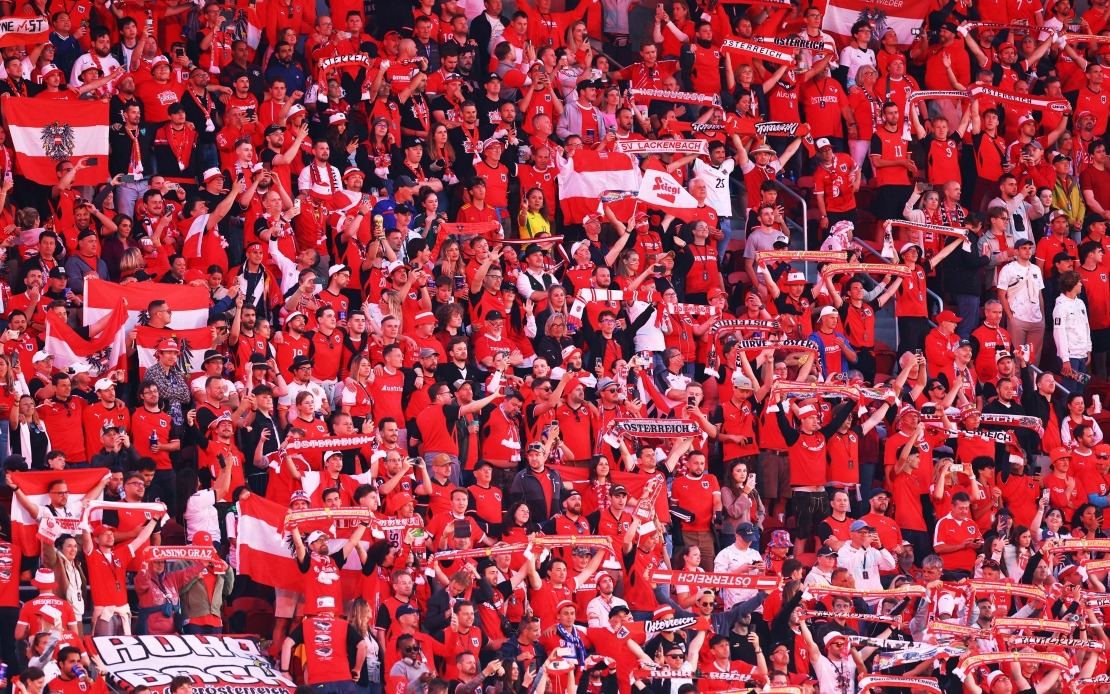
The opening fortnight of the FIFA World Cup in North America has delivered strong attendance figures, with organisers reporting that more than one million fans filled stadiums for the initial 16 matches, contradicting earlier fears about the tournament's drawing power. According to FIFA's official data, 1,028,429 supporters were present across matches played through Monday, representing a stadium occupancy rate of 99.34 per cent. The milestone prompted FIFA President Gianni Infantino to publicly celebrate the turnout, sharing a photograph on Instagram alongside Aaron Bren, the fan recognised as the tournament's one millionth attendee, and expressing gratitude to supporters for bringing what he described as "the most inclusive FIFA World Cup to life."
These headline figures came as a welcome relief to tournament organisers, who had faced mounting scepticism in the lead-up to the tournament about whether prohibitively high ticket prices would deter fans from attending matches. Pre-tournament analysis pointed to troubling signs when visibly sparse crowds were observed at the South Korea versus Czech Republic encounter in Guadalajara and the Qatar versus Switzerland fixture in the San Francisco Bay Area, both instances raising questions about whether the promotional strategy around ticketing had backfired. The empty seats visible during those matches fuelled broader concerns about the commercial approach taken to this particular World Cup and whether it might undermine the traditional atmosphere that international football tournaments are meant to generate.
Yet the aggregated attendance numbers released by FIFA suggest that such concerns, at least in aggregate terms, may have been overstated. The 99.34 per cent capacity figure indicates near-universal stadium fill across the opening stage of the competition, a metric that tends to reassure broadcasters, sponsors, and tournament administrators that the event is resonating with audiences in the host region. For Malaysian and Southeast Asian football enthusiasts watching from afar, these numbers carry implications for how future World Cups in Asia might be marketed and priced. Stadium occupancy at this level typically translates into enhanced television ratings, robust merchandise sales, and the kind of vibrant on-field atmosphere that enriches the viewing experience for global audiences, including the substantial football-loving population across the region.
However, beneath the positive attendance statistics lies a security and crowd management concern that has begun to receive serious scrutiny from independent observers. Football Supporters Europe, a leading advocacy organisation for fan interests, has raised alarms about the absence of conventional segregation measures at matches, a standard feature of major football tournaments designed to minimise tension and prevent confrontations between opposing supporters. Ronan Evain, the executive director of the umbrella group, articulated the apprehension in candid terms to BBC Sport, warning that FIFA's apparent lack of detailed knowledge about which supporters hold tickets for specific sections creates an elevated "risk" of supporters from rival nations mixing unpredictably within stadium seating.
Evain's critique hinged specifically on FIFA's aggressive ticketing strategy, which the organisation pushed to maximise revenue by encouraging primary ticket holders to resell available allocations on secondary markets. This approach, while economically rational, has the unintended consequence of obscuring visibility into crowd composition. When tickets change hands multiple times before match day, organisers lose the ability to ensure that supporters wearing team colours or identifying as supporters of particular nations are clustered in designated areas. Instead, a supporter from one country could find themselves surrounded by fans of an opposing team, potentially creating flashpoints for disorder. In a region like Southeast Asia, where football rivalries—particularly around ASEAN Cup competitions—can generate considerable passion, this structural vulnerability in crowd management would be viewed with apprehension by local authorities and fan organisations alike.
FIFA has defended its approach by pointing to measures it has implemented to group the most engaged supporters. The organisation notes that each participating nation receives a "participant member association" or PMA allocation, a ring-fenced block of tickets reserved specifically for official supporter clubs and the most committed fans of those countries. This system ensures that at minimum, core supporters from each nation occupy a cohesive section of the stadium, providing a foundation for traditional supporter culture and reducing the likelihood that isolated pockets of opposing fans become flashpoints for tension. Nevertheless, FIFA's acknowledgment that it cannot fully track the downstream ownership of tickets beyond the PMA allocation suggests that the segregation achieved through this system is incomplete and potentially fragile.
The contrast between the headline attendance success and the underlying security vulnerabilities underscores a broader tension in modern sports tournament management. Maximising revenue and attendance often conflicts with maintaining the kind of controlled, predictable stadium environment that security protocols depend upon. Tournament organisers must balance commercial imperatives with duty-of-care obligations to spectators. For Southeast Asian nations that have occasionally experienced crowd incidents at major football fixtures—and which place considerable emphasis on security at international sporting events—the World Cup's approach to ticket distribution and fan segregation provides an instructive case study in the potential pitfalls of prioritising market mechanisms over structural safety measures.
Looking ahead to the tournament's group stage and knockout phases, the question of whether the strong early attendance will be sustained remains open. Initial enthusiasm and pent-up demand often inflate opening-stage figures, while later matches may face dropoff if local teams are eliminated or if ticket prices remain at elevated levels. Additionally, the security concerns flagged by Football Supporters Europe will likely come under heightened scrutiny if any incidents occur in coming weeks. Should fan tensions materialize, the narrative around the World Cup could shift rapidly from a celebration of record-breaking attendance to a reckoning about whether FIFA's commercial approach compromised tournament safety.
For Malaysian observers, the World Cup serves as a bellwether for how major international sporting events balance commercial success with cultural and safety considerations. As Malaysia continues to develop its sports tourism infrastructure and occasionally bids for hosting rights to major competitions, the decisions made by FIFA regarding ticketing, crowd management, and fan segregation offer valuable precedents. The experience demonstrates that strong headline attendance figures do not automatically indicate a well-managed tournament, and that the mechanisms through which tickets are distributed and allocated carry downstream consequences that extend well beyond revenue considerations. As the tournament progresses through its group stage and the narrative continues to unfold, the interplay between record-breaking attendance and latent security vulnerabilities will merit close attention.