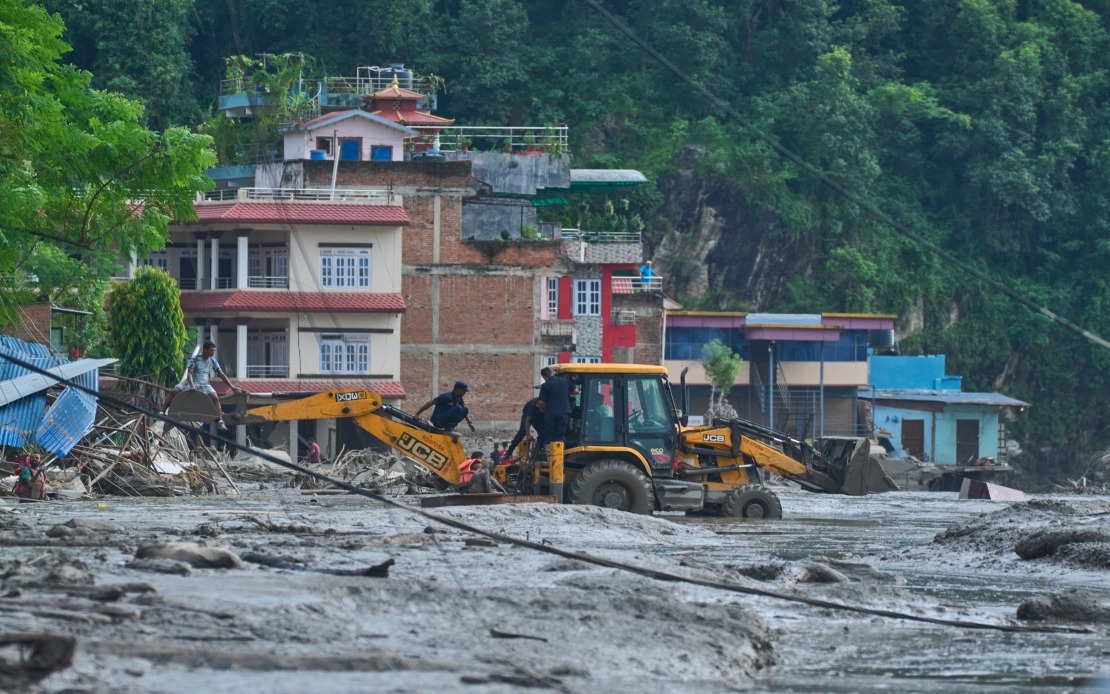
The Nepal-China border region faces one of its worst natural disasters in recent memory, as flash floods and landslides triggered by heavy rainfall have unleashed a humanitarian crisis affecting both nations. The confirmed death toll has reached 160, with Nepalese police reporting 157 recovered bodies so far, while Chinese authorities reported three deaths in the Tibetan region. However, the true scale of the tragedy remains unclear, as the number of missing persons has surged past 680, spanning both countries and multiple nationalities.
The geographical scope of the destruction extends across several critical districts in Nepal. The deluge has ravaged the Rasuwa, Dhading and Chitwan areas, with particular devastation concentrated around the Rasuwagadhi crossing, a major entry point for trekkers heading to the Langtang region and pilgrims bound for Mount Kailash and Lake Mansarovar in Tibet. The Gyirong Port area on the Chinese side of the border similarly suffered catastrophic damage from a mudslide that swept through the region, cutting off road access and severing communications and power infrastructure.
Among those unaccounted for are dozens of tourists and international travellers, reflecting the region's importance as a trekking and pilgrimage destination. The missing include nationals from Malaysia, the United Kingdom, South Africa, Australia, the Netherlands, India and Nepal, with eight South Korean citizens reported unaccounted for and ten others stranded following the disaster. The presence of so many international visitors underscores the economic significance of these border regions for regional tourism and trade.
The impact on Nepal's hydropower sector has been particularly severe. According to the Prime Minister's Office, thirteen major hydropower projects have been damaged or destroyed, representing a significant setback to the nation's renewable energy infrastructure and development agenda. The disaster has also claimed 44 army personnel, 28 police officers, 13 armed police personnel and 60 civilian employees who were engaged in hydropower construction work at various sites throughout the affected region.
Infrastructure damage extends far beyond the power sector. At least nineteen bridges have been obliterated by the floodwaters, while approximately forty kilometres of road network has been swept away or rendered impassable. Nepalese Foreign Minister Sishir Khanal informed parliament that the floods had erased numerous government offices and critical road facilities, crippling connectivity in the border region and hampering relief efforts.
Rescue operations have mobilised considerable resources on both sides of the frontier. Nepal has deployed helicopters, drones and rafting equipment alongside personnel from the Nepal Police, Armed Police Force and Nepal Army. Chinese President Xi Jinping has ordered an "all-out" search and rescue response, with instructions to evacuate residents in danger and provide urgent medical care to the injured to reduce casualties. Authorities in the Xizang Autonomous Region have launched coordinated operations to locate missing persons and clear debris.
The humanitarian response has extended beyond immediate rescue efforts. In Kathmandu, government hospitals and medical facilities operated by security agencies have been cleared to accommodate the influx of injured requiring treatment. India has dispatched ten tonnes of humanitarian assistance, disaster relief supplies and essential medicines to support Nepal's immediate response, demonstrating regional solidarity during the crisis. Indian Prime Minister Narendra Modi spoke directly with his Nepalese counterpart Balendra Shah, offering condolences and confirming India's readiness to provide comprehensive humanitarian assistance.
The disaster has sent ripples throughout the region's administrative structures. Officials in Bihar, India's eastern state bordering Nepal, have been instructed to implement heightened vigilance measures including round-the-clock embankment monitoring and enhanced night patrolling in sensitive districts, reflecting concerns about potential secondary impacts from the flooding.
For Malaysia and other Southeast Asian nations, the tragedy serves as a sobering reminder of the vulnerability of the region's mountain communities and tourism infrastructure to extreme weather events. The presence of Malaysian nationals among those missing highlights the interconnected nature of tourism flows in Asia and the inherent risks travellers face in remote, geographically challenging areas. Climate change and increasing rainfall intensity in the Himalayan region have raised alarm among environmental experts about the frequency and severity of such disasters, suggesting that communities along the Nepal-China border may face recurrent threats in coming years.

