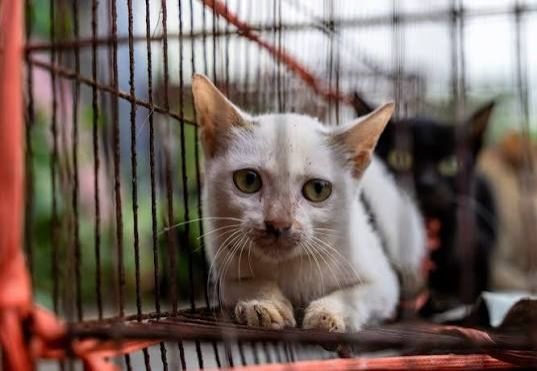
Police in Ho Chi Minh City have broken up an organized cat-theft operation that had been systematically stealing pets across southern Vietnam for three years, resulting in the recovery of more than 40 animals that have been returned to their rightful owners. The crackdown on what authorities describe as a "criminal group specialising in stealing and collecting cats" saw nine individuals arrested following an investigation into widespread pet disappearances plaguing the city. The success of the operation marks a significant victory for animal welfare advocates in a country where the consumption of dog and cat meat remains legal and uncontroversial in many quarters.
The scale of the criminal enterprise became apparent when officers executed search warrants at multiple locations connected to the suspects. Authorities recovered over 400 living cats and approximately 80 carcasses that had been preserved on ice, alongside an additional 21 animals discovered at a separate facility. The sheer volume of animals seized underscores the industrial nature of the operation, which had evolved from simple pet theft into a more sophisticated supply chain feeding restaurant establishments across the region. According to Ho Chi Mihn City police's official newspaper, the gang members confessed to their involvement in luring and trapping cats throughout southern Vietnam during their three-year criminal spree.
While cat and dog meat consumption is perfectly legal in Vietnam and openly marketed by many restaurants and food vendors, the nation's regulations do require sellers to present documentation verifying the legitimate origin of the animals being sold. This legal framework is crucial context for understanding why the thefts constitute a serious criminal matter rather than merely a cultural dispute. The authorities focused their investigation specifically on the illicit sourcing of the meat—essentially obtaining inventory through criminal theft rather than through legally-obtained channels. The police response reflected both growing public concern about pet abductions and the enforcement of existing regulations around food safety and animal sourcing.
Reuniting stolen pets with their families represents one of the more emotionally satisfying aspects of the investigation's outcome. Animal rights organisation Humane World for Animals confirmed that at least 40 of the rescued cats have been successfully returned to their owners, and the group commended police authorities for what it described as "decisive action that has saved the lives of so many animals." For families who had lost cherished companions, the recovery operation provided closure and the chance to be reunited with their pets. However, the process of identifying and locating owners for hundreds of animals has proven logistically challenging and emotionally draining for rescue organisations involved in the effort.
The operation has also exposed harsh realities about the welfare of animals caught up in this black market. Humane World for Animals reported that approximately 100 of the rescued cats subsequently died, suffering complications and health failures traceable directly to their experience in the theft network. The trauma of capture, the stress of confinement in unsanitary conditions, disease exposure, and the physical toll of being transported and held as inventory all contributed to this tragic loss of life. These deaths represent not merely statistics but individual animals whose lives were cut short by the criminal enterprise, even though some were technically rescued by authorities.
The ongoing challenges presented by the investigation extend beyond the initial arrests and animal recovery phase. Animal welfare advocates have raised concerns about the welfare of the cats that remain in police custody as evidence for the prosecution of the nine suspects. According to Karanvir Kukreja of Humane World for Animals, the organisation's primary concern focuses on ensuring proper care for these animals while they are held at the police station during legal proceedings. The practical implications of maintaining hundreds of animals in a police facility designed for evidence storage rather than animal care present genuine animal welfare challenges that require creative solutions.
To address these conditions, Humane World for Animals has taken a proactive approach by donating food supplies to support the cats and coordinating the delivery of ventilation equipment, including fans, to help regulate temperature in the holding area. This intervention highlights the collaborative relationship that can emerge between law enforcement and animal welfare organisations when addressing crimes that affect vulnerable animals. The provision of proper nutrition and climate control may seem elementary, but in many jurisdictions where animal evidence is treated primarily as physical property, such considerations often receive minimal attention. The group's efforts demonstrate how international animal welfare standards and practices can influence local law enforcement approaches to animal-related crimes.
The broader implications of this case extend beyond Vietnam's borders, touching on regional concerns about organised crime networks and cross-border trafficking of animals. Pet theft rings operating across multiple locations and provincial boundaries suggest a degree of coordination and infrastructure that resembles other organised crime activities. For Malaysia and other Southeast Asian nations, the Vietnamese case offers important lessons about monitoring emerging criminal enterprises that exploit the legal status of animal consumption to disguise theft and trafficking operations. The investigation's success demonstrates that even where culturally-sensitive food practices exist, law enforcement can effectively distinguish between legitimate commerce and criminal activity.
The case also reflects evolving attitudes toward animal welfare within Vietnam, where younger urban residents increasingly view pets as companions worthy of legal protection rather than merely as potential food commodities. The public concern about pet thefts that prompted the police investigation suggests that even in societies where dog and cat meat consumption remains normalised, growing segments of the population oppose the targeting of people's beloved animals. This tension between traditional practices and emerging ethical concerns about animal welfare may reshape how Southeast Asian countries approach regulations governing the trade in companion animals.
Moving forward, animal welfare groups are advocating for enhanced protections specifically targeting pet theft, recognising it as a distinct criminal category that warrants dedicated resources and attention. The Vietnamese police operation demonstrates that with sufficient investigative effort, multi-person criminal networks can be disrupted and perpetrators held accountable. For families across Southeast Asia anxious about their missing pets, such operations offer hope that dedicated law enforcement can help bring stolen animals home. The investigation also underscores the importance of collaboration between government authorities and international animal welfare organisations in addressing crimes that transcend cultural and legal boundaries within the region.

