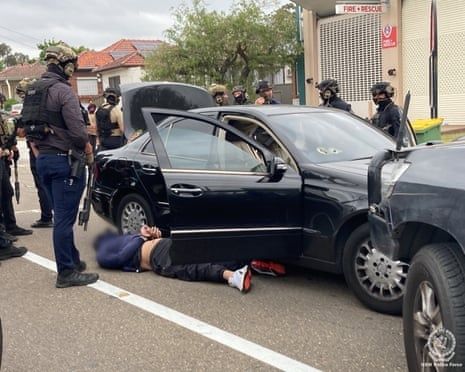
New South Wales police have intensified their assault on public transport crime, announcing the arrest of 356 individuals across a three-day operation that represents the latest escalation in their year-long battle against violence and sexual offences on trains, buses, light rail and ferries. The sixth phase of Operation Waratah, which concluded Saturday, deployed more than 400 officers daily across the state's sprawling public transport network, reflecting the scale of the challenge authorities believe they face in securing commuter safety.
Since its establishment in 2024, Operation Waratah has now resulted in the arrest and charging of more than 1,800 people, a figure that underscores both the breadth of the initiative and the persistent nature of crime affecting daily commuters throughout NSW. The operation represents an institutional commitment to reclaiming public spaces that many residents had grown to view as unsafe, particularly during late-night travel when visibility and passenger density may both be compromised.
The latest phase yielded substantial material evidence and drug seizures that suggest a nexus between weapon-carrying and substance use within the offending cohort. Police recovered 28 knives and other weapons during the three-day period, while conducting 137 drug detections across the network. These figures indicate that officers encountered not merely single-incident offenders but individuals engaged in multiple forms of criminal conduct, complicating both immediate response and longer-term intervention strategies.
The 356 arrests generated 645 individual charges, a ratio that reflects the tendency of arrested individuals to face multiple counts. This pattern is significant for sentencing outcomes and judicial workload alike, as courts must process cases involving compound offences rather than isolated incidents. The charge composition—though not fully detailed in official releases—likely encompasses assault, sexual assault, intimidation, and weapon-related violations that collectively undermine public confidence in transport reliability.
Operational logistics during the latest phase revealed the intensity of police commitment. Officers conducted foot patrols and static surveillance across 539 trains, 127 buses and 29 light rail trams over just seventy-two hours, a deployment requiring substantial coordination across multiple transport modes and geographic zones throughout the state. This level of saturation policing aims both to deter opportunistic offenders and to apprehend active perpetrators within a bounded operational window.
The implications for Malaysian and Southeast Asian transit authorities warrant consideration. While NSW's public transport network operates within a developed economy with significant police resources, the underlying challenge—ensuring passenger safety on crowded, often poorly supervised vehicles—resonates across the region. Cities including Kuala Lumpur, Bangkok and Manila have grappled with similar issues, though operational responses have varied in scope and technological sophistication. Operation Waratah's emphasis on visible officer presence offers one strategic model, though questions persist regarding sustainability and cost-effectiveness of such intensive deployments.
The criminological profile of offenders arrested under the operation remains partially obscured in public reporting, limiting analysis of whether these represent repeat offenders, organized networks, or primarily opportunistic individuals. Understanding this distinction would inform whether resource allocation should emphasize enforcement saturation, intelligence-led targeting, or environmental design modifications to transport infrastructure that might reduce offence opportunity. The scale of the initiative—over 400 officers daily—suggests authorities believe the problem extends beyond a small core of serial offenders.
Community perception represents a crucial variable often overlooked in operational announcements. High-visibility policing generates deterrent effects, yet sustained absence of officers between major operations may paradoxically heighten vulnerability perception among commuters. Balancing continuous presence against resource constraints remains an enduring challenge for transport security agencies throughout the Asia-Pacific region, where budget pressures frequently compete with public safety imperatives.
The concentration of arrests within a single three-day period raises questions about whether such operations generate lasting behavioral change or primarily displace offending to adjacent periods or untargeted routes. Criminological research on crackdown sustainability suggests initial effects often diminish as offenders adapt to new enforcement patterns. Longer-term success would depend on whether NSW Police maintains elevated presence levels or transitions toward intelligence-led, targeted interventions against identified high-risk individuals and locations.
For regional security professionals, Operation Waratah exemplifies one jurisdiction's response to endemic public transport crime, demonstrating the resource intensity required to materially impact offending behavior. The operation's apparent legitimacy and public visibility also reflects the political priority placed on transport security in NSW, where commuter safety directly influences electoral dynamics and public confidence in government institutions. Whether this model offers valuable lessons for Southeast Asian transit authorities or remains context-specific to Australian conditions and capacity remains subject to ongoing assessment.

