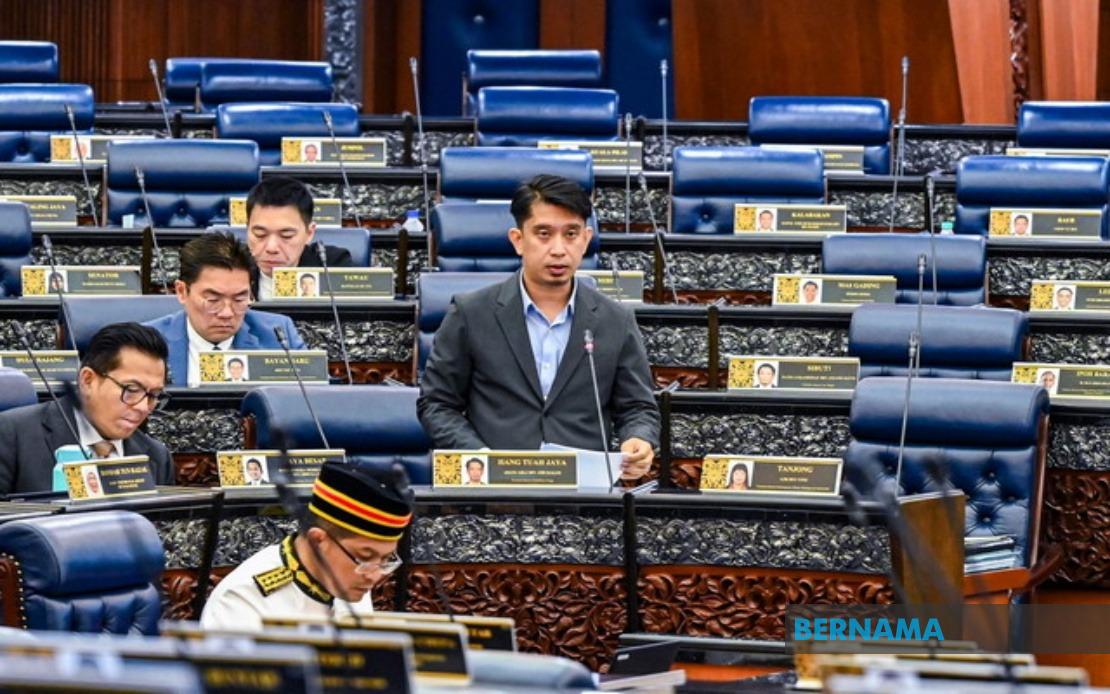
Malaysia's public higher education institutions have successfully channelled over 326,000 students into science and technology fields in just over three years, signalling strong governmental commitment to developing a knowledge-based workforce aligned with regional economic ambitions. Deputy Minister of Higher Education Adam Adli Abd Halim disclosed to Parliament that between 2023 and March 2026, a total of 326,419 diploma and first-degree students pursued studies in Science, Technology, Engineering and Mathematics (STEM) disciplines across public institutions of higher learning (IPTA), while 230,137 opted for non-STEM pathways. The data underscores a deliberate strategic pivot toward equipping the nation's youth with skills demanded by emerging technological sectors.
The enrollment figures reflect approximately 58.6 per cent of all new students choosing STEM over non-STEM fields, a distribution that authorities characterise as indicative of institutional alignment with broader economic imperatives. Adam Adli framed these statistics as evidence that Malaysia's public university system continues prioritising the cultivation of scientific and technical expertise in response to rapidly evolving global markets. He emphasised that this emphasis responds not merely to abstract national targets but to concrete demand signals emanating from high-technology industries that increasingly define competitive advantage within Southeast Asia and globally.
The government's approach, however, extends beyond simply counting how many students graduate with engineering or computer science degrees. Rather than establishing rigid quotas for specific engineering disciplines, the National Science, Technology and Innovation Policy (DSTIN) 2021–2030, overseen by the Ministry of Science, Technology and Innovation, adopts a more holistic framework centred on building comprehensive ecosystems of talent. This encompasses researchers, scientists, engineers and technologists (RSET) working across interconnected sectors, recognising that innovation systems require diverse expertise rather than isolated specialisation. The policy acknowledges that future breakthroughs in artificial intelligence, semiconductors, automation, digitalisation and green technology depend on collaborative environments where different technical disciplines intersect.
Central to the government's workforce planning is a specific benchmark: achieving 200 RSET professionals for every 10,000 workers by 2030. Extrapolating from Malaysia's projected national workforce of approximately 17.06 million people, this translates to a requirement for roughly 341,200 such professionals within the next three years. This target represents an ambitious expansion of the nation's research and innovation capacity, particularly given that Malaysia historically has struggled to retain highly qualified talent and compete with wealthier neighbours for scientific expertise. The gap between current output and future requirements suggests that intensifying university enrolment in STEM fields represents only one component of a broader strategy that must simultaneously address retention, quality and international competitiveness.
The emphasis on STEM education reflects Malaysia's historical positioning within regional and global technology supply chains, but also growing recognition that remaining competitive requires upgrading beyond manufacturing and assembly toward research, design and innovation. Sectors such as semiconductor fabrication and advanced automotive manufacturing demand workforces with sophisticated technical training. Similarly, Malaysia's declared aspirations to become a regional artificial intelligence and digital services hub require pools of skilled engineers and data scientists capable of developing, deploying and maintaining cutting-edge systems. The concentration of students in STEM fields thus represents an investment in Malaysia's capacity to move up technological value chains and capture higher-margin economic opportunities.
However, enrollment figures alone do not guarantee successful outcomes. The quality and relevance of STEM education remain critical variables determining whether graduates emerge equipped to contribute meaningfully to advanced industries. Government attention has therefore turned toward infrastructure and institutional capacity. Deputy Minister Adam Adli indicated that the ministry is currently focusing development efforts on four universities within the Malaysian Technical University Network (MTUN), a consortium specifically designed to align technical higher education with industry needs. This targeted approach suggests recognition that upgrading teaching quality, expanding research laboratory capacity and acquiring high-technology equipment requires concentrated resource deployment rather than diffuse efforts across numerous institutions.
The discussion of expert lecturers, research laboratories and sophisticated equipment points toward persistent challenges in Malaysia's research ecosystem. Attracting and retaining highly qualified academic staff with genuine expertise in cutting-edge fields proves difficult when comparable salaries and facilities exist elsewhere in the region. Building laboratories capable of supporting AI, semiconductor and advanced digital engineering programmes demands sustained capital investment that competes with other budgetary priorities. These infrastructural constraints often prove more limiting than student demand, as ambitious young Malaysians may find themselves enrolled in courses taught by instructors lacking current industry experience or studying using equipment that does not reflect actual workplace technologies.
The policy framework articulated by the government also reflects a sophisticated understanding that STEM talent alone cannot guarantee innovation or economic development. The emphasis on building comprehensive RSET ecosystems acknowledges that transforming knowledge into economic value requires institutional arrangements, industry partnerships, intellectual property protections and entrepreneurial culture alongside technical expertise. Malaysia's challenge extends beyond producing engineers to creating environments where such professionals can conduct meaningful research, develop new products and establish successful ventures. This broader systemic perspective represents an evolution beyond earlier approaches that sometimes treated education as isolated from the innovation infrastructure supporting its productive application.
Regional competition adds urgency to Malaysia's STEM education expansion. Neighbouring Singapore has long prioritised technological development with well-resourced universities and institutes producing high-quality researchers. Vietnam and Indonesia have begun similar expansions, with Vietnam particularly aggressive in building technical capacity to support its growing manufacturing and digital sectors. The Philippines possesses a large English-speaking workforce attractive to global technology companies. Within this competitive context, Malaysia's push to enrol over 326,000 students in STEM fields represents an effort to maintain relevance and capability in technology-intensive industries increasingly crucial to regional economic dynamism.
Looking forward, the government's projection that Malaysia will require 341,200 RSET professionals by 2030 raises questions about whether current enrollment levels and infrastructure investments will prove sufficient. If current trends continue at similar rates, the system might generate the necessary numbers, but quality concerns and the risk of graduate unemployment or underemployment in misaligned fields persist. Furthermore, the target assumes that Malaysia can retain domestic talent and attract skilled immigrants, both assumptions that depend on factors extending beyond education policy alone, including salary competitiveness, career opportunities and broader quality-of-life considerations.
The parliamentary disclosure regarding IPTA STEM enrollments ultimately reflects Malaysia's strategic bet that technological advancement represents the pathway to sustained prosperity in an increasingly competitive global economy. Whether this investment in technical human capital translates into genuine innovation leadership and equitable economic prosperity depends not merely on enrollment statistics but on the quality of education delivered, the infrastructure supporting students' learning and research, the relevance of curricula to actual industry demands, and the broader institutional environment determining whether graduates can apply their expertise productively within Malaysia or find themselves forced to contribute to other nations' development instead.

