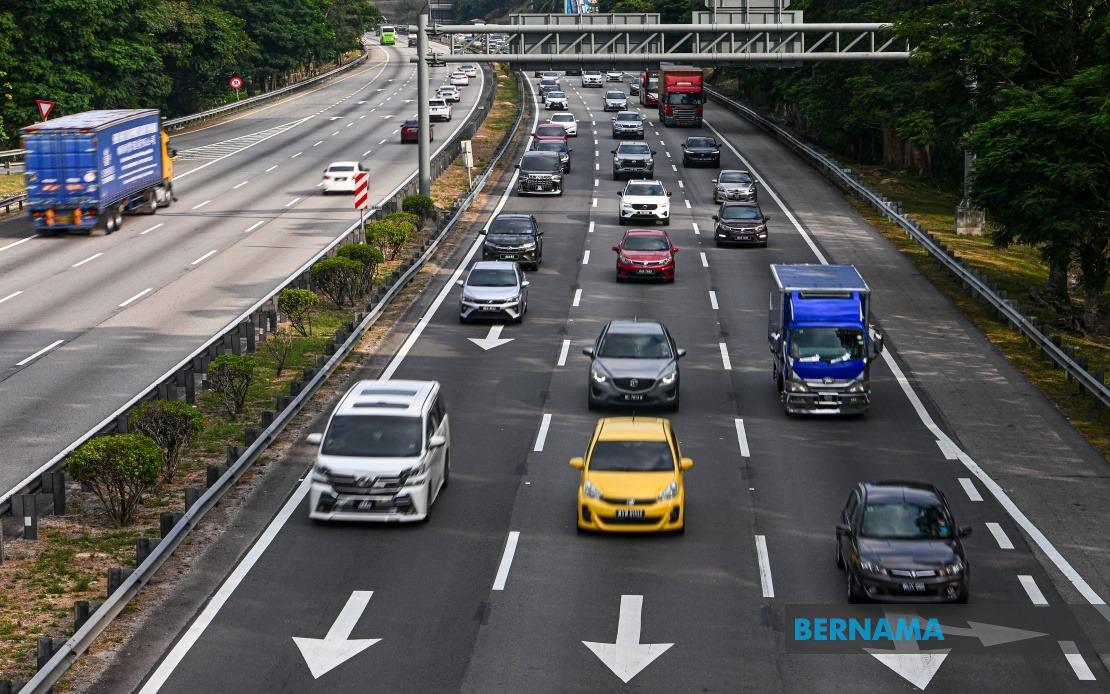
More than 300,000 voters are anticipated to travel to Johor ahead of Saturday's 16th state election, a movement that will significantly strain the state's highway infrastructure and test the efficiency of traffic management systems. The Malaysian Highway Authority (LLM) issued the warning this week, alerting the public to plan journeys carefully and anticipate delays on major access routes during the polling period. This surge in movement represents a substantial logistical challenge for a state that already experiences congestion during peak travel periods, making coordination between authorities and motorist compliance crucial for maintaining road safety and minimizing disruptions.
LLM chairman Datuk Seri Hasni Mohammad emphasized in an official statement that travellers heading to or transiting through Johor should reconsider their travel timing and routes to navigate around expected congestion hotspots. The advisory reflects the authority's recognition that a sudden influx of voters returning home creates unpredictable traffic patterns, particularly on corridors connecting Johor to other major population centres. This type of mass movement during elections, while reflecting democratic participation, inevitably strains transportation networks that operate under normal capacity assumptions throughout the year.
To facilitate smoother traffic flow, LLM announced a decision to postpone planned lane closure and maintenance works on highways during polling day, with the exception of critical emergency repairs that cannot be deferred. This represents a practical accommodation by the authority to reduce unnecessary disruptions and keep all available lanes operational when demand peaks. By deferring non-emergency construction activities, authorities are acknowledging that voter mobility takes precedence over routine infrastructure maintenance schedules, a calculation that reflects the significance of enabling electoral participation.
The authority specifically highlighted the northbound North-South Expressway between Simpang Renggam and Senai as an area requiring heightened caution, where third-lane construction activities continue amid regular traffic flow. Motorists using this section will encounter narrower passages and potentially slower movement, making it a vulnerability point in the highway network during high-traffic periods. Drivers are instructed to observe reduced speed limits through this zone and maintain heightened awareness of surrounding vehicles, as congestion combined with construction constraints dramatically increases accident risk.
Beyond traffic management, LLM urged motorists to undertake practical preparations that demonstrate good judgment and reduce unnecessary disruptions. Vehicle roadworthiness checks are essential when undertaking longer journeys, as mechanical failures during peak travel periods can trigger cascading delays affecting thousands of other road users. Similarly, maintaining adequate balances in Touch 'n Go accounts and e-wallet systems ensures seamless toll collection without stopping, which becomes particularly important when highways experience congestion.
The authority encouraged widespread adoption of the TuJu app as a planning tool, enabling voters to identify optimal departure times and routes based on real-time traffic conditions. This technology-enabled approach allows individuals to make informed decisions about their journeys rather than guessing at conditions, ultimately distributing traffic demand more evenly across available routes and time windows. By shifting traveller decision-making toward data-informed choices, the app functions as a decentralized traffic management system where thousands of individual routing decisions collectively optimize network usage.
Rest and service areas along major expressways will play an important role during the election travel period, providing safe locations for drivers to recover from fatigue and reduce accident risks on busy routes. The authority specifically advised travellers to use designated R&R facilities and lay-bys rather than attempting to rest on roadside shoulders or emergency lanes, where stopped vehicles create hazard zones for passing traffic. Proper use of these facilities reflects both personal safety awareness and consideration for the safety of other road users.
The Election Commission has scheduled July 11 as polling day, providing voters with a specific deadline for returning to their constituencies to cast votes. This advance notice theoretically allows individuals to plan travel arrangements strategically, though in practice many voters often delay departure decisions until closer to polling day, creating compressed demand periods that strain highways. The concentrated nature of electoral travel—where millions of people must move within a narrow time window for a specific purpose—differs fundamentally from regular dispersed traffic patterns and presents unique management challenges.
LLM established multiple channels for real-time traffic information, including its Facebook page, TikTok account at @llmtrafik, and a dedicated Traffic Management Centre hotline at 1-800-88-7752. These communication platforms enable drivers to access current conditions, incident reports, and alternative routing suggestions during their journeys. The authority also made live CCTV camera feeds available through its official website, allowing drivers to assess conditions on specific highway sections before committing to particular routes. This multi-channel information strategy recognizes that modern drivers have diverse preferences for accessing real-time data and ensures that different user groups can find information through their preferred platforms.
The approach taken by LLM demonstrates how election administration extends beyond voting mechanics to encompass the broader infrastructure required to enable democratic participation. The decision to temporarily suspend non-emergency highway maintenance, coupled with aggressive public communication campaigns and information technology deployment, represents a deliberate prioritization of voter accessibility. For Malaysian drivers heading to Johor specifically to vote, the coordination between electoral authorities and infrastructure managers creates conditions where democratic participation becomes practically feasible despite enormous logistical pressures on transportation networks.
For regional observers, the Johor election movement patterns reveal the scale of internal migration that characterizes Malaysia's electoral system, where constituencies contain significant populations of seasonal residents and those working elsewhere. This structural feature of Malaysian politics necessitates that states and the federal government coordinate on transportation policies during major electoral events. The expected 300,000-voter movement for a single state election underscores how electoral administration in federal systems requires cooperation across multiple governance levels and technical domains beyond traditional electoral commission functions.

