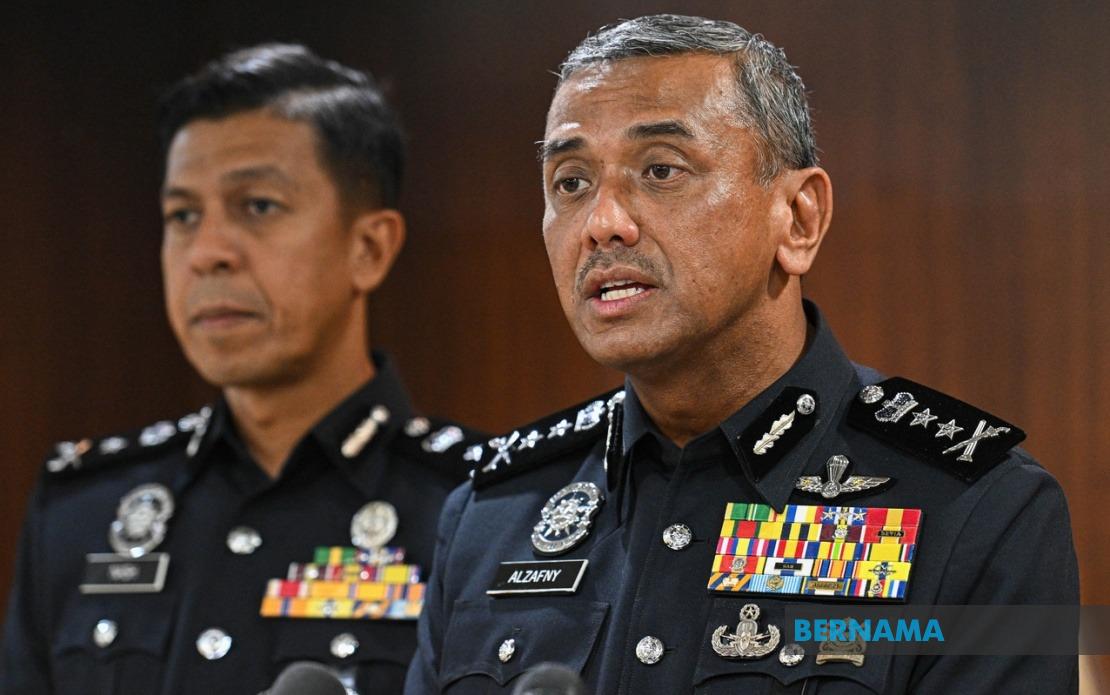
The 16th Negeri Sembilan state election will see an unusually large cohort of security force personnel participating in early voting arrangements. According to Negeri Sembilan police chief Datuk Alzafny Ahmad, a combined total of 22,339 eligible voters from the Royal Malaysia Police and Malaysian Armed Forces, encompassing both individual officers and their family members, will exercise their democratic rights before the main polling day. This early voting block represents a significant portion of the state's electoral participation and underscores the logistical complexity of managing security personnel during electoral periods.
The breakdown reveals that police representation comprises 5,455 officers and personnel from across Negeri Sembilan, with the armed forces and their spouses accounting for the substantially larger contingent of 16,884 voters. This distinction reflects the considerable military presence within the state and the electoral commission's recognition that security personnel require special scheduling provisions to balance their duty commitments with their voting rights. The arrangement demonstrates how elections in Malaysia accommodate the constitutional rights of those engaged in essential services that typically demand continuous deployment.
Operational planning for the election reflects the security establishment's commitment to maintaining order throughout the electoral cycle. The police chief disclosed that 1,796 officers and personnel will be stationed across designated zones specifically on early voting day, July 28, representing a substantial mobilisation of resources to facilitate both the voting process itself and the security infrastructure surrounding it. This deployment figure indicates the seriousness with which authorities approach the management of civilian and security force participation in electoral activities.
Beyond early voting day, security arrangements will intensify through subsequent election phases. The nomination day on Saturday, July 20, will require 2,393 personnel on deployment duties, establishing a presence that signals governmental commitment to transparent candidate registration. Throughout the official campaign period leading up to polling day, 1,685 personnel will maintain security vigilance, and this number will escalate to 4,788 officers on August 1 when Negeri Sembilan residents vote to determine their state representation. These sequential deployments illustrate how electoral security operates as a graduated response rather than a single concentrated effort.
Datuk Alzafny's public statements to the media extended beyond administrative details to emphasise behavioural expectations for all participants in the democratic process. Candidates and their supporters received explicit reminders to maintain discipline and restraint throughout the campaign period, with the police chief framing voter conduct and candidate behaviour as equally critical to electoral integrity. The emphasis on controlling supporter movements and preventing unauthorised processions reflects Malaysia's historical experience with electoral periods and the potential for enthusiastic political mobilisation to occasionally exceed peaceful bounds.
The prohibition framework articulated by the police leadership encompasses multiple categories of problematic conduct extending well beyond conventional violence or intimidation. The authorities have signalled particular sensitivity regarding false information dissemination, which in contemporary Malaysian politics frequently manifests through social media channels that can rapidly amplify divisive narratives. Slander and hate speech prohibitions target personal and communal attacks that, while sometimes framed as political commentary, risk inflaming tensions across ethnic and religious lines. These restrictions reflect Malaysia's constitutional commitment to racial and religious harmony as foundational to national stability.
Matters concerning religion, race, and the Royal Institution occupy a specially protected status within the electoral guidelines. Datuk Alzafny clarified that this sensitivity extends comprehensively across political speeches delivered at rallies, campaign materials distributed in physical form, media statements issued by candidates and party officials, and digital content posted across social media platforms. This holistic approach recognises that modern campaigns operate simultaneously across multiple communications channels, and restricting only certain forums would create problematic loopholes. The emphasis on these three domains reflects their particular sensitivity within Malaysian constitutional law and social cohesion frameworks.
The timing of the Negeri Sembilan election within Malaysia's broader electoral calendar carries regional significance, occurring during a period when multiple state administrations face potential transitions. The state election represents an opportunity for voters to assess governance performance at the subnational level and for political parties to gauge their respective appeal across the peninsula's central regions. For Malaysian observers tracking the trajectory of electoral politics beyond federal Parliament, Negeri Sembilan provides meaningful data about voter preferences and party momentum during this particular political cycle.
Datuk Alzafny's message regarding post-election conduct reflects a mature understanding that electoral legitimacy extends beyond voting day itself. The call for candidates and supporters to accept official results gracefully and to channel any objections through legal mechanisms rather than street mobilisation demonstrates institutional emphasis on rules-based dispute resolution. This framing recognises that while electoral competition is inherently contentious, democracies depend on participants ultimately accepting outcomes and transitioning from campaign mode to governance mode. The specific warning against actions that could jeopardise public security signals particular concern about maintaining normality during the sensitive period immediately following result announcements.
For Southeast Asian observers monitoring electoral management quality, Negeri Sembilan's preparations offer insights into how Malaysia operationalises its commitment to democratic processes while managing security imperatives. The coordination between law enforcement, electoral administration, and political actors suggests institutional mechanisms designed to accommodate competing demands. The state's experience with orchestrating early voting for security personnel while maintaining overall electoral integrity contributes to broader regional discussions about managing elections in diverse, complex societies where multiple institutions must function in concert.
The comprehensive security and conduct guidelines issued ahead of the election reflect Malaysian authorities' recognition that electoral periods carry particular potential for social discord if not properly managed. Rather than restricting voting access or candidate participation, the approach emphasises channelling political energy through defined, peaceful processes while establishing clear boundaries around conduct that threatens community harmony. This regulatory philosophy underpins Malaysia's approach to competitive politics within a multicommunal democracy.

