More than 200 community-driven projects are competing for grants under Singapore's newly launched SG Partnerships Fund, a S$50 million initiative designed to empower Singaporeans to develop and expand ideas that benefit their neighbourhoods and society at large. Announced by Prime Minister Lawrence Wong during the February 2026 Budget speech and formally established in April 2026, the fund represents a significant government commitment to bottom-up social innovation. The scheme has already begun processing applications, with early beneficiaries demonstrating the diverse nature of ground-up initiatives that can gain traction with financial backing and institutional support.
The fund operates through a tiered structure that caters to initiatives at different stages of development and organisational maturity. At the entry level, the seed tier provides grants up to S$5,000 for individuals, informal groups, and Singapore-registered organisations piloting fresh concepts within their communities. This category has proven surprisingly popular among applicants, according to Hasliza Ahmad, director of the Singapore Government Partnerships Office (SGPO), which administers the fund. The accessibility of this tier—both in terms of funding quantum and application requirements—has lowered barriers to participation, allowing citizens with modest budgets to transform neighbourhood-scale ideas into tangible programmes.
Moving up the structure, the sprout tier supports established organisations seeking sector-wide impact, offering grants reaching S$50,000. Most recently, in July 2026, the fund introduced a scale tier designed for mature organisations aiming to effect systemic change across entire sectors, with grants available up to S$1 million. This graduated approach reflects a deliberate policy calculus: recognising that community action operates along a spectrum from nascent grassroots efforts to sophisticated institutional interventions. By offering multiple entry and scaling pathways, the fund encourages both experimentation at the neighbourhood level and consolidation of proven models across wider constituencies.
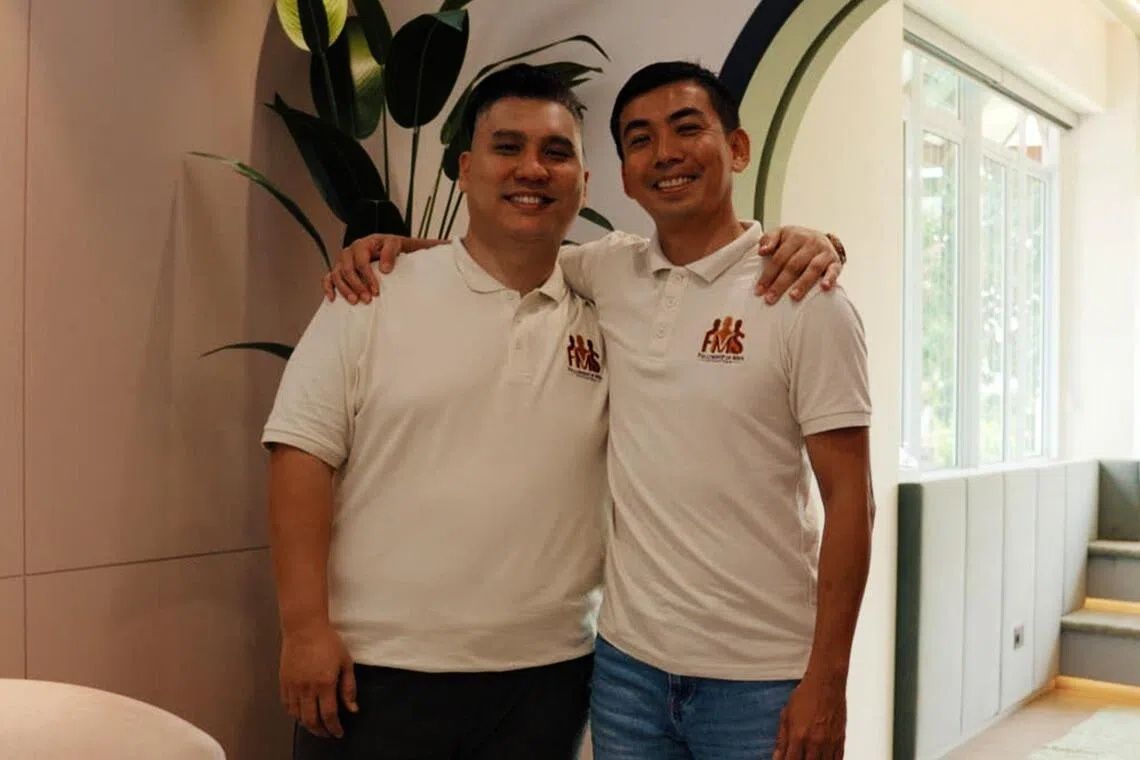
Fellowship of Men Singapore illustrates how modest seed funding can catalyse meaningful social work addressing sensitive issues. Co-founders Ben Ang, 45, a former family service centre director, and Ismail Didih Ibrahim, 41, a volunteer-turned-food-stall operator, recognised that preventive approaches to male violence and aggression outperform crisis-driven interventions. Rather than focusing on remedial treatment of troubled men, they pivoted toward encouraging help-seeking behaviour and normalising emotional expression. After leaving full-time employment in January 2026, the pair established their non-profit with programmes combining community engagement, mentoring, and structured group activities that blend practical tasks with guided dialogue on masculinity, relationships, and wellbeing.
With a S$5,000 seed grant, Ang and Didih organised a three-hour engagement session at a culinary school in Geylang, involving 24 men alongside their families. The setting itself—a professional kitchen rather than Ang's home—signalled legitimacy and generated conversations on self-care, emotional health, and help-seeking that might otherwise have remained stilted or avoided. The initiative reflects a broader insight: that reframing masculine identity beyond the provider-protector dichotomy requires accessible, relatable entry points where men encounter these conversations without the psychological friction of formal therapeutic settings. The founders now aspire to scale Fellowship of Men Singapore into a broader movement, having demonstrated proof of concept and seen participant enthusiasm.
Another seed grant recipient, 21-year-old Loke Wai Yee from LASALLE College of the Arts, observed a gap in Christmas giving infrastructure during the annual "angel tree" season. Though the scheme—enabling disadvantaged children to express gift wishes through public displays—operates in certain shopping malls, its reach remains limited geographically and economically. Expensive gift options exclude younger and budget-conscious donors, while coverage skews toward wealthier districts. Recognising this inequity, Loke assembled 12 peers to create Little Wishes, an online platform democratising gift-giving to disadvantaged children by enabling donors to select presents within their budget constraints and receive matched beneficiary assignments.
Little Wishes exemplifies how technology and design can amplify community generosity when financial and logistical obstacles are removed. The team originally intended to build their platform independently, but that approach would have sacrificed user experience and functionality. The S$5,000 grant enabled them to engage professional web developers, resulting in a properly designed, intuitive site launching in August 2026. Beyond the monetary grant, SGPO provided invaluable connective tissue: introductions to social service agencies identifying beneficiaries, signposting toward complementary funding sources, and ongoing mentorship to navigate organisational development. The initiative is positioned to support 80 beneficiaries in its initial phase, with growth potential if volunteer recruitment and donor engagement scale.
The SGPO's supporting role extends considerably beyond cheque-writing. Under the leadership of Hasliza Ahmad, the office functions as an ecosystem builder, connecting grant recipients with networks, providing guidance on fund deployment, and ensuring accountability without excessive bureaucratic friction. This approach acknowledges that many grassroots organisers lack not merely financial resources but also organisational infrastructure, professional networks, and mentorship relationships that larger institutions take for granted. By bundling grants with strategic support, the SGPO multiplies the effective value of financial disbursements and increases the likelihood that funded initiatives will mature into sustainable programmes.
Senior Minister of State for Culture, Community and Youth Low Yen Ling, speaking at SGPO's inaugural community exchange event on 4 July at Common Ground Civic Centre in Bedok North, characterised the fund's tiered architecture as a "pathway for Singaporeans to develop and grow their ideas." This framing emphasises progression: individuals or groups need not conceive perfect, large-scale solutions from inception. Instead, they can pilot concepts at modest scale, gather evidence of impact and feasibility, and graduate toward larger ambitions with accumulated confidence and track record. The newly launched scale tier, available from July 2026, operationalises this logic by creating a destination for established initiatives seeking sector-wide influence.
The fund's design responds to demographic and social shifts within Singapore. Younger citizens increasingly favour participatory governance models where government functions as enabler rather than primary provider. Simultaneously, Singapore's ageing population, shifting family structures, and evolving mental health awareness create demand for community-level interventions addressing loneliness, wellbeing, and social cohesion—challenges that centralised bureaucracies struggle to address with sensitivity and cultural nuance. Ground-up initiatives, precisely because they emerge from lived experience within specific communities, often possess cultural fluency and trust that government-imposed programmes cannot easily replicate.
For Malaysia and the broader Southeast Asian context, Singapore's SG Partnerships Fund offers a instructive model for deploying public resources toward social innovation. The initiative suggests that even wealthy, well-governed city-states face limitations in addressing complex social issues through top-down mechanisms alone. The tiered grant structure balances ambition with pragmatism, permitting experimentation while maintaining accountability. The SGPO's integration of financial support with mentorship and network access demonstrates recognition that money alone remains insufficient; emerging social entrepreneurs require institutional scaffolding.
The uptake of over 200 applications within months of the fund's launch signals strong demand for platforms enabling community action. As Singapore grapples with mental health awareness, changing gender norms, and inequality, the projects funded through this mechanism—from Fellowship of Men Singapore to Little Wishes—address real social gaps that market mechanisms and government provision have underserved. If successful, these initiatives may influence how other developed economies and aspiring Southeast Asian cities structure public investment in community-led problem-solving, particularly around traditionally sensitive topics like male mental health and child welfare where institutional approaches prove insufficient without grassroots partnership.

