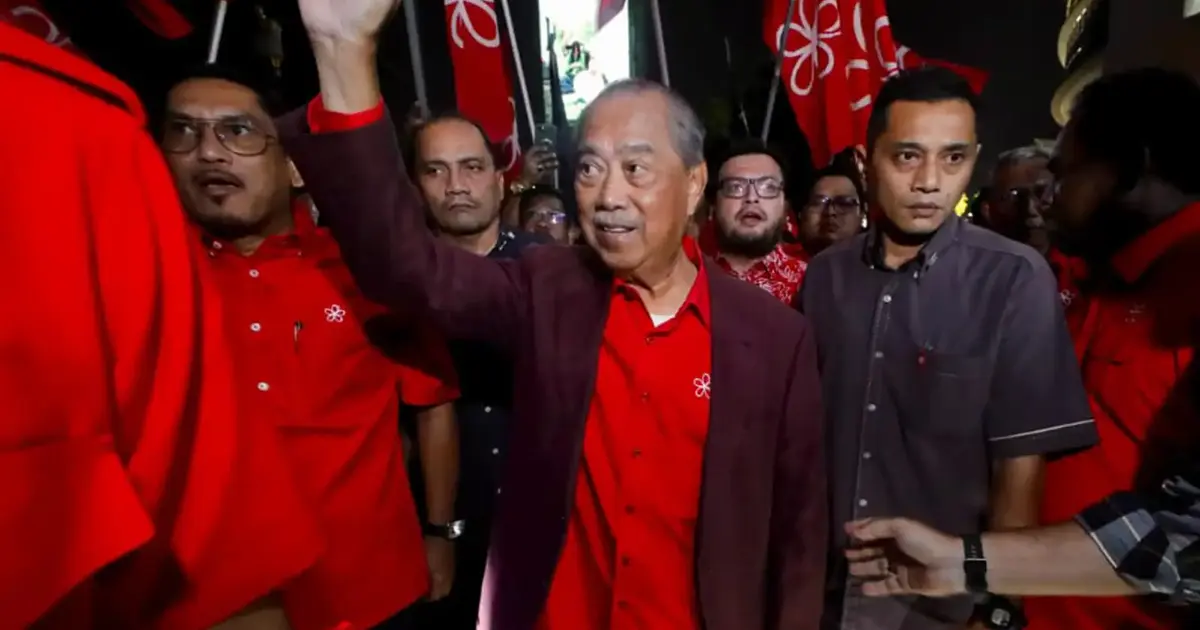
More than 200 Bersatu members gathered to demonstrate their backing for Muhyiddin ahead of what promises to be a consequential internal party assembly that will tackle several pressing political matters affecting the party's immediate future and longer-term positioning in Malaysia's coalition landscape.
The show of grassroots support underscores the significance of the upcoming meeting, which is expected to centre on preparations for state-level contests in Johor and Negeri Sembilan. These elections represent critical opportunities for Bersatu to consolidate its standing in key Malaysian states and demonstrate electoral viability beyond its historical strongholds. For a party navigating significant political transitions in recent years, momentum in state contests can translate into renewed leverage in federal politics and enhanced negotiating power within broader political coalitions.
Beyond the immediate electoral agenda, the assembly will also examine Bersatu's relationship with PAS, one of the defining questions facing the party as it calculates its strategic direction. The nature and depth of collaboration between the two parties carries implications that extend far beyond internal party mechanics, potentially reshaping the composition of Malaysia's political blocs and influencing how Malay-Muslim constituencies organise their political preferences. This relationship has proven contentious within Bersatu circles, with different factions holding divergent views on the optimal path forward.
Muhyiddin's position within the party has been subject to considerable scrutiny in recent months, making the visible rally of support a notable moment in Bersatu's internal dynamics. The gathering provides the party leadership with a tangible demonstration of backing from the grassroots, even as the party contends with broader questions about its strategic positioning and electoral prospects. For a party that has experienced significant internal turbulence and repositioning, such shows of unity can matter operationally and symbolically as leadership navigates difficult decisions.
The timing of the rally and subsequent meeting reflects the accelerating pace of Malaysia's political calendar. With state elections in Johor and Negeri Sembilan looming, Bersatu must move quickly to finalise candidate selections, campaign strategies, and coalition arrangements. Delays in decision-making at this stage risk squandering preparation time and creating uncertainty that opposition parties might exploit. The party leadership is therefore under pressure to emerge from the assembly with clear directives and unified messaging.
For Malaysian observers, Bersatu's trajectory warrants close attention as the party continues to define its role in the country's political ecosystem. Founded more recently than many Malaysian political institutions, Bersatu has nonetheless established itself as a significant player capable of influencing national outcomes. How it performs in forthcoming state contests and how it manages its external alliances will provide important signals about the party's capacity to sustain relevance and grow its political footprint.
The question of PAS collaboration deserves particular scrutiny given the broader implications for Malaysian politics. Any deepening or recalibration of Bersatu-PAS relations could affect coalition configurations, electoral strategies, and the political narratives that parties deploy to mobilise their respective supporters. These considerations extend beyond internal party matters to touch on fundamental questions about how Malaysia's Malay-Muslim political constituencies organise themselves and which parties emerge as dominant voices within that spectrum.
The rally itself also reflects the reality that Malaysian political parties, despite sophisticated national-level strategic calculations, ultimately depend on grassroots energy and active supporter engagement to translate electoral competitiveness into actual poll performance. Bersatu's demonstrated ability to mobilise over 200 supporters around its leadership suggests a functioning party apparatus, though numerically such gatherings are modest compared to some larger Malaysian political parties' mobilisation capacities.
Looking ahead, the outcome of Bersatu's assembly will be closely watched not only within the party itself but across Malaysia's broader political ecosystem. Clear decisions on electoral preparations and coalition strategy could provide the party with operational clarity and allow it to focus energy on competitive state contests. Conversely, any ambiguity or continued internal disagreement could undermine the party's effectiveness and distract attention from the substantive work of campaigning and policy development that state elections demand.
For Southeast Asian observers with interest in Malaysian politics, Bersatu's evolution continues a broader pattern of political party adaptation and coalition reorganisation that has characterised the region in recent years. As traditional political alignments have shifted and new political forces have emerged, smaller and medium-sized parties have been forced to recalculate their strategies and positioning. Bersatu's journey in navigating these dynamics offers lessons relevant to understanding how parties in democracies with complex ethnic and religious demographics manage their political survival and growth amid changing circumstances.