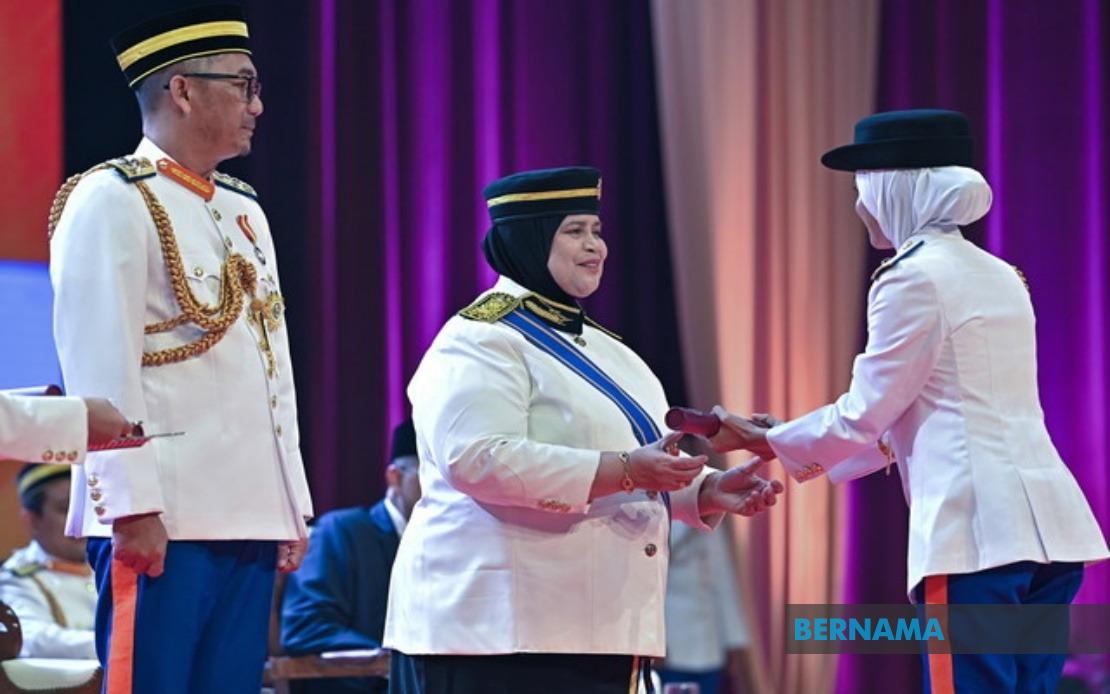
Malaysia is rolling out a fresh allowance scheme for Civil Defence Student Corps (Kor SISPA) cadets, marking a tangible step toward recognising the contributions of thousands of university volunteers who support disaster response and community safety efforts nationwide. The initiative, announced at the 17th National Kor SISPA Commissioning Ceremony held at Universiti Pendidikan Sultan Idris in Tanjong Malim, will initially benefit 1,107 cadets stationed across 36 higher learning institutions, with payments commencing this month under a phased implementation approach.
Deputy Minister of Rural and Regional Development Datuk Rubiah Wang, representing Deputy Prime Minister Datuk Seri Dr Ahmad Zahid Hamidi at the ceremony, framed the allowance as evidence of the government's commitment to translating welfare discussions into concrete action. The inaugural phase carries a financial commitment of RM500,000, providing the foundation for what officials envision as a progressively expanding benefit structure. This measured rollout reflects both budgetary prudence and an acknowledgment that resource allocation for volunteer support requires careful calibration across multiple institutions and cohorts.
The allowance structure itself demonstrates thoughtful differentiation based on educational attainment. Cadets holding bachelor's degrees will receive RM9.80 per hour of service, whilst diploma holders receive RM8 per hour. This tiered approach ties compensation directly to hours of actual duty performed rather than offering flat payments, creating a system that rewards active participation and operational engagement. The hourly rate framework also provides flexibility for cadets juggling academic commitments with their voluntary civil defence responsibilities, a practical consideration given that most participants are full-time students.
The underlying rationale for the allowance speaks to broader policy objectives within Malaysia's civil defence architecture. By providing financial recognition, the government aims to catalyse greater participation among university students in Kor SISPA programmes, transforming what might otherwise be a marginal extracurricular commitment into a more attractive and valued opportunity. The initiative also serves a motivational function, signalling to young Malaysians that their contribution to public safety infrastructure warrants tangible acknowledgment and support from the state.
Kor SISPA's operational scope extends significantly beyond headline-grabbing disaster response activities. As Datuk Rubiah emphasised, civil defence volunteers operate throughout the year, providing crucial assistance at university events, campus activities, and community functions both within and beyond institutional boundaries. This year-round engagement represents a substantial informal contribution to Malaysia's civil protection ecosystem, one that has historically received minimal financial recognition. The allowance scheme, however modest in its initial quantum, represents a philosophical shift in how volunteer labour is valued within government structures.
The programme itself has demonstrated considerable institutional resilience since its establishment in 2010. Operating across universities, higher learning institutions, and teacher education centres, Kor SISPA has graduated approximately 11,802 members to date, establishing itself as a significant pipeline for developing young people with practical civil defence knowledge and community-minded attitudes. These graduates constitute a dispersed national network capable of contributing to emergency preparedness and response efforts across diverse geographical and sectoral contexts.
The government's stated intention to explore additional fiscal mechanisms for expanding the scheme reflects recognition that current resources represent merely a starting point. Officials acknowledge that comprehensive coverage of all eligible cadets would require substantially greater budgetary allocation, a reality that necessitates phased expansion and ongoing evaluation of programme effectiveness. This pragmatic approach allows for initial implementation while maintaining space for evidence-based refinement and potential scaling depending on demonstrated outcomes and available resources.
For Malaysian higher education institutions, the allowance scheme carries institutional implications extending beyond simple cadet compensation. Universities that host active Kor SISPA units now operate within a framework where volunteer civil defence participation carries formal financial recognition, potentially reshaping student perceptions of civic engagement and institutional safety infrastructure. This may influence recruitment patterns for the programme, attracting students motivated partly by the prospect of compensated service hours that provide supplementary income alongside their educational pursuits.
The expansion beyond the initial 1,107 cadets represents a substantial policy ambition, though one tempered by fiscal realities. The next commissioning ceremony, scheduled for Universiti Sultan Zainal Abidin (UniSZA) in the following year, will provide a milestone opportunity to assess scheme implementation, gather feedback from participating cadets and institutions, and establish a foundation for subsequent phases of rollout. These formal commissioning events serve simultaneously as celebration of cadet achievement and strategic platforms for policy communication within the civil defence ecosystem.
From a Southeast Asian perspective, Malaysia's move reflects a broader regional trend toward formalising and professionalising volunteer civil protection structures. As climate change intensifies extreme weather events and urbanisation concentrates populations in high-risk zones, countries throughout the region are recognising that sustained volunteer engagement requires more than moral appeals and organisational commitment. Financial recognition, even at modest levels, represents a necessary component of national disaster preparedness strategies that increasingly depend on young, educated cadres capable of bridging community and institutional response capacities.
The allowance scheme ultimately signals recognition that civil defence represents not merely an optional extracurricular pursuit but a legitimate dimension of national safety infrastructure worthy of state investment. By extending compensation to participating cadets, Malaysia joins peers in acknowledging that volunteer systems sustaining public safety require financial scaffolding alongside institutional support and moral encouragement. The modest RM500,000 initial outlay thus carries symbolic weight exceeding its numerical value, framing civil defence participation as a valued national contribution rather than an marginalised volunteer effort.

