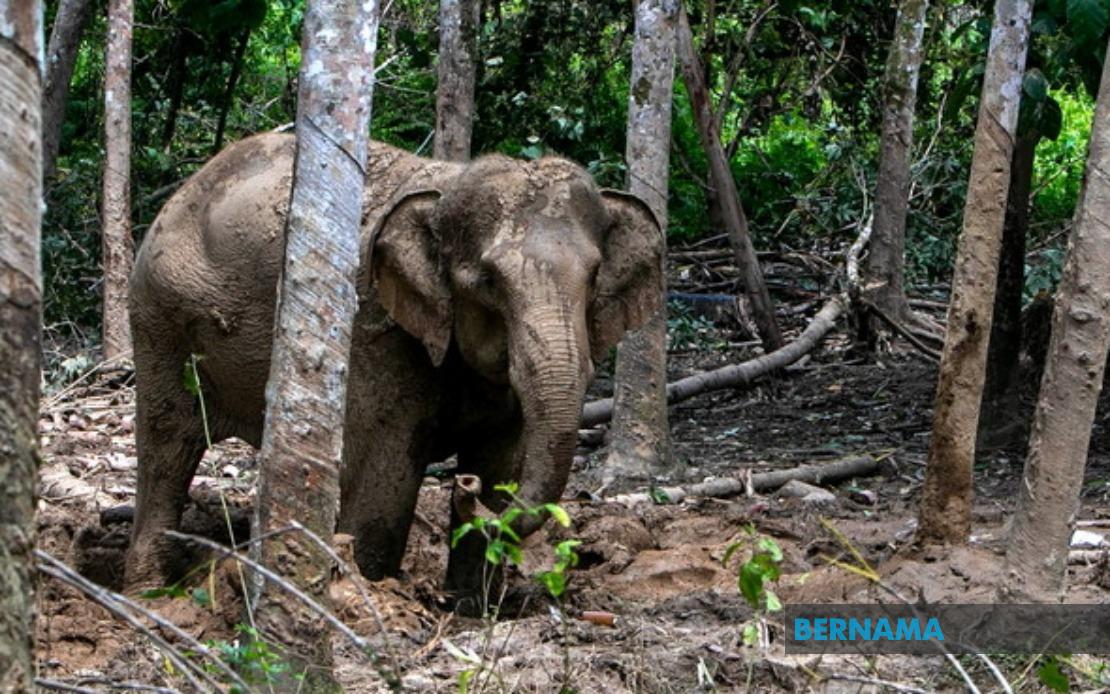
A resident of Kampung Orang Asli Perjek in the Legap Resettlement Scheme near Sungai Siput, Perak, sustained serious injuries last Friday evening after coming under attack from an elephant whilst attempting to protect his community's agricultural plots. The incident underscores the mounting pressures faced by indigenous communities living at the interface between human settlements and wildlife habitats, where elephants increasingly venture into populated areas in search of food sources.
According to the Department of Wildlife and National Parks (PERHILITAN) Peninsular Malaysia, officers from the Sungai Siput district office responded to an emergency call received at approximately 10 pm. Upon arrival, investigators determined that a group of four elephants had breached the perimeter of the residential area and proceeded to forage on cassava and banana crops cultivated by villagers on the periphery of their homes. Such incursions have become more frequent as elephant populations in Peninsular Malaysia face shrinking natural habitats, forcing them to seek sustenance in agricultural zones where human activity concentrates.
The victim, working alongside several fellow villagers, initiated efforts to repel the intruders from their farms using conventional deterrent tactics. However, as the confrontation intensified, he ventured closer to the herd than prudent, inadvertently positioning himself within striking distance of one of the animals. The elephant responded with a sudden and violent assault, leaving the man with multiple trauma injuries, significant blood loss, and a temporary loss of consciousness at the scene. His rapid response from neighbouring residents likely prevented further deterioration of his medical condition before professional care could be administered.
The injured man was evacuated to Raja Permaisuri Bainun Hospital in Ipoh, where medical staff stabilised his condition. At time of report, he remained hospitalised in stable condition, though the severity of his injuries suggests he may face a prolonged recovery period. Such attacks carry substantial risks beyond immediate physical harm, potentially leaving survivors with lasting psychological trauma and chronic pain that disrupts their ability to continue traditional livelihood practices.
Drone surveillance deployed by PERHILITAN personnel confirmed that all four elephants had voluntarily departed the settlement by the time of the investigation, suggesting they likely continued their search for food sources in less populated forest areas. The department has since implemented additional management protocols aimed at deterring future incursions into the village perimeter, though the underlying drivers of human-wildlife conflict—habitat loss and food scarcity—remain unaddressed.
PERHILITAN has initiated assistance procedures to help the victim's family access compensation through the Wildlife Attack Victim Assistance initiative, a programme administered by the Ministry of Natural Resources and Environmental Sustainability. This framework, while helpful, represents a reactive response to conflicts that might be preventable through more proactive habitat management and elephant corridor protection.
The incident provides a sobering reminder of the risks inherent in direct confrontations with wild elephants, animals that possess vastly superior strength and unpredictable responses to perceived threats. PERHILITAN publicly cautioned citizens against attempting to resolve wildlife incursions independently, emphasising that such efforts, however well-intentioned, expose individuals to extreme danger. The department strongly recommends that communities witnessing elephant activity immediately contact wildlife authorities rather than pursuing self-help remediation strategies.
For residents in areas prone to elephant visitations, the broader lesson involves understanding elephant behaviour and implementing community-wide prevention measures. These might include deploying noisemakers, maintaining better-fortified crop storage facilities, and establishing buffer zones between residential structures and cultivated fields. Such preparatory investments require coordination between local authorities, community leaders, and wildlife agencies.
The Orang Asli communities positioned in resettlement schemes across Perak and Selangor face particular vulnerability due to their proximity to remaining elephant populations. Many such settlements exist on the periphery of protected forests, placing residents in unavoidable contact zones. Policy discussions at state and federal levels should examine whether current resettlement location decisions adequately account for wildlife conflict risks, and whether alternative arrangements or enhanced support mechanisms might better protect indigenous populations from such hazards.
PERHILITAN has activated multiple reporting channels for future incidents, encouraging the public to contact the wildlife hotline at 1-800-88-5151 or lodge complaints through the Public Complaints Management System (SISPAA) accessible via the department's official website. Rapid reporting enables faster response deployment and documentation that informs long-term conflict mitigation strategies. As elephant populations in Peninsular Malaysia continue adapting to habitat fragmentation, such incidents will likely increase unless comprehensive conservation and management approaches address root causes alongside emergency response protocols.

