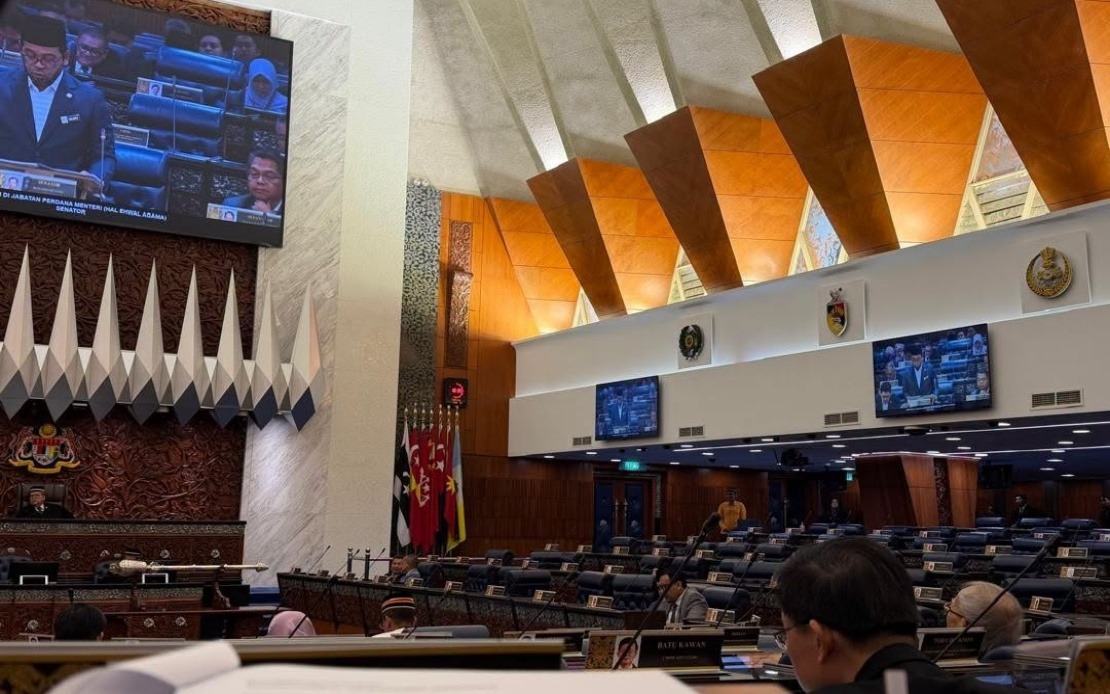
The opposition's decision to abandon parliamentary proceedings during a special sitting dedicated to the Tabung Haji Royal Commission of Inquiry report has drawn sharp criticism from the government benches, with backbenchers questioning the sincerity of opposition commitment to protecting Muslim depositors' interests. The walkout, orchestrated before Minister in the Prime Minister's Department for Religious Affairs Dr Zulkifli Hasan could present the RCI findings to Parliament, represents a critical juncture in how Malaysia's political establishment handles accountability on one of the country's most significant Islamic financial institutions.
Datuk Seri Dr Zaliha Mustafa, chairman of the MADANI Government Backbenchers Club and Sekijang MP, articulated the government's position that opposition MPs squandered a rare parliamentary opportunity to scrutinise the report's findings through formal debate and factual contestation. She emphasised that Parliament provided the appropriate forum for opposition members to challenge any disputed conclusions, propose alternative interpretations, or defend any party against allegations—yet they chose instead to stage a protest and exit the chamber. This decision, according to Dr Zaliha, contradicts the opposition's frequent public pronouncements about championing Islamic principles and Muslim welfare.
The backdrop to this confrontation involves the Perikatan Nasional chief whip Datuk Seri Takiyuddin Hassan proposing postponement of the special sitting after noting the absence of both Prime Minister Datuk Seri Anwar Ibrahim and Deputy Prime Minister Datuk Seri Fadillah Yusof, both undergoing medical treatment. Speaker Tan Sri Johari Abdul proceeded with the sitting despite this proposal, triggering the opposition's boycott and walkout. The decision to continue without the prime minister's presence became the flashpoint that mobilised opposition resistance, though the underlying dispute centres on how Malaysia's parliament should conduct accountability reviews of significant institutions.
Tabung Haji, formally known as Lembaga Tabung Haji, manages billions of ringgit in savings from Malaysian Muslims participating in the hajj pilgrimage system. The institution's governance and financial stewardship have been subject to considerable public scrutiny and concern, making the RCI report a document of significant national importance. Any parliamentary examination of its findings carries weight beyond routine legislative business, as depositors' life savings and the institution's credibility hang in the balance. The opposition's rejection of participating in this formal parliamentary review thus carries particular symbolic weight regarding the seriousness with which all political stakeholders treat public accountability.
Dr Zaliha challenged the opposition to explain their tactical retreat by posing a pointed rhetorical question: who genuinely does not wish the Tabung Haji matter thoroughly debated? She argued that opposition MPs claiming concern for transparency, institutional trust, Islamic principles, and Muslim interests should have remained in the chamber to contest the RCI's conclusions on factual and argumentative grounds. Walking out, she suggested, undermines their credibility on these precisely stated values, transforming what should be a substantive policy disagreement into what appears to observers as political theatre.
The Tabung Haji issue resonates differently across Malaysia's political landscape than many other parliamentary disputes. For opposition parties positioned as advocates for Islamic governance and Muslim welfare, abstaining from detailed parliamentary scrutiny of an institution serving millions of Muslim depositors creates a particularly acute credibility challenge. The government's framing suggests that genuine concern for Muslim interests would manifest through engaged parliamentary presence, rigorous questioning, and factual debate rather than symbolic protest and absence.
Parliamentary walkouts carry legitimate political communication value—they signal strong principled objection and can mobilise public attention toward perceived procedural injustices. However, when the underlying subject matter concerns institutional governance and protection of vulnerable financial interests, the communication strategy becomes more complex. Opposition members might argue that proceeding without the prime minister's presence rendered the sitting fundamentally compromised, making continued participation an implicit endorsement of flawed procedure. Yet this interpretation requires public communication to succeed, and walkouts often communicate ambiguity rather than clarity to broader audiences.
For Malaysian civil society and Muslim depositors specifically, the parliamentary standoff reflects troubling questions about whether political competition might obstruct thorough institutional accountability. The RCI report presumably contains specific findings and recommendations requiring implementation. Whether those findings receive adequate parliamentary scrutiny and whether implementation proceeds smoothly may ultimately matter more than which political faction participated most vigorously in the initial debate. Nevertheless, the absence of substantive opposition engagement on the parliamentary record creates an incomplete formal record of the report's implications.
The incident also illustrates broader tensions in Malaysia's parliamentary culture regarding how government and opposition balance procedural disputes against substantive policy examination. When Prime Minister and Deputy Prime Minister absence triggers fundamental questions about sitting legitimacy, reasonable arguments exist on both sides. The government emphasises parliamentary continuity and avoiding indefinite postponements based on ministerial absences; the opposition emphasises the impropriety of debating a prime-minister-level policy matter without prime ministerial presence. Yet from a depositor protection and institutional accountability perspective, both positions ultimately seem secondary to ensuring thorough, credible examination of Tabung Haji governance.
As Malaysia continues developing its democratic institutions and parliamentary practices, episodes like this reveal both the vibrancy of opposition participation and remaining questions about how competing political actors balance procedural objections against substantive accountability imperatives. The opposition's walkout may have registered procedural complaints effectively, but the government's challenge to their motives appears to have registered more powerfully in the immediate political conversation. Whether this pattern serves Malaysia's long-term institutional development and public trust depends partly on whether parliamentary debates on such significant matters ultimately proceed with genuine engagement across party lines, regardless of which specific procedures govern their conduct.

