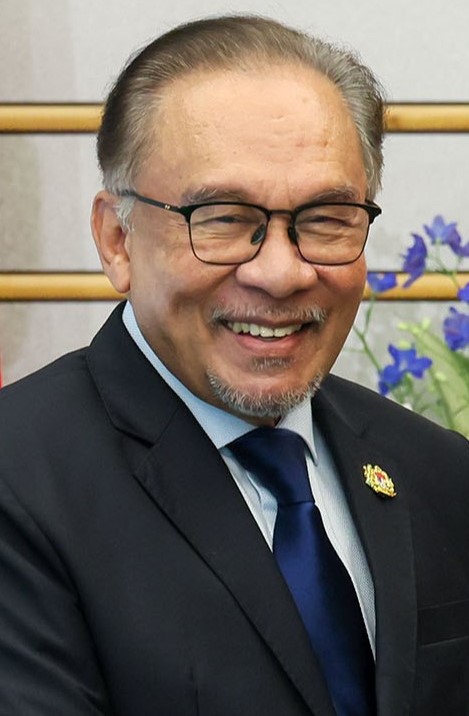
Senior opposition lawmakers, including Hamzah, converged at the headquarters of Parti Islam Se-Malaysia in what observers view as a significant political moment amid growing instability within the Perikatan Nasional coalition. The closed-door meeting underscores the churning dynamics at play following PAS's dramatic decision last week to formally sever its partnership with Bersatu, a development that has rattled the broader opposition alliance and triggered fresh speculation about parliamentary alignments.
The confluence of opposition figures at PAS headquarters signals that coalition management has moved into critical territory. Perikatan Nasional, which commands substantial parliamentary representation, now faces existential questions about its cohesion and long-term viability. The presence of multiple MPs at the gathering suggests these discussions extend beyond routine party business, touching instead on the structural integrity of a coalition that has evolved significantly since its inception.
PAS's rupture with Bersatu represents more than a simple partnership dissolution. The split reflects deeper philosophical and strategic differences that have accumulated over months of mounting tension. By moving to formalise the break, PAS has signalled that maintaining organisational autonomy and pursuing its own political trajectory takes precedence over coalition solidarity. This recalibration carries immediate implications for Perikatan Nasional's negotiating position in parliament and its ability to present a unified front on key legislative matters.
For Malaysian politics broadly, the PAS-Bersatu split underscores a recurring pattern in coalition politics where initial partnerships, forged around shared opposition to government or common ideological positions, struggle to withstand the pressures of sustained collaboration and the competing ambitions of member parties. The fracture exposes fundamental questions about whether opposition coalitions in Malaysia can develop the institutional maturity and conflict-resolution mechanisms necessary for long-term stability.
The timing of this gathering at PAS headquarters is particularly significant given the current parliamentary calendar and the government's legislative agenda. Opposition coalitions typically wield maximum influence during periods of parliamentary activity, where unity on critical votes becomes essential. The internal discord within Perikatan Nasional potentially weakens the opposition's capacity to mount coordinated challenges on government measures, altering the balance of power in parliament.
Hamzah's visible presence at these talks carries particular weight given his standing within opposition circles and his track record in coalition negotiations. His attendance suggests that senior figures across the opposition spectrum believe addressing the rupture and exploring potential realignments merit urgent attention. The involvement of multiple MPs indicates that these conversations involve both immediate tactical concerns and longer-term strategic positioning.
The broader political environment in Malaysia has shifted markedly in recent months, with successive electoral cycles and by-elections creating new opportunities and pressures for opposition consolidation. Against this backdrop, the PAS-Bersatu split may force other coalition members to reassess their own commitments and explore alternative arrangements. Some observers suggest that Perikatan Nasional's future configuration may differ substantially from its current composition.
From a regional perspective, Malaysia's opposition coalition dynamics warrant close attention from Southeast Asian political analysts, who track how plural democracies manage internal alliance pressures. The technical challenge of maintaining multi-party coalitions—particularly when member organisations possess distinct bases, ideologies, and leadership structures—remains pertinent across the region.
The meeting at PAS headquarters also reflects the intensity of behind-the-scenes political negotiation that characterises Malaysian parliamentary democracy. Formal statements from party leadership often lag significantly behind substantive discussions occurring in private settings. These informal channels frequently determine the actual trajectory of coalition politics, making the reported gathering particularly noteworthy for what it suggests about ongoing recalibrations.
Looking ahead, Perikatan Nasional faces critical decisions about how to respond to PAS's departure. Whether the coalition moves to formalise a new reduced structure, attempts to attract additional partners, or gradually fragments further remains uncertain. The outcome will substantially influence the opposition's coherence and effectiveness in parliament during the coming parliamentary session.
For Malaysian voters and observers seeking clarity on opposition positioning, these internal upheavals reinforce an essential reality: coalitions in Malaysian politics remain inherently fragile arrangements dependent on constant management and the alignment of leadership interests. The gathering of opposition MPs at PAS headquarters represents one chapter in an ongoing story of coalition realignment that will continue to reshape Malaysia's political landscape in the months ahead.