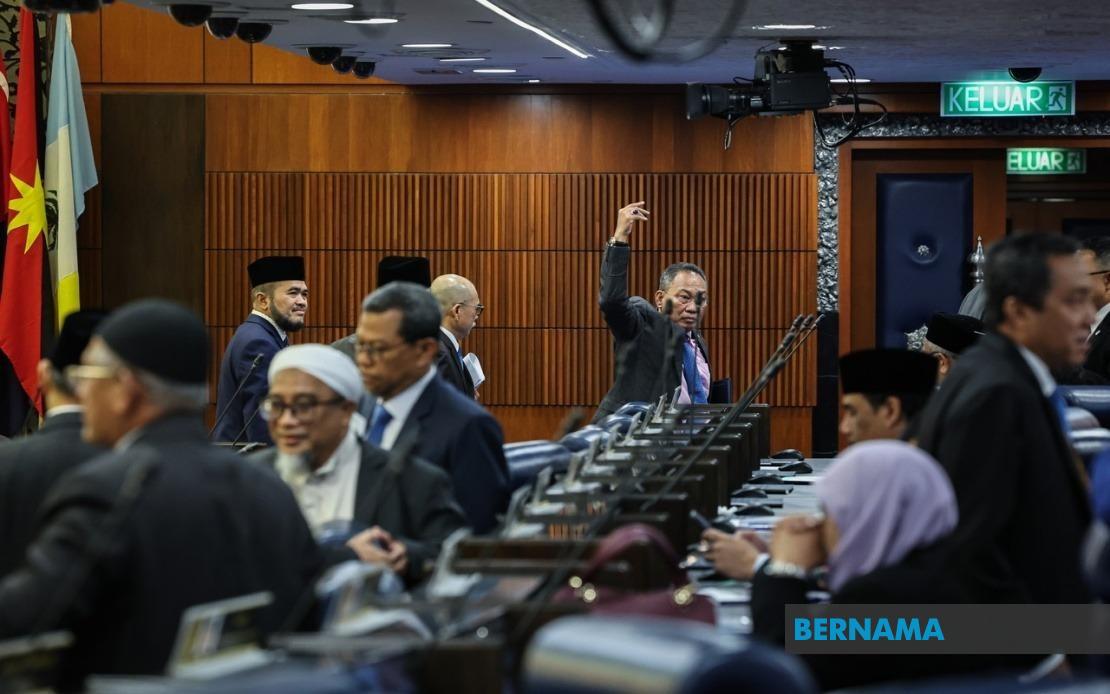
The opposition's withdrawal from yesterday's parliamentary proceedings on the Tabung Haji Royal Commission of Inquiry report represents a missed opportunity to exercise meaningful legislative scrutiny, according to Malaysian academics and governance observers. Perikatan Nasional lawmakers, led by Opposition Leader Datuk Seri Hamzah Zainuddin, vacated the Dewan Rakyat during the ministerial briefing and subsequent debate, citing the absence of Prime Minister Datuk Seri Anwar Ibrahim and Deputy Prime Minister Datuk Seri Fadillah Yusof, both undergoing medical treatment.
The institutional implications of this boycott extend beyond partisan concerns, with experts highlighting how the decision compromises Parliament's fundamental role in safeguarding public interest. At stake is the financial welfare of approximately 10 million Tabung Haji depositors whose savings remain tied to an institution that the RCI findings have identified as suffering from significant management and operational deficiencies spanning the 2014–2020 period. These vulnerabilities, documented in the commission's comprehensive report, demanded rigorous parliamentary examination and detailed governmental accountability during yesterday's proceedings.
Associate Professor Dr Mazlan Ali from Universiti Teknologi Malaysia contends that the opposition's elected representatives bear a fiduciary responsibility to their constituents that supersedes party-political calculations. Parliamentary debate provides the most transparent and effective platform for elected officials to interrogate executive decisions, challenge governmental explanations, and place critical questions on the official record. By declining to participate in yesterday's briefing and debate, opposition lawmakers essentially surrendered their primary mechanism for protecting Tabung Haji depositors' interests through formal legislative channels.
The substantive work of parliamentary oversight requires presence and engagement rather than absence and protest. Dr Mazlan argues that had opposition members remained in the chamber, they could have posed targeted questions to Minister in the Prime Minister's Department (Religious Affairs) Dr Zulkifli Hasan regarding the RCI's specific findings and the government's proposed remedial measures. Rather than boycotting, the opposition could have demanded detailed ministerial responses, thereby creating a comprehensive parliamentary record of governmental accountability that depositors and the broader public could scrutinise.
Concerning the opposition's stated grievance regarding the Prime Minister's non-attendance, Dr Mazlan observes that this rationale does not align with parliamentary conventions or practical governance. Dr Zulkifli Hasan, as the responsible minister within his portfolio's scope, possesses the authority and capacity to provide substantive explanations and clarifications regarding Tabung Haji governance and the RCI findings. The ministerial briefing format was specifically designed to accommodate Mr Anwar Ibrahim's medical leave, ensuring institutional continuity. Recognising the Prime Minister's health requirements reflects responsible governance rather than democratic deficiency.
Dr Nazreena Mohammed Yasin, a senior lecturer at Universiti Tun Hussein Onn's Department of Social Sciences, reinforces this analysis by emphasising that active parliamentary participation constitutes the substantive mechanism through which check-and-balance functions operate in democratic systems. The legislative debate on the Tabung Haji RCI report provided a formal institutional platform enabling opposition MPs to scrutinise the commission's findings, interrogate governmental responses, and demand public accountability. Through parliamentary examination, elected representatives can strengthen the principle of governmental accountability by ensuring that state officials directly answer to Parliament and, by extension, to the public they serve.
The political calculus underlying the opposition's boycott risks creating damaging public perceptions regarding the opposition's commitment to protecting ordinary Malaysians' financial interests. When an institution directly affecting millions of citizens faces documented governance challenges, political parties must subordinate partisan positioning to substantive public advocacy. The opposition's absence sends a problematic signal that protecting depositor interests ranks below tactical political manoeuvring. In contrast, visible, engaged opposition scrutiny of governmental responses would have demonstrated genuine commitment to institutional reform and fiduciary protection.
Dr Nazreena further emphasises that parliamentary accountability does not hinge exclusively on the Prime Minister's physical presence. Cabinet ministers retain independent authority and responsibility to answer parliamentary questions within their designated portfolios. When MPs engage with relevant ministers in structured debate, substantive accountability mechanisms activate regardless of whether the Prime Minister participates. The opposition's insistence on the Prime Minister's attendance, therefore, does not reflect parliamentary necessity but rather appears motivated by alternative political considerations.
The implications for Tabung Haji's future governance are particularly concerning given the scale of public interest involved. The institution serves the Muslim community across Malaysia, managing savings and facilitating hajj pilgrimage funding for millions of Malaysians. The RCI's identification of management and operational weaknesses over a seven-year period demands comprehensive parliamentary oversight of corrective measures, proposed governance reforms, and implementation timelines. Opposition participation in this scrutiny process strengthens democratic accountability and ensures that depositor protection mechanisms receive genuine political attention across the political spectrum.
Beyond the specific Tabung Haji context, this incident illuminates broader tensions within Malaysia's parliamentary democracy regarding the proper exercise of opposition responsibilities. Opposition politics encompasses not merely criticism and resistance but also constructive engagement with legislative processes aimed at protecting public interest. When opposition lawmakers boycott parliamentary proceedings addressing matters with direct implications for millions of constituents, they diminish their institutional capacity to influence policy outcomes or demand governmental accountability through formal channels.
The decision to walkout rather than remain and engage represents a strategic choice with long-term democratic consequences. Parliamentary records created through debates establish documentary evidence of governmental positions, ministerial explanations, and official commitments regarding policy implementation. By refusing to participate, the opposition forfeited the opportunity to place challenging questions and counter-arguments on the parliamentary record, thereby reducing the documentary foundation for future accountability regarding Tabung Haji governance and reform implementation.
Looking forward, parliamentary democracy functions most effectively when opposition parties exercise their scrutiny responsibilities consistently and substantively, even when disagreeing with governmental personnel or decisions. The opposition's future credibility as a champion of depositor interests depends partly on demonstrating active engagement with legislative mechanisms designed to protect public welfare. Yesterday's boycott, according to these analysts, represents a departure from this constructive opposition model, with potentially damaging implications for the perceived integrity of parliamentary oversight regarding an institution serving millions of Malaysian families.

