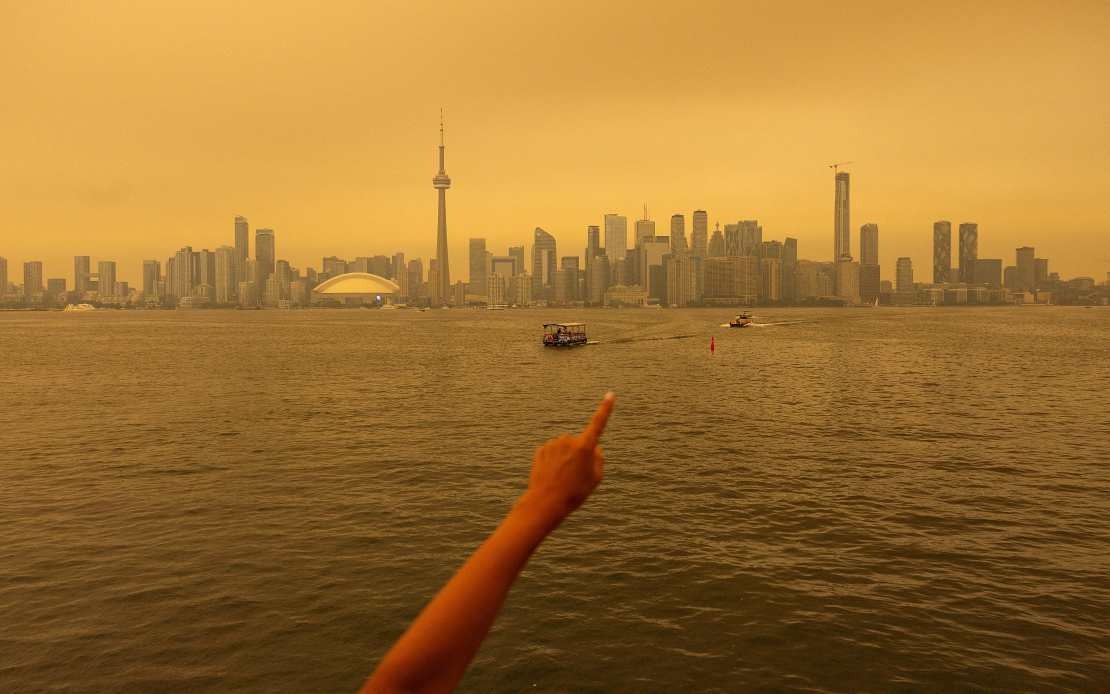
A sprawling wildfire crisis across northwestern Ontario is transforming Canada's urban landscape into a hazardous health emergency, with thick smoke blanketing the nation's capital and its largest metropolitan centre. The scale of deterioration has been remarkable: on Wednesday morning, Toronto registered air quality measurements that ranked it among the most polluted cities in the world, a stark illustration of how environmental disasters in remote regions can cascade into public health crises affecting millions. The phenomenon underscores the interconnected nature of environmental challenges in North America, where atmospheric patterns can transport smoke across vast distances within days.
Environment Canada's official measurements painted a dire picture of conditions across the affected regions. Toronto's Air Quality Health Index was classified at "very high risk" levels, a designation that triggers public health warnings and disrupts the daily lives of vulnerable populations including children, the elderly, and those with respiratory conditions. The situation extended beyond Canada's largest city—Ottawa, sitting 450 kilometres to the east, also activated air quality alerts as meteorological conditions conspired to worsen the crisis. The combination of wildfire smoke and elevated humidity created a perfect storm for air pollution, as moisture in the atmosphere trapped smoke particles close to ground level, transforming the sky into an eerie yellow hue that residents described as apocalyptic.
The immediate trigger for this environmental emergency stems from more than 100 active fire zones still burning across the northwestern reaches of Ontario. These fires forced emergency authorities to coordinate rapid evacuations from multiple communities as flames spread unpredictably. The sheer number of simultaneous fire fronts overwhelmed regional firefighting resources and prevented authorities from containing the blazes quickly. Unlike controlled burns or smaller incidents that authorities can manage with strategic interventions, this fire season has broken historical patterns and created a cascade of secondary emergencies affecting transportation, public health, and economic activity across the region.
A dramatic illustration of the fire's intensity emerged from footage recorded late Monday near Armstrong, Ontario, where a Canadian National railway locomotive found itself surrounded by advancing flames. The video, which circulated widely across social media platforms, captured towering walls of fire consuming forest on both sides of the train tracks, casting an intense crimson glow throughout the locomotive cab. The visceral imagery served as a powerful reminder of nature's raw power and the vulnerability of infrastructure built through wilderness corridors. Canadian National confirmed the authenticity of the footage and announced that the train crew had been successfully evacuated before the situation deteriorated further, averting what could have been a tragic outcome.
The railway disruption carries significant economic implications beyond the immediate safety concerns. Canadian National announced temporary suspension of train operations through the affected section, disrupting cargo movements and passenger services. For a nation heavily dependent on rail transport for resource extraction, agricultural exports, and commercial supply chains, such closures accumulate costs rapidly. The suspension reflects not only the physical danger posed by active fires but also the degraded visibility and unstable atmospheric conditions that make rail operations unsafe. This represents a tangible reminder for Malaysian observers of how climate-related disasters can suddenly interrupt critical infrastructure and supply chains, a risk increasingly relevant across Southeast Asia as extreme weather becomes more frequent.
Meteorological forecasts offered limited reassurance to residents hoping for rapid improvement. Weather authorities warned that prevailing atmospheric circulation patterns would sustain the smoke plume over affected cities for several additional days. The persistence of these conditions relates to high-pressure systems and wind patterns that keep smoke concentrated in specific regions rather than dispersing it widely. This forecast implied that communities would endure degraded air quality for an extended period, requiring sustained public health advisories and continued economic disruption. For Malaysian readers familiar with seasonal haze from transboundary forest fires in Southeast Asia, the Canadian situation presents an uncomfortable mirror—demonstrating how smoke from distant burning can paralyze urban centres thousands of kilometres away.
The public health dimensions of this crisis extend beyond immediate respiratory irritation. Prolonged exposure to wildfire smoke increases cardiovascular stress, exacerbates asthma and chronic obstructive pulmonary disease, and poses particular risks to pregnant women and developing children. Hospital systems in Toronto and Ottawa prepared for potential surges in respiratory complaints and other smoke-related conditions. The psychological toll of breathing hazardous air and observing apocalyptic skies also warrants consideration, as Canadians confronted the visceral reality of climate change affecting their daily existence. Unlike distant climate statistics, the experience of breathing contaminated air creates immediate political pressure for environmental action and resource allocation toward fire prevention and management.
The succession of recent wildfire seasons across western and central Canada reflects broader trends in climate patterns and forest management practices. Warmer temperatures extend fire seasons and create conditions where vegetation dries more rapidly, providing abundant fuel for ignition. Decades of fire suppression policies, while reducing immediate damage, have allowed undergrowth to accumulate in many forests, intensifying fires when they do occur. Ontario's response to this crisis involves not merely managing the current emergency but reconsidering long-term forest management philosophy and investment in fire prevention infrastructure. The economic cost of wildfire response, evacuation coordination, and productivity losses from transportation disruption far exceeds the cost of preventive measures, a calculus increasingly recognized by provincial authorities.
For Southeast Asian observers, the Ontario wildfire crisis offers instructive parallels and contrasts with regional experience. Malaysia and other ASEAN nations face similar transboundary smoke challenges, particularly during the annual burning season in Sumatra and Kalimantan, where agricultural conversion fires regularly degrade air quality across Singapore, Malaysia, and southern Thailand. However, the Canadian situation demonstrates how wealthy, industrialised nations with sophisticated monitoring and emergency response systems still struggle to protect populations from environmental disasters. The challenge intensifies in regions with fewer resources and less developed early warning systems, where wildfire smoke combines with industrial and vehicular pollution to create more complex air quality crises. International cooperation on forest management and fire prevention emerges as essential, particularly for countries sharing ecological systems and atmospheric circulation patterns.

