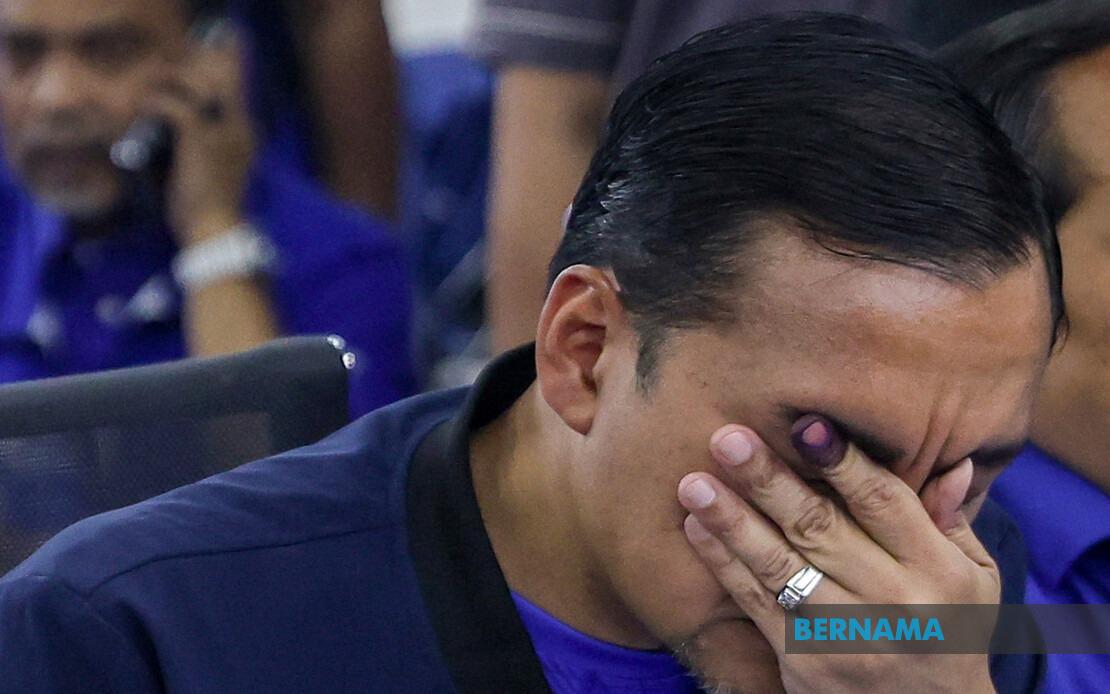
The Johor Menteri Besar has secured a decisive victory in the Machap parliamentary constituency during the 16th state election, underscoring the coalition's growing electoral strength in the southern state. Datuk Onn Hafiz Ghazi, who chairs the Johor Barisan Nasional machinery, garnered 20,382 votes to comfortably defeat his Pakatan Harapan counterpart Nur Hafiz Roslan in what became a two-way contest. The Election Commission's official tally gave the BN leader a majority margin of 15,375 votes, a substantial victory that reflects the electorate's confidence in his administration.
The scale of Onn Hafiz's win represents a significant consolidation of support compared to his previous electoral performance. In the 2022 state election held just two years prior, the Menteri Besar secured the same Machap seat with a majority of 6,543 votes, but that victory came in a far more crowded political landscape. At that time, four candidates competed for the position, including Azlisham Azahar representing Perikatan Nasional, R. Sangaran from MUDA, and Sharuddin Md Salleh of PEJUANG. The fragmentation of the opposition vote across multiple parties had previously divided anti-BN support, but this cycle saw a clearer polarisation between BN and PH forces.
The widened victory margin signals several important trends in Johor's political trajectory. First, it demonstrates that the Menteri Besar has successfully maintained his electoral base while potentially expanding it beyond 2022 levels. The consolidation of opposition votes behind the PH standard-bearer, while reducing the number of challengers, ultimately proved insufficient to dent Onn Hafiz's dominance in his own constituency. Second, the result underscores BN's capacity to mobilise voters effectively at a time when Malaysian politics remains fractious at the federal level, with coalition governments dependent on razor-thin parliamentary majorities.
For Malaysian readers, this Johor outcome carries broader implications for how regional politics will evolve ahead of the next federal election. Johor has traditionally been a BN stronghold, and the consistency of strong showings in the state—both in 2022 and now in 2024—suggests that the coalition retains deep organisational roots and community trust in the peninsula's southernmost state. This contrasts with volatility elsewhere, where swing voters and shifting allegiances have become the norm. The state's stability may provide BN with a crucial electoral foundation that anchors its national political position.
Onn Hafiz's personal standing has clearly benefited from his tenure as Menteri Besar. His administration has overseen various development initiatives and welfare programmes that appear to have resonated with voters in Machap and likely across Johor more broadly. The jump in his personal vote count—from levels sufficient to win with 6,543 votes in a four-way race to over 20,000 votes in a straight contest—suggests he has grown his voter base or achieved stronger turnout among existing supporters. This personal mandate will likely strengthen his hand within state and potentially national BN councils.
The near-elimination of splinter opposition candidates from the contest merits closer examination. In 2022, the presence of MUDA and PEJUANG candidates reflected fractures within the broader anti-government movement and the appeal of new political alternatives, particularly MUDA's youth-oriented messaging. The 2024 result shows that PH has largely consolidated these scattered votes into its own machinery, creating a more straightforward choice for voters. Whether this represents a strategic decision by opposition parties to avoid splitting votes in marginal seats or a genuine shift in voter preference toward the traditional two-coalition system remains an open question worth monitoring across other constituencies.
For Southeast Asian observers of Malaysian politics, Johor's performance illustrates how regional state elections function as crucial testing grounds for national coalitions. While federal politics in Kuala Lumpur may appear turbulent, strong performances in traditional BN states demonstrate that the coalition retains institutional capacity and voter confidence where it matters most. This stability in a major state helps explain why BN has managed to maintain relevance and coalition partnerships despite facing unprecedented competition from reformist and Islamist movements elsewhere.
The context of Malaysian electoral dynamics further enriches this result. The country's voters have shown increasingly sophisticated behaviour, supporting different coalitions at different levels of government. Johor's consistent backing for BN in 2022 and 2024 indicates that state-level governance, economic management, and local delivery of services continue to influence voting patterns more than ideological messaging alone. This pragmatism among Johor voters may reflect broader satisfaction with the state's economic performance, infrastructure development, and relative stability compared to other Malaysian states experiencing political turmoil.
Looking ahead, Onn Hafiz's strengthened position will likely influence internal BN dynamics and his standing within Umno, the dominant party within the coalition. His convincing victory in Machap, achieved with a mandate that nearly tripled his 2022 majority, positions him as a significant figure within Johor politics and potentially within the broader Umno power structure. The Menteri Besar's ability to deliver votes at such scale provides him with negotiating power when coalition government decisions are made at state and national levels. This victory may affect his trajectory within Umno's youth and grassroots wings, areas where maintaining electoral credibility matters significantly for future leadership contests.
The result also provides BN with valuable momentum entering subsequent phases of Malaysian electoral competition. With Johor secured and key constituencies like Machap delivering overwhelming mandates, the coalition can point to concrete evidence of voter confidence in its governance model. This messaging will be crucial as BN seeks to rebuild its image after various political controversies and to present itself as the stability-oriented choice to Malaysian voters fatigued by constant political upheaval. Johor's consistent performance as a BN fortress offers the coalition a powerful narrative of continuity and competent administration.

