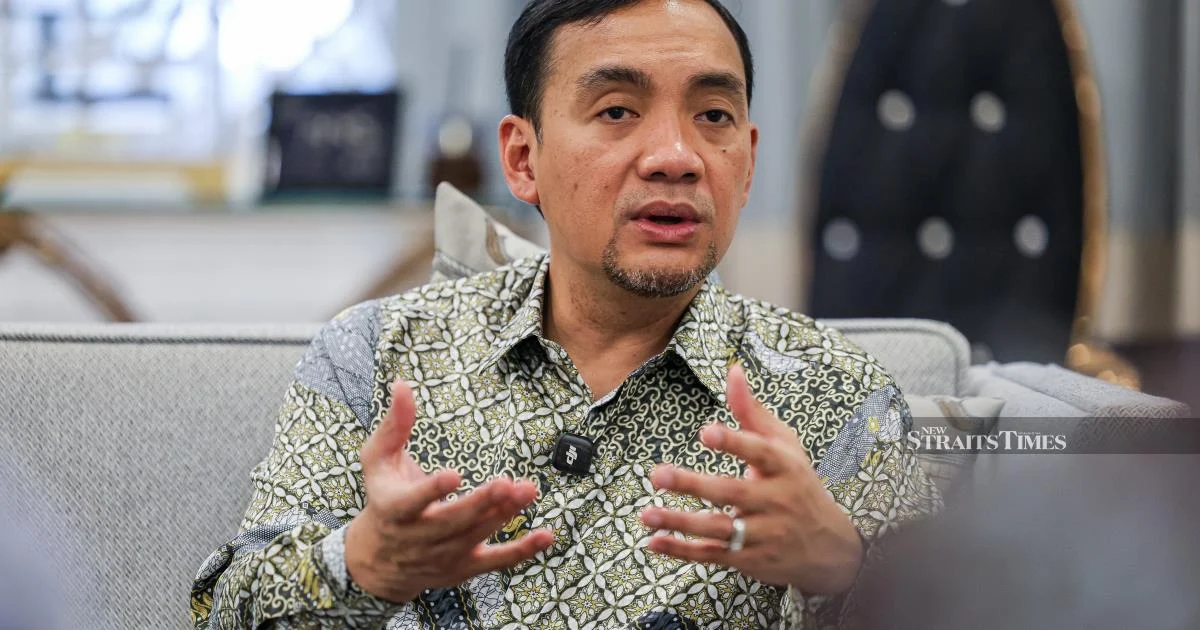
Datuk Onn Hafiz Ghazi, who serves as Johor's caretaker Menteri Besar, has made a deliberate and emphatic statement rejecting any possibility that Barisan Nasional would collaborate with the Democratic Action Party to establish a state administration in Johor, should voters grant them a renewed mandate in the upcoming election cycle. The Johor leader's pronouncement underscores intensifying divisions within Malaysia's political landscape as the nation approaches critical electoral contests at both state and federal levels.
The caretaker Menteri Besar's explicit rejection of a DAP partnership signals the ideological fault lines that continue to structure Malaysian politics, particularly within Umno-led coalitions. Rather than characterising the position as opportunistic or circumstantial, Onn Hafiz has grounded his statement in principle, suggesting that the disagreements run deeper than tactical considerations about vote counts or seat distributions. This framing carries significant weight in Johor, a state that has historically served as a bellwether for Barisan Nasional's broader political health and a repository of the coalition's traditional electoral strength.
For Malaysian readers, this development reflects the hardening of political boundaries between Barisan Nasional—the long-dominant coalition centred on Umno, MCA, and MIC—and Pakatan Harapan's component parties, most notably DAP. The declaration comes amid a broader reconfiguration of Malaysia's political architecture, where coalition mathematics have grown increasingly unstable and where former partners have found themselves in opposition or locked in regional standoffs. Johor's political composition makes this announcement particularly consequential, as the state remains one of Barisan Nasional's most reliable strongholds and a critical battleground for both coalitions.
The ideological language employed by Onn Hafiz warrants closer examination. Barisan Nasional's official positioning has traditionally emphasised multiethnic representation and constitutional monarchy, whilst simultaneously highlighting its role as guardian of Malay-Muslim interests through Umno's dominance. DAP, conversely, has advocated for secular governance, reduced religious influence in state administration, and arguably a more pluralistic vision of Malaysia's constitutional framework. These philosophical differences, which have long existed, appear to have become sharper and less amenable to compromise than in previous electoral cycles.
The timing of this statement deserves scrutiny in the context of Malaysian electoral politics. By clearly demarcating ideological boundaries now, the caretaker Menteri Besar sends multiple signals simultaneously: to his Umno base, he reinforces that Barisan Nasional remains ideologically distinct and principled; to swing voters concerned about governance stability, he suggests that any Barisan Nasional victory would be uncomplicated by unpredictable coalition negotiations with ideologically distant partners; and to DAP supporters, he establishes that accommodation with Umno-led formations remains structurally impossible. Such messaging can be electorally strategic even as it purports to articulate fundamental principle.
For Johor specifically, this positioning carries regional implications. The state has experienced multiple changes of government in recent years—from Pakatan Harapan's brief interregnum under Datuk Seri Adib Zakri to Barisan Nasional's restoration—creating a constituency increasingly conscious of governance capacity and political stability. Onn Hafiz's statement may reassure voters who fear that a fragmented coalition would compromise administrative effectiveness or lead to divisive negotiations that overshadow development priorities. Conversely, it may alienate moderate voters or those from non-Malay communities who might have entertained support for a multiparty administration.
The rejection also reflects calculations about Barisan Nasional's electoral prospects at the state level. If internal modelling suggests the coalition can secure a working majority without DAP's support, categorical rejection becomes strategically sensible—it locks in the ideologically conservative Umno base without forfeiting meaningful governing possibilities. Should the coalition's prospects appear tighter, such a declaration could represent either confidence or bluster. Either way, the unambiguous nature of the statement constrains Onn Hafiz's future options and commits Barisan Nasional to a particular political trajectory in Johor.
The broader Malaysian context amplifies this moment's significance. At the federal level, DAP participation in government remains controversial within Umno and amongst conservative constituencies, despite DAP's indispensable contribution to Pakatan Harapan's 2018 victory and subsequent representation in Parliament. State-level declarations like Onn Hafiz's feed into national-level political discourse, suggesting that Barisan Nasional—or at least its Umno core—remains fundamentally uncomfortable with power-sharing arrangements that include DAP, even in contexts of coalition necessity. This may indicate a strategy of relying primarily on partnerships with PAS and other Islamist-oriented parties, a trajectory with significant implications for Malaysia's political economy and governance philosophy.
For Southeast Asian observers, Johor's electoral dynamics and Onn Hafiz's statement offer a window into how Malaysia navigates political competition when no single party or coalition enjoys overwhelming dominance. The region's democracies increasingly grapple with coalition instability and the challenge of governing through ideologically diverse alliances. Malaysia's experience—with its particular history of communal politics and constitutional arrangements protecting Malay-Muslim interests—demonstrates how principle and pragmatism intersect in coalition formation, and how even seemingly categorical political positions remain subject to future renegotiation if circumstances demand.
What remains uncertain is whether Onn Hafiz's ideological boundary-setting will prove durable or whether electoral mathematics might ultimately force reassessment. Malaysian political history contains numerous instances where previously declared red lines were crossed when governing coalitions faced collapse or paralysis. Nonetheless, the caretaker Menteri Besar's current statement establishes an important marker in Johor's political landscape and contributes to the broader conversation about what form Malaysian governance should take as the nation continues to navigate multi-party competition and coalition politics.

