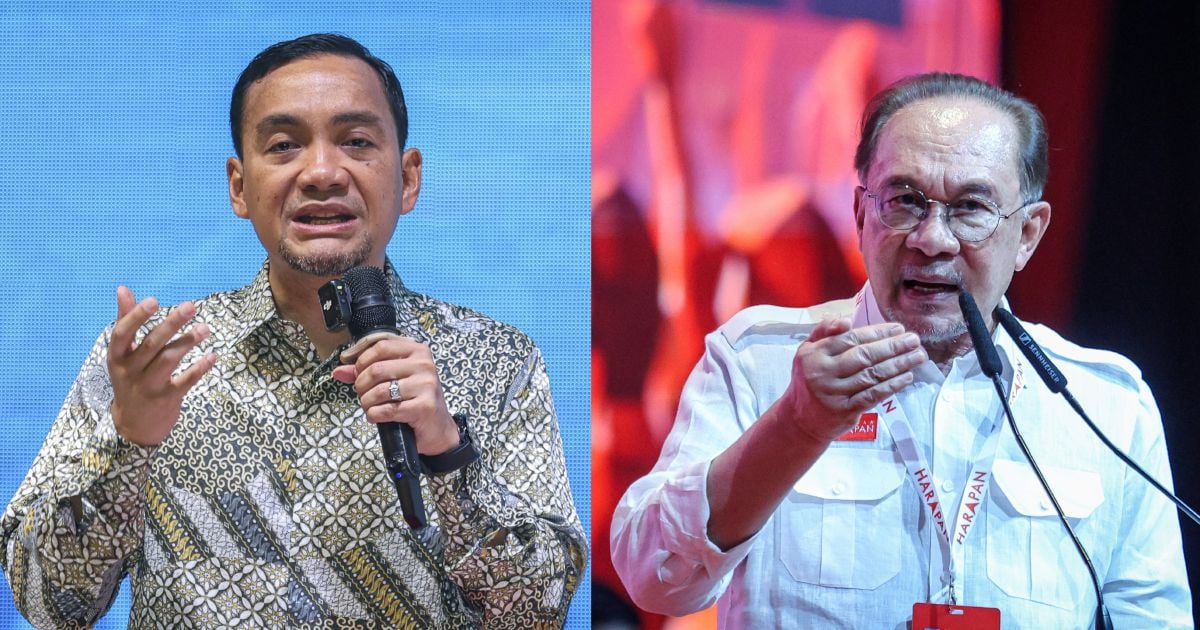
Caretaker Johor menteri besar Datuk Onn Hafiz Ghazi has launched a vigorous defence of his administration against suggestions that the state government is unwilling to cooperate with the federal government. The remarks come at a time of heightened political tension in Johor, where state elections are anticipated in the coming months, and reflect the complex interplay between regional and national power structures that has long characterised Malaysian politics.
In his pushback, Onn Hafiz characterised the criticism as fundamentally misrepresenting the Johor administration's position and its actual record of engagement with Putrajaya. His defence underscores a core tension in Malaysian federalism: the balance between state autonomy and compliance with national initiatives. The caretaker menteri besar appears to be signalling that listening to the concerns of Johoreans—and advocating for state interests—should not be misconstrued as a refusal to collaborate with federal authorities. This rhetorical framing is significant, as it attempts to reposition the narrative away from accusations of obstructionism and toward one of responsible stewardship of local concerns.
The timing of these statements reflects the broader political dynamics in Johor, where the state has historically served as a crucial power base for Malaysian politics. As the southernmost peninsular state and a significant economic contributor to the nation, Johor's political complexion carries implications that resonate well beyond its borders. The caretaker status of Onn Hafiz's position, pending the upcoming state elections, adds an additional layer of urgency to his defence, suggesting that the administration wishes to consolidate its standing with voters before going to the polls.
Onn Hafiz's remarks also highlight a recurring theme in Malaysian state-federal relations: the question of how regional leaders should balance constituent demands with national directives. By framing responsiveness to Johoreans as a legitimate form of governance rather than provincial intransigence, the caretaker menteri besar is articulating a defence of state-level democratic representation. This positioning may resonate with voters who view their state government as an advocate for local interests against perceived federal overreach or indifference.
The political context matters considerably here. Johor has undergone significant shifts in its political alignment in recent years, and the upcoming elections will determine whether the current administration retains power or whether control passes to rival coalitions. The accusations of non-cooperation with Putrajaya, therefore, carry electoral implications, potentially damaging the menteri besar's credibility if left unanswered. By engaging directly with these allegations, Onn Hafiz is attempting to inoculate his government against charges that could prove decisive in a closely contested election campaign.
Moreover, the substance of Onn Hafiz's defence speaks to genuine challenges in centre-state relations across Malaysia. When federal and state governments are controlled by different political coalitions—or when they hold differing views on policy priorities—friction becomes inevitable. The question of how to characterise such disagreements is not merely semantic; it shapes public perception and can influence electoral outcomes. By reframing what opponents characterise as non-cooperation as legitimate representation of state interests, the caretaker menteri besar is attempting to control the terms of the debate.
The remarks also reflect the broader democratisation of Malaysian politics, wherein state governments increasingly assert their prerogatives and resist unconditional subordination to federal directives. This trend is evident across multiple states and administrations, suggesting a structural shift in how federalism is practised in Malaysia. For younger or more engaged voters in Johor, a government that stands firm on state interests may be seen as more principled than one that capitulates to federal pressure without public justification.
Economically, Johor's cooperation with Putrajaya matters considerably. The state is home to major industrial zones, port facilities, and investment corridors that are integral to national economic planning. Disruptions to state-federal coordination could theoretically affect economic development initiatives, making these political squabbles more than merely rhetorical. By defending his administration's collaborative record, Onn Hafiz may be attempting to assure investors and federal planners that partisan politics will not impede the machinery of state-federal economic partnership.
Looking forward, how Johor voters and the broader Malaysian public perceive these exchanges will significantly influence the electoral landscape. The caretaker menteri besar's defence strategy appears aimed at rebalancing perceptions of his administration's engagement with federal authorities while simultaneously cementing its identity as a stalwart defender of Johor's interests. Whether this rhetorical manoeuvre succeeds in shifting public opinion will likely become evident once campaigning for the state elections formally commences.
The broader lesson for Malaysian politics is that state-level governance remains contested terrain, where questions of appropriate deference to federal authority, legitimate advocacy for regional interests, and the nature of cooperation itself remain subjects of genuine political disagreement. Onn Hafiz's defence of his administration thus reflects not merely a partisan exchange but a fundamental debate about the character and structure of Malaysian federalism as it continues to evolve.

%22%2F%3E%3C%2Fpattern%3E%3C%2Fdefs%3E%3Crect%20width%3D%22100%25%22%20height%3D%22100%25%22%20fill%3D%22url(%23ph1354vg)%22%2F%3E%3Crect%20width%3D%22100%25%22%20height%3D%22100%25%22%20fill%3D%22url(%23ph1354vp)%22%2F%3E%3Ctext%20x%3D%2250%25%22%20y%3D%2250%25%22%20text-anchor%3D%22middle%22%20dominant-baseline%3D%22central%22%20fill%3D%22rgba(255%2C255%2C255%2C0.95)%22%20font-family%3D%22Georgia%2C%20'Times%20New%20Roman'%2C%20serif%22%20font-weight%3D%22700%22%20font-size%3D%22320%22%20letter-spacing%3D%22-0.02em%22%3EGRS%3C%2Ftext%3E%3C%2Fsvg%3E)