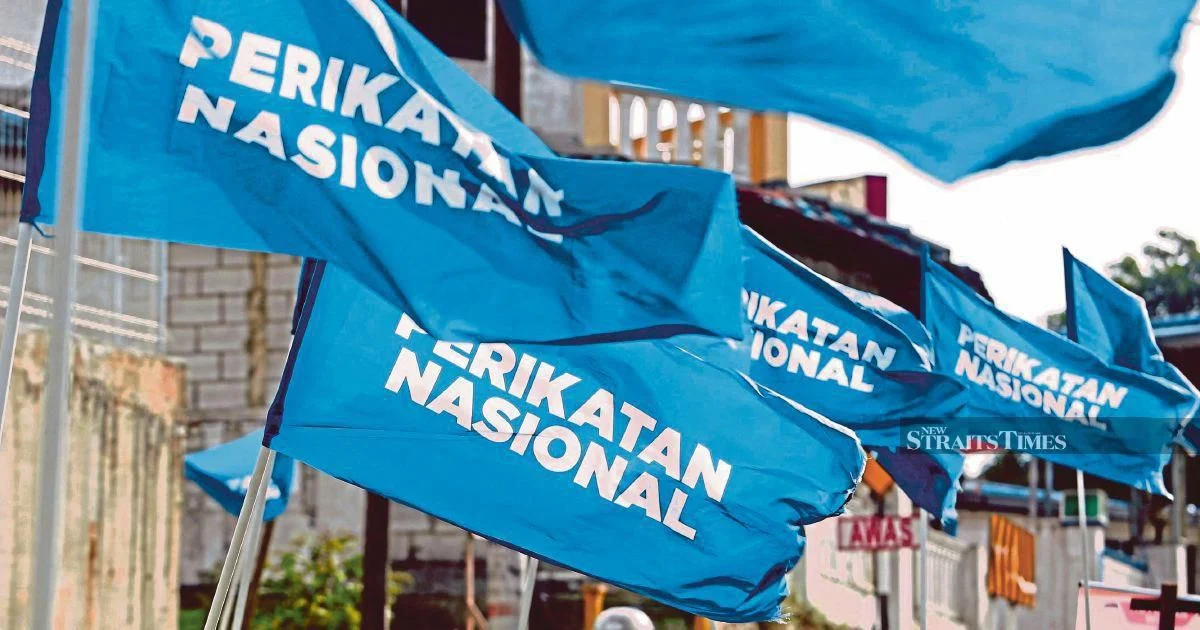
Growing tensions within the Perikatan Nasional coalition surfaced this week as PAS leadership questioned whether its ally Bersatu possessed the legitimate authority to use the bloc's official logo during forthcoming electoral campaigns in Johor and Negri Sembilan. The dispute underscores mounting friction between the two major Islamist-nationalist parties that have formed the backbone of PN since its inception, raising fresh questions about the stability of an arrangement that was meant to present a united opposition front.
PAS officials articulated a clear procedural position regarding logo usage and campaign identity within the coalition framework. According to party statements, only the designated chairman of Perikatan Nasional holds the constitutional and organisational authority to greenlight the deployment of the coalition's distinctive branding materials in election campaigns. This interpretation suggests that unilateral decisions by any member party, regardless of its size or standing within the alliance, would represent a breach of established protocols and consensus-based governance structures that presumably underpin the PN partnership.
The timing of this disagreement carries particular significance given that Johor and Negri Sembilan are preparing for state-level contests that will test the coalition's operational cohesion and electoral appeal. These elections have become focal points for demonstrating whether PN can function as an effective electoral machine or whether internal divisions will undermine its competitive advantage against the ruling Pakatan Harapan government. For Malaysian political observers, such disputes at crucial moments suggest underlying structural weaknesses in how the coalition manages decision-making and resource allocation.
Bersatu's apparent move to utilise the PN logo without explicit central authorisation reflects broader tensions about the party's role and influence within the coalition. As the party led by former Prime Minister Muhyiddin Yassin, Bersatu has substantial political capital and voter appeal, particularly in certain constituencies. However, this apparent unilateral action may signal frustration within Bersatu over its perceived marginalisation in coalition decisions or a desire to assert greater independence in campaign strategy. The move could also indicate calculations about whether Bersatu's own party symbol carries sufficient electoral weight compared to the broader PN branding.
PAS, as the coalition's largest component by registered membership and electoral presence, clearly seeks to maintain hierarchical control over key decisions affecting the entire bloc. This posture reflects the party's traditional role as kingmaker in Malaysian politics and its concern about protecting its organisational interests within any political arrangement. By insisting on the chairman's exclusive prerogative, PAS essentially establishes a gatekeeping mechanism that prevents individual parties from making unilateral decisions about coalition representation and campaign messaging.
The procedural dispute also carries implications for how power is genuinely distributed within PN versus how such distribution appears formally on paper. If PAS can successfully enforce strict adherence to centralised approval processes for logo usage, it effectively reinforces its dominant position within the coalition. Conversely, if Bersatu's actions proceed without serious consequences, it would signal that the coalition's structural rules lack enforcement mechanisms and that larger member parties can operate with considerable autonomy. This ambiguity creates uncertainty for other potential or actual PN allies regarding their own decision-making space.
For voters and political analysts tracking Malaysian coalition dynamics, this dispute exemplifies recurring challenges that multi-party alliances face in maintaining discipline and unity. The Perikatan Nasional experiment represents an attempt to forge a working relationship between parties with different historical trajectories, voter bases, and ideological emphases. That disagreements emerge over seemingly technical matters like logo usage suggests that deeper questions about coalition purpose, strategy, and decision-making authority remain unresolved. These tensions often foreshadow more serious fractures if underlying disputes about power and direction are not systematically addressed.
The Johor and Negri Sembilan campaigns will likely reveal whether this dispute remains a procedural squabble or develops into a more serious schism. These state contests carry national implications because they affect the overall parliamentary mathematics and the psychological momentum of opposition politics in Malaysia. A poorly coordinated campaign marred by internal disagreements could provide Pakatan Harapan with electoral advantages, particularly if opposition voters perceive disunity or lack of clarity about coalition priorities and campaign messaging.
Regionally, Malaysia's internal coalition politics warrant attention as the country navigates contested electoral environments and shifting political alignments. The PN arrangement emerged partly as a response to the perceived fragmentation and instability of previous governing coalitions. That it now faces organisational strains suggests that sustainable multi-party governance in Malaysia requires more robust institutional frameworks and clearer protocols for managing internal disputes. Southeast Asia's broader experience with coalition politics demonstrates that explicit agreements about authority distribution and conflict resolution mechanisms prove essential when diverse political parties attempt to operate within shared structures.
Moving forward, the Perikatan Nasional coalition faces pressure to either clarify and enforce its internal governance rules or risk further deterioration of operational coordination. The specific question of logo usage may seem technical, but it reflects fundamental questions about whether PN members genuinely view themselves as committed coalition partners subordinating individual interests to collective goals, or whether they maintain parallel ambitions constrained only by temporary electoral calculations. How the coalition's leadership addresses this dispute will signal the trajectory of opposition politics in Malaysia heading into these critical state elections and potentially beyond.

