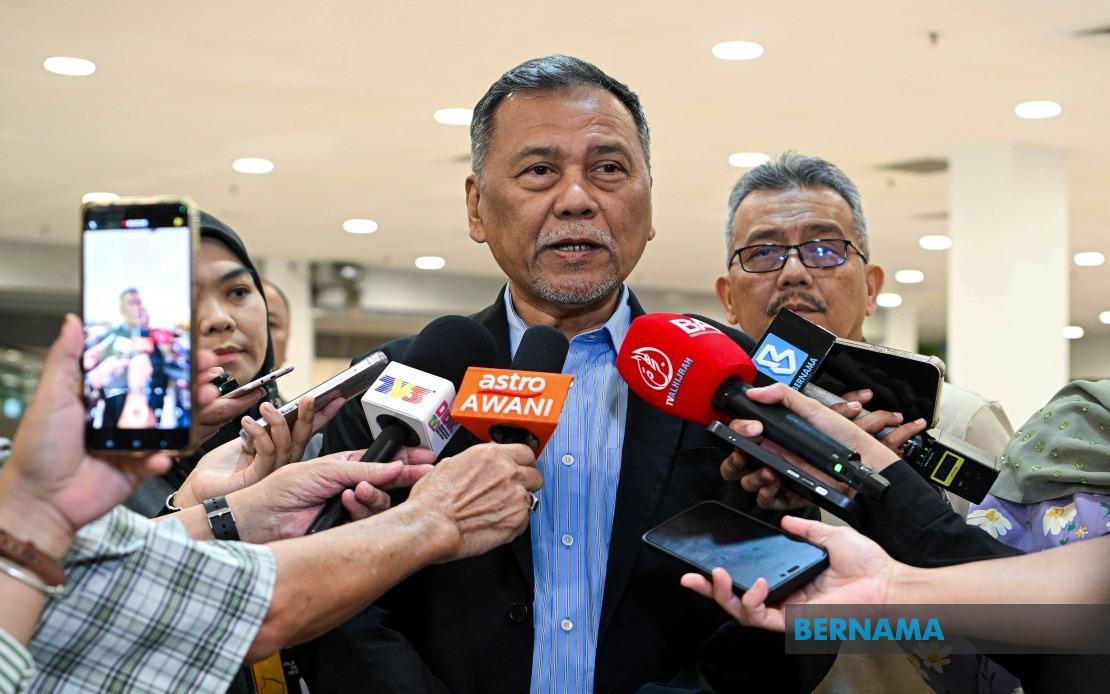
Negeri Sembilan's upcoming state election is entering a critical phase as the Election Commission disclosed that nomination activity remains modest, with only 70 prospective candidates having formally committed their participation through deposit payments out of 464 nomination forms distributed so far. Election Commission chairman Datuk Seri Ramlan Harun issued an appeal for remaining candidates to settle their financial obligations before the conclusion of tomorrow's nomination process, emphasising the operational pressures that last-minute submissions would create for the commission's administrative machinery.
The deposit deadline coincides with the scheduled nomination day tomorrow, creating a potential rush as candidates make final decisions about their electoral ambitions. Ramlan's cautionary remarks underscored the commission's preference for a staggered approach to payments, allowing staff adequate time to process documentation and verify candidate eligibility without compressed timelines that might introduce errors or delays. The relatively low proportion of paid deposits—roughly 15 percent of nomination forms distributed—suggests considerable uncertainty among potential contestants about their final candidacy.
The Election Commission has completed comprehensive preparations for tomorrow's nomination proceedings, which will unfold across eight parliamentary constituency-based centres rather than the state constituency model employed during Johor's recent state election. This centralised approach, applied to Negeri Sembilan's 36 state seats, reflects logistical considerations specific to the state's geography and administrative requirements. The commission deployed 761 officers across nomination centres located at eight parliamentary constituencies to manage the process, with full-scale rehearsal exercises conducted at all venues to identify and rectify potential operational bottlenecks.
Ramlan highlighted that the shift from Johor's decentralised model demonstrates the Election Commission's adaptive approach to election administration, tailoring procedures to suit individual state circumstances. By concentrating nomination activities within eight parliamentary hubs rather than spreading them across 36 separate state constituency locations, the commission aims to enhance coordination, streamline resource allocation, and improve candidate convenience. This methodological recalibration reflects lessons learned from previous electoral cycles and ongoing refinements in the commission's operational playbook.
Security considerations occupy a prominent position in the Election Commission's preparations, with officials reminding all contesting parties and their supporters to maintain decorum throughout the nomination period. Ramlan stressed that political factions should scrupulously avoid provocative behaviour, cautioning that any violations of electoral conduct standards could jeopardise the harmonious atmosphere essential for smooth proceedings. The emphasis on early arrival by candidates aims to prevent congestion at nomination centres, while directives to supporters underscore the commission's determination to prevent confrontations that might undermine public confidence in electoral integrity.
Election Commission regulations demand that political parties maintain compliance with established guidelines throughout the campaign period, with particular attention to avoiding common electoral offences. The commission's messaging reflects broader concerns within Malaysia's electoral administration about maintaining public confidence in the legitimacy of election processes through meticulous adherence to procedural rules and demonstrated even-handedness in adjudicating candidate eligibility and dispute resolution.
Nominations will commence at 9 am tomorrow and conclude one hour later, followed by returning officers' announcements of eligible candidates. This compressed timeframe concentrates the administrative workload into a brief window, reinforcing the commission's request for early candidate payments to avoid processing delays. The Electoral Roll updated as of June 4, 2026 identifies 889,490 eligible voters across Negeri Sembilan, comprising 867,151 ordinary voters supplemented by 16,884 military personnel and spouses and 5,455 police officers classified as early voters eligible to cast ballots on July 28.
Polling day is scheduled for August 1, providing a three-day gap between the final opportunity for early voting and the general election date. This interval allows the Election Commission to consolidate results from early voting venues and distribute final election materials to regular polling stations. The timeline grants candidates approximately two weeks for campaigning between the conclusion of nomination day and election day, a period markedly compressed compared to some previous state election cycles.
Negeri Sembilan's State Legislative Assembly was dissolved on June 5 following formal consent from Tuanku Muhriz Tuanku Munawir, the Yang Dipertuan Besar. This dissolution triggered the necessity for fresh elections to reconstitute the 36-seat assembly. In the previous 2023 state election, Pakatan Harapan secured a commanding majority by capturing 17 seats, while Barisan Nasional claimed 14 seats and Perikatan Nasional won five, establishing the incumbent political landscape against which this election cycle will be measured.
The 16th Negeri Sembilan State Election represents a significant test of political momentum in the state, following the Pakatan Harapan government's stewardship since 2023. The relatively modest number of confirmed candidates at this stage may indicate internal deliberation within established parties regarding seat allocations, or alternatively, hesitation among independent candidates about contesting in a state-level election. As nomination day approaches, the final tally of submitted nominations will reveal the competitive intensity of the contest and provide early indicators of expected electoral contestation across the 36 constituencies.

