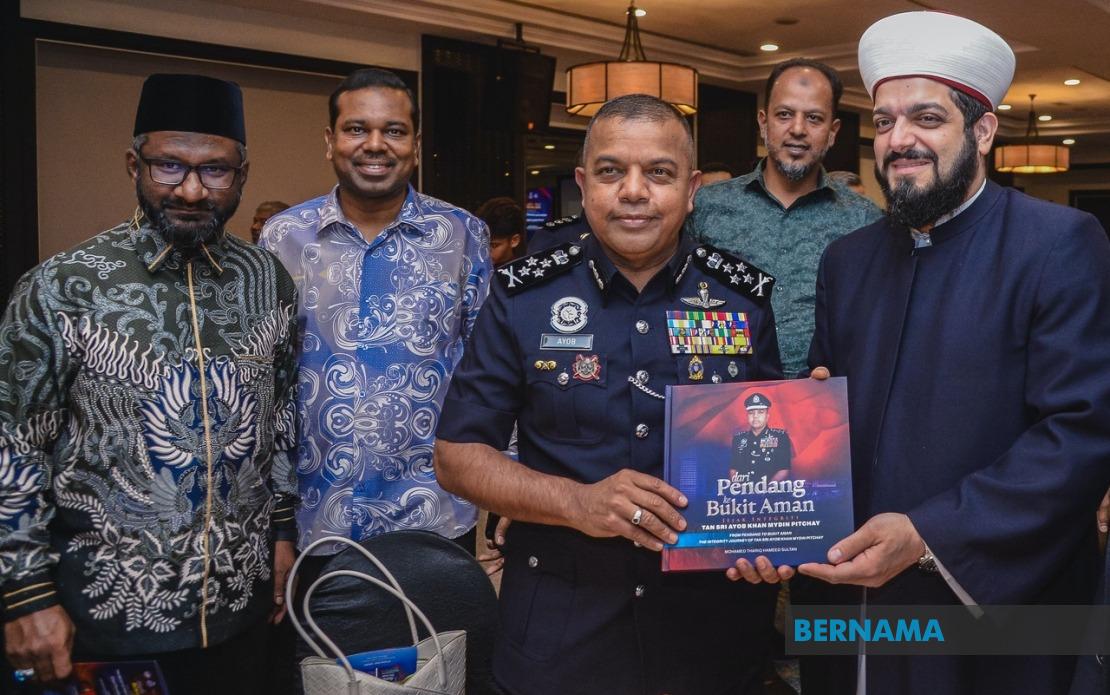
The battle against extremism in Malaysia is taking on a new digital dimension, with militant and terrorist organisations shifting their recruitment strategies away from conventional methods toward sophisticated online ecosystems. Deputy Inspector-General of Police Tan Sri Ayob Khan Mydin Pitchay sounded the alarm on this evolution, warning that the threat landscape will continue to expand and adapt faster than traditional law enforcement responses can counter.
Speaking after the launch of his biography in Kuala Lumpur, Ayob Khan highlighted a fundamental transformation in how extremist groups identify and enlist new members. Where recruitment once centred on physical usrah—informal religious study circles held in mosques, homes, or community centres—the nexus of radicalization has now migrated almost entirely to the digital realm. Video gaming platforms, particularly titles like Roblox that attract younger players, have become unexpected recruitment channels where potential extremists can be identified, groomed, and indoctrinated away from public scrutiny.
The shift toward gaming platforms represents a particularly insidious evolution in recruitment methodology. These environments offer extremists several tactical advantages: they provide anonymity for both recruiter and recruit, they attract younger demographics who may be more vulnerable to online influence, and they create spaces where radicalization messaging can be embedded within seemingly innocuous gaming interactions. The casual, social nature of gaming platforms also lowers initial barriers to engagement—participants may not immediately recognise they are being assessed for ideological alignment or that their personal information is being harvested for recruitment purposes.
Ayob Khan underscored that contemporary extremist motivation extends well beyond traditional religious grievances. The profile of modern recruits increasingly reflects individuals driven by personal anger, social alienation, or psychological vulnerability rather than genuine theological conviction. Recent arrests involving teenagers have exposed this pattern, revealing that emotional distress and community isolation can serve as potent catalysts for radicalization. This shift means law enforcement agencies must reframe their understanding of who is susceptible to extremist messaging and why—a recognition that challenges conventional counter-extremism approaches focused primarily on theological refutation.
The modus operandi transformation carries profound implications for Malaysian security architecture. Ayob Khan emphasised that reactive policing—waiting for threats to materialise before responding—is fundamentally inadequate in this new environment. Instead, he called for a proactive, intelligence-led approach where the police remain consistently ahead of operational curves. This requires continuous monitoring of digital spaces, investment in cyber-intelligence capabilities, and sophisticated analysis of emerging patterns in online extremist activity. The window between initial radicalization and potential attack has narrowed considerably, making early detection and intervention critical.
Several high-ranking officials attended the biography launch, reflecting the seriousness with which Malaysia's security apparatus views this challenge. The presence of the Criminal Investigation Department director, the Commercial Crime Investigation Department director, and the Internal Security and Public Order Department director underscored that counter-extremism is now understood as a multi-disciplinary challenge involving traditional policing, cyber investigations, and strategic security coordination. This institutional mobilisation suggests that Malaysia is moving toward a more integrated, whole-of-government response to digital radicalization.
The identification of Roblox and similar gaming platforms as recruitment vectors raises important questions for platform governance and corporate responsibility. Many international gaming platforms maintain moderation systems designed to prevent explicit political or religious content, yet they remain vulnerable to encoded messaging, subtle grooming tactics, and private communications that evade automated detection. For Malaysia, engaging with platform operators to enhance monitoring capabilities while respecting privacy considerations has become an urgent policy imperative.
Ayob Khan's warning also carries implications for Malaysian society more broadly. The expanding digital recruitment landscape means that radicalization is no longer confined to specific geographic regions, particular communities, or identifiable institutional structures. Any young Malaysian with internet access and a gaming account could potentially encounter extremist messaging. This universalisation of exposure demands corresponding investment in digital literacy, critical thinking education, and community-based early intervention programmes that can reach at-risk individuals before more intensive radicalization occurs.
The Counter-Terrorism Division's E8 unit has been specifically tasked with heightened vigilance in detecting and neutralising threats before attacks materialise. This strategic placement reflects recognition that counter-terrorism operations must now seamlessly integrate traditional intelligence tradecraft with digital forensics and cyber investigation methodologies. Officers working in this space require expertise spanning theological knowledge, psychological assessment, online investigation techniques, and cultural understanding—a sophisticated skill set that Malaysian security agencies continue developing.
International experience demonstrates that gaming platforms are indeed exploited by extremist networks globally. From far-right white supremacist groups to jihadist organisations, transnational terrorist actors have recognised the utility of these spaces for community-building, ideological transmission, and operational planning. Malaysia's experience mirrors international trends, suggesting that solutions will require both domestic intelligence operations and coordinated engagement with international gaming companies, other regional security services, and international counter-terrorism bodies.
The challenge ahead extends beyond mere interdiction. While disrupting specific recruitment operations remains essential, addressing the underlying conditions that make individuals susceptible to extremist messaging—social alienation, economic disadvantage, identity confusion, psychological distress—requires parallel investment in social programmes, mental health services, youth engagement initiatives, and community resilience building. Ayob Khan's acknowledgement that emotional rather than purely ideological factors drive modern radicalization suggests that security solutions alone will prove insufficient.
Moving forward, Malaysia's police force and broader security ecosystem must operationalise genuinely forward-looking counter-extremism strategies. This means transitioning from reactive investigations to predictive intelligence systems, maintaining continuous presence in digital spaces where recruitment occurs, building partnerships with technology companies, training personnel in emerging cyber-investigation techniques, and fostering community reporting mechanisms that identify concerning digital activity. The evolution of extremist tactics demands equally sophisticated governmental responses.

