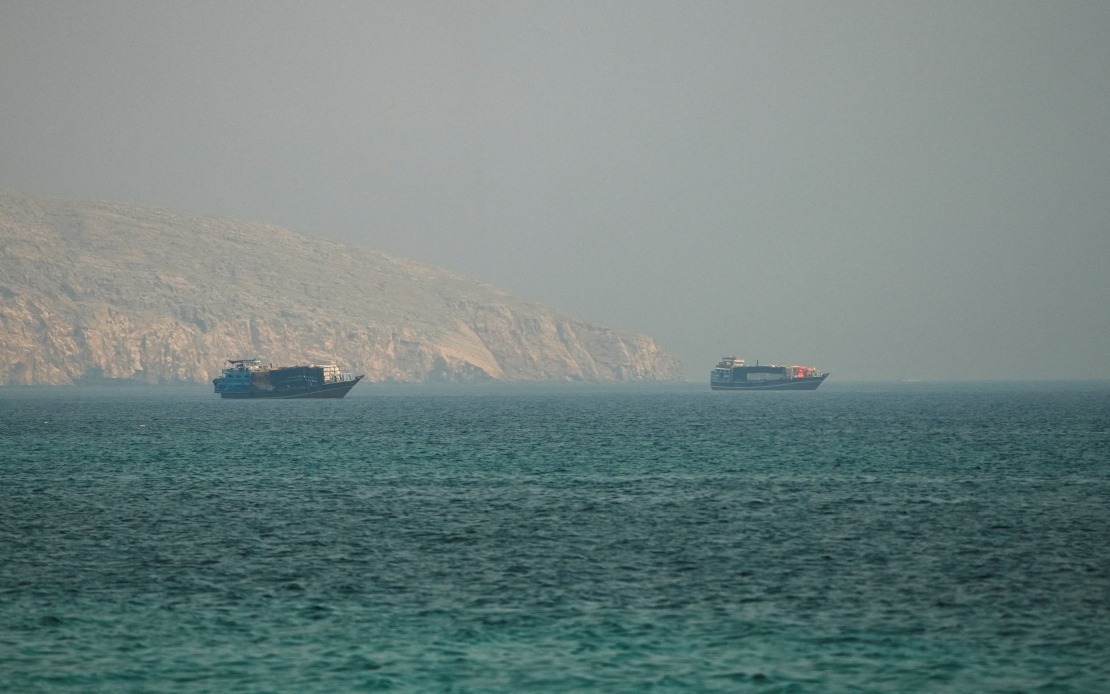
Oman has firmly opposed the imposition of mandatory transit fees on ships traversing the Strait of Hormuz, positioning itself instead as an advocate for voluntary service arrangements that would allow shipping companies discretionary participation in funding navigational support. An Omani delegate made this position explicit during proceedings at the International Maritime Organisation's 137th Council session in London this week, signalling the sultanate's measured approach to an increasingly contentious maritime issue that threatens global commerce.
The statement represents Oman's formal stance on a proposal it quietly submitted to the United States and other Western powers in recent weeks. Under this initiative, vessel operators would have the option to contribute fees for services facilitating safe passage through the critical waterway rather than facing coercive toll collection. This voluntary framework deliberately echoes existing cooperative mechanisms employed in the Strait of Malacca and Singapore, jurisdictions that have successfully managed high-traffic sea lanes through consensus-based funding models rather than unilateral imposition.
Oman's intervention carries particular weight given its geographical position and historical role as a neutral mediator in the Persian Gulf. The sultanate controls the eastern approach to the Strait of Hormuz and maintains diplomatic relations across the region's fractious divide, making it uniquely positioned to broker arrangements that might satisfy competing interests. By explicitly reaffirming its commitment to the international legal principle of transit passage—a cornerstone of maritime freedom—Oman signals that any accommodation must respect established norms rather than circumvent them through authoritarian measures.
The escalating dispute reflects deepening tensions between Iran and Western maritime powers over control of the strategic chokepoint through which approximately one-third of globally traded oil transits daily. Iran has reportedly begun collecting unilateral transit tolls from passing vessels, a practice the United Arab Emirates and several allied nations formally condemned during the same IMO Council session. This Iranian behaviour prompted the emergency response from multiple countries seeking to establish international consensus against such charges, creating a diplomatic standoff that threatens maritime stability across Southeast Asian shipping routes dependent on predictable international maritime governance.
For Malaysia and other ASEAN states, Oman's proposal holds particular relevance because it draws explicitly on management mechanisms developed for the Strait of Malacca. The voluntary contribution model reflects successful collaborative approaches that Southeast Asian nations, China, Japan, and other stakeholders have employed to maintain security and environmental standards in one of the world's busiest maritime corridors without resorting to contentious toll collection that could disrupt regional commerce. This precedent suggests that analogous arrangements might address legitimate concerns about Strait of Hormuz maintenance and safety without imposing the economically destabilising effects of mandatory fees.
Iran's counter-position, articulated through its own IMO submission, emphasises that it has engaged in consultations with Oman regarding management protocols and coordination mechanisms for administering the waterway consistent with international law and domestic regulations. This framing attempts to legitimise Iranian actions within accepted legal frameworks while highlighting Oman's role as an interlocutor. The ongoing nature of these discussions suggests that behind-the-scenes negotiations continue, with Oman potentially serving as a vital channel through which broader consensus might eventually emerge, even as public positions remain entrenched.
Oman's commitment to preserve unrestricted sea lanes, safeguard maritime life, and sustain resilient international supply chains underscores the wider economic stakes embedded in this dispute. Disruption to Hormuz transit would immediately reverberate through Southeast Asian ports, Malaysian refineries dependent on Gulf crude, and shipping companies whose profit margins depend on predictable operating costs. Any regime imposing arbitrary or unilaterally determined fees would introduce precisely the uncertainty that undermines investment and commercial confidence across interconnected regional economies.
The voluntary arrangement model that Oman champions incorporates precedent from the Strait of Malacca maritime cooperation framework, where user states and transit nations have negotiated burden-sharing for navigation aids, environmental protection, and security infrastructure without formalising extractive toll systems. This approach respects coastal state interests in securing resources for waterway maintenance while preserving the principle that international straits remain open to all vessels under established legal regimes. The distinction between voluntary contribution and mandatory toll collection carries profound implications for maritime freedom doctrine.
International maritime law, codified through the United Nations Convention on the Law of the Sea, explicitly protects the right of transit passage through straits used for international navigation. This principle undergirds global shipping and energy security, preventing any single state from weaponising geographic position to extract economic rent from international commerce. Oman's emphasis on sustaining this framework, while remaining engaged with Iran through bilateral consultations, reflects a sophisticated understanding that legal legitimacy ultimately depends on demonstrable compliance with established international norms rather than assertions of sovereign control.
The timing of Oman's proposal during the formal IMO proceedings signals an attempt to anchor the voluntary arrangement concept within the organisation's governance structures, potentially creating an international institutional framework that could eventually supersede unilateral Iranian actions. By framing voluntary contributions as a pathway that respects both maritime freedom and coastal state prerogatives, Oman offers an exit ramp from escalating confrontation. However, whether Iran would accept such arrangements remains uncertain, and the proposal's success ultimately depends on achieving sufficient consensus among major maritime powers and shipping interests.
For Malaysian policymakers and regional stakeholders, Oman's intervention demonstrates how smaller strategic actors can meaningfully shape outcomes on critical transnational issues through diplomatic positioning and institutional engagement. Oman's proposal provides a template for addressing maritime governance challenges without sacrificing principles of open seas that underpin Southeast Asian prosperity. The coming weeks will reveal whether this voluntary model gains traction with the IMO membership, Iran, and Western nations, or whether the Strait of Hormuz descends further into unilateral assertion and counter-assertion.

