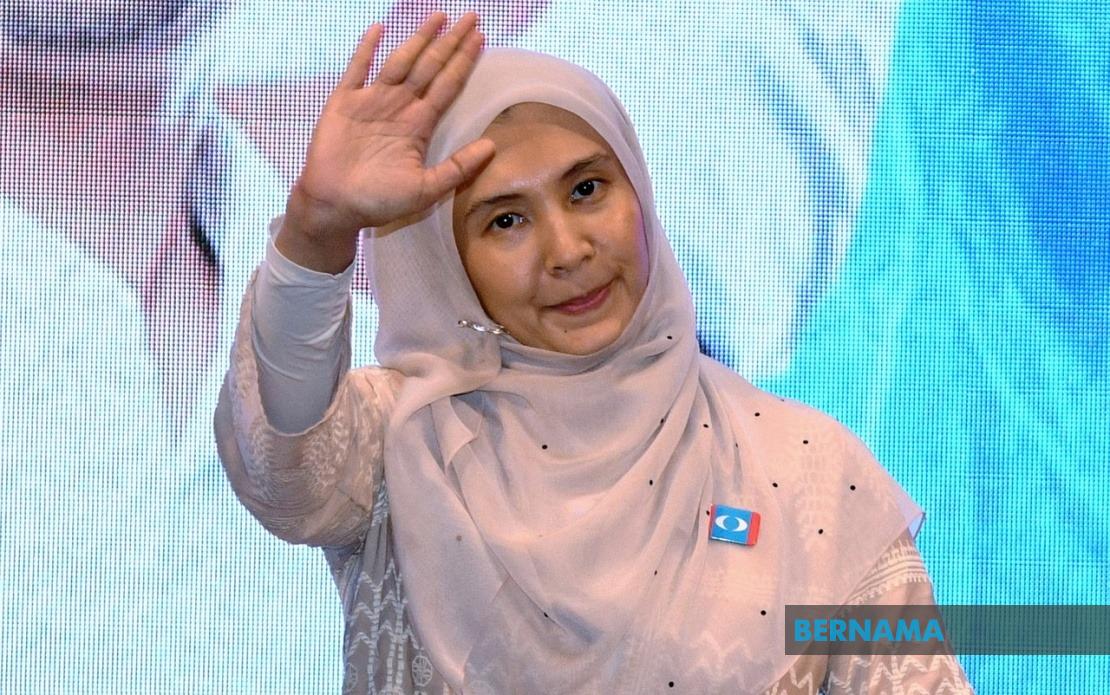
Nurul Izzah Anwar, the deputy president of the People's Justice Party (PKR), has announced her decision to relinquish her position in order to dedicate herself to pursuing further education and expanding her community contributions outside the formal political framework. In a statement posted on Facebook, the daughter of Prime Minister Anwar Ibrahim explained that her choice resulted from deliberate reflection on her personal and professional priorities, underscoring that meaningful service to society need not be confined to party structures or elected office.
The party's Central Leadership Council formally granted Nurul Izzah temporary leave from her deputy presidential duties, effective after the PKR National Congress scheduled for August 15 and 16 in Melaka. This arrangement allows her to step back from active party administration while maintaining her membership and symbolic connection to the party she has been associated with throughout her political career. The decision, according to PKR information chief Datuk Seri Fahmi Fadzil, followed discussions within party leadership regarding her formal request to vacate the position.
In her statement, Nurul Izzah made clear her intention to remain engaged with PKR as a regular member, pledging continued support for the party's broader mission of advancing Malaysia's development under the stewardship of Anwar Ibrahim and the party's grassroots structures. Her language suggested a transition rather than a rupture, positioning her future involvement as complementary rather than contradictory to her new focus on academic pursuits. This careful messaging may reflect her desire to preserve relationships within the party while signalling a genuine shift in her life direction.
The appointment of PKR vice-president Datuk Seri Saifuddin Nasution Ismail as acting deputy president represents a straightforward succession within the party hierarchy. Nurul Izzah expressed confidence in Saifuddin's capacity to manage the portfolio alongside Datuk Seri Amirudin Shari, who assumes the role of PKR election director. She characterised both leaders as possessing the wisdom and diligence necessary to discharge their new responsibilities effectively, offering her formal blessing for their transition into expanded roles.
The timing of this development carries significance for PKR's internal dynamics. As Malaysia's political landscape continues to shift following the formation of the current federal government, PKR's organisational structure and leadership depth remain matters of interest to political observers. The deputy presidency represents one of the party's senior positions, and how the party manages the transition reveals something about its institutional maturity and the depth of talent within its ranks.
Nurul Izzah's decision also reflects broader conversations about work-life balance and personal development among Malaysian political figures. Her explicit mention of pursuing further studies suggests a commitment to intellectual advancement that may ultimately enhance her capacity to contribute to national discourse in future roles. This framing positions academic study not as an escape from politics but as a complementary investment in personal growth.
For PKR as an organisation, the transition presents both a challenge and an opportunity. While the loss of a high-profile, second-generation party leader from an executive position might appear to represent a diminishment of capacity, the elevation of other senior figures like Saifuddin provides a platform for demonstrating the party's bench strength. Malaysian political parties frequently face questions about succession planning and institutional viability beyond their founding figures, making visible transitions of authority particularly important for party credibility.
Nurul Izzah's long tenure within PKR spans a period of significant transformation for the party, including the end of Anwar's imprisonment, his return to active politics, and ultimately his appointment as Prime Minister. Her willingness to step back at a moment of comparative stability within the party and government may reflect confidence that PKR's institutional structures have matured sufficiently to function effectively without her in a formal leadership capacity. This interpretation gains credence from her emphasis on remaining engaged with party members at the forthcoming National Congress.
The decision also touches on questions of family dynamics within party leadership. While Anwar Ibrahim occupies the apex of national executive authority as Prime Minister, and Nurul Izzah held significant party office, the family's relationship with power has been shaped by extraordinary circumstances including Anwar's imprisonment and his subsequent rehabilitation. Nurul Izzah's stepping back from formal party administration may signal a desire to define her own path independently of family political prominence, even as she maintains loyalty to the party and her father's vision.
For Malaysian politics more broadly, the episode underscores how party structures continue to evolve in response to individual circumstances and aspirations rather than strictly according to predetermined hierarchical models. The flexibility of PKR's leadership in accommodating Nurul Izzah's request for temporary leave suggests an organisation capable of adapting to members' personal needs without triggering broader institutional crises. Whether this arrangement proves genuinely temporary or represents a more permanent transition away from high-level party office will become clearer over the coming months and years.

