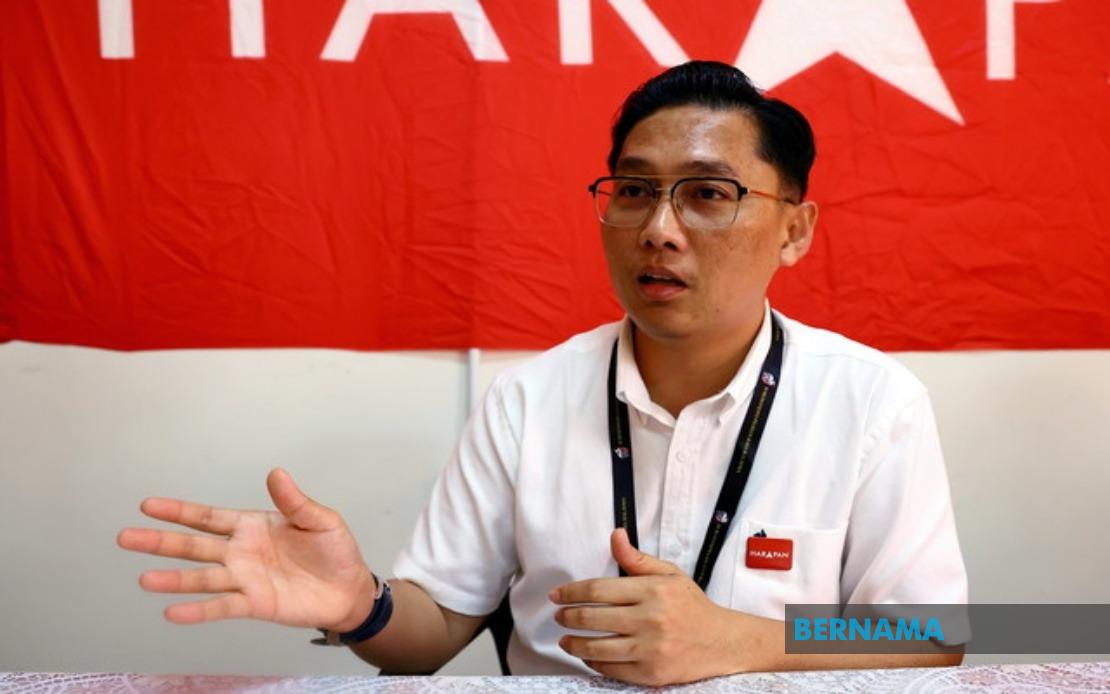
Nur Hafiz Roslan, the Pakatan Harapan candidate contesting the Machap state constituency, has identified a pressing demographic crisis that threatens the constituency's long-term stability: while voter rolls show young people aged 25 to 45 comprise nearly 51 per cent of the electoral base, the vast majority have relocated to seek employment and opportunity elsewhere. The candidate framed this not simply as economic migration but as symptomatic of deeper structural deficiencies that have undermined Machap's capacity to retain its younger generation.
During campaigning ahead of the July 11 Johor state election, Nur Hafiz outlined how systemic gaps in job creation and infrastructure development have compelled the outward flow of talent and ambition. His analysis reflects a broader challenge facing rural and semi-rural constituencies across Malaysia, where young adults migrate to urban centres or cross-border destinations including Singapore and the Klang Valley in pursuit of better wages and career pathways. The cumulative effect of this exodus has reshuffled Machap's demographic composition: residents aged 60 and above now constitute approximately 60 per cent of the constituency's population, fundamentally altering its character and economic dynamism.
Nur Hafiz's campaign strategy acknowledges this spatial reality by leveraging digital platforms to communicate directly with outstation voters who retain emotional and familial ties to their hometown despite their physical absence. Rather than confining his messaging to traditional ground operations concentrated in Machap itself, his team has intensified social media campaigns designed to penetrate the networks where displaced constituents gather online. This approach recognises that electoral success increasingly depends on mobilising voters scattered across multiple states and even countries, a phenomenon that conventional door-to-door canvassing cannot adequately address.
The candidate's policy platform centres on two interconnected priorities: first, remedying Machap's infrastructure deficit by investing in transportation networks, public facilities, and service delivery that had previously been neglected or inadequately maintained; and second, dramatically upgrading digital connectivity to ensure the constituency is not left behind in Malaysia's digital economy transition. Nur Hafiz framed these commitments as foundational measures to make Machap economically competitive and attractive to young professionals, thereby reversing the migration tide that has hollowed out the constituency.
In articulating his vision, Nur Hafiz invoked the semantic meaning of his own name, positioning himself as a bearer of light and renewal for Machap. The metaphor was deliberate: he sought to cast himself not merely as another politician making routine promises but as a transformative figure capable of restoring vitality to a constituency facing generational decline. This rhetorical strategy attempts to align personal brand with constituency renewal, creating a compelling narrative for voters—whether resident or absent—who have despaired of Machap's trajectory.
The candidate made an explicit appeal to Machap-born citizens living away to return for the July 11 poll, framing their participation as both a filial duty toward parents remaining in the constituency and an investment in its future. By reframing absentee voting as an act of civic responsibility rooted in family obligation and community stewardship, Nur Hafiz sought to overcome the logistical barriers that typically depress turnout among dispersed electorates. His message suggested that even a single vote cast by an outstation voter carries disproportionate weight in determining whether meaningful change reaches Machap.
Nur Hafiz faces a formidable opponent in incumbent Machap assemblyman Datuk Onn Hafiz Ghazi, who holds the additional advantage of serving as Johor's Menteri Besar. The sitting representative brings to the contest both the resources of state government and the incumbency advantage of having held the seat previously. This two-candidate contest crystallises the electoral choice for Machap voters: maintain the status quo represented by the Barisan Nasional incumbent, or endorse the opposition's promise of renewed focus on infrastructure and digital development.
The youth exodus phenomenon at Machap mirrors challenges confronting numerous Malaysian constituencies where migration to urban employment hubs has drained human capital and economic vitality. Economists and social observers have increasingly flagged this pattern as unsustainable, warning that peripheral constituencies risk becoming demographically and economically marginalised if younger populations continue departing permanently. Nur Hafiz's campaign implicitly acknowledges that reversing this trend requires not merely rhetorical flourishes but substantive, implemented improvements to economic opportunity and quality of life.
The strategic deployment of digital campaigning toward geographically dispersed constituents reflects evolving electoral practice in Malaysia, where traditional campaign approaches prove inadequate when addressing electorates fragmented across multiple locations. By targeting outstation voters through social media, Nur Hafiz's team demonstrates recognition that modern electoral contests increasingly operate across digital and physical spaces simultaneously. This technological adaptation may prove instructive for other constituencies wrestling with similar migration patterns.
For Southeast Asian observers and Malaysian political analysts, the Machap contest encapsulates broader questions about regional inequality, labour mobility, and the capacity of local governance to retain and attract talented populations. The constituency's experience suggests that without deliberate policy interventions to enhance economic opportunity and infrastructure quality, further demographic erosion remains likely. Whether Nur Hafiz's proposed remedies would prove sufficient to reverse migration flows remains uncertain, but his campaign has at least identified the challenge with clarity and proposed concrete responses.

